
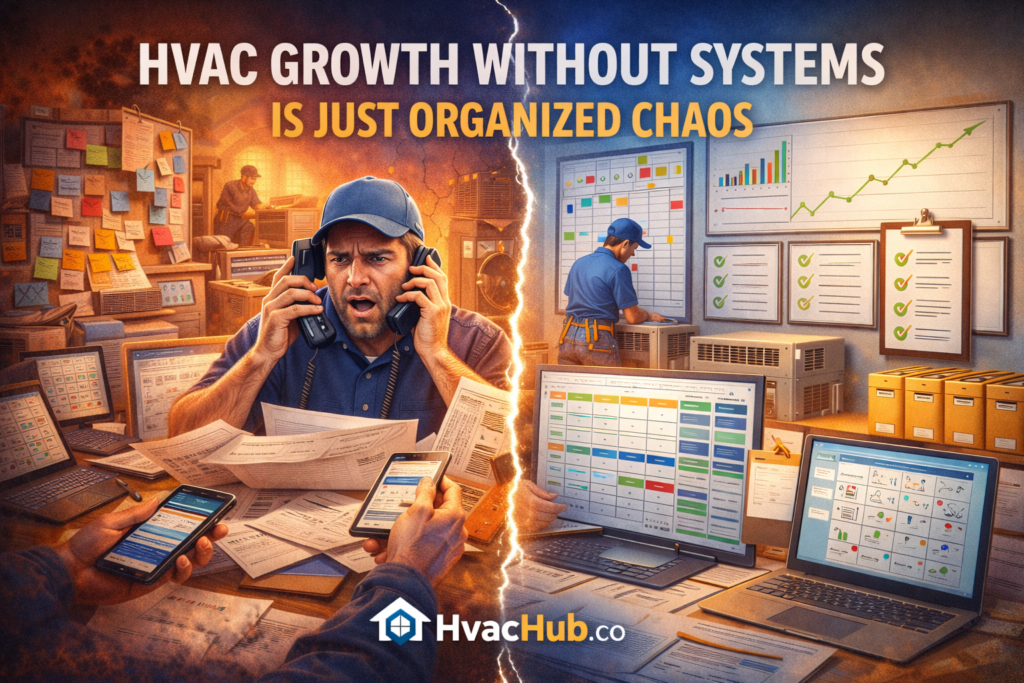
HVAC Growth Without Systems Is Just Organized Chaos

HVAC growth without systems feels exciting at first. More calls come in. Revenue increases. The schedule stays full. From the outside, everything looks successful.
However, underneath that momentum, pressure starts building.
When HVAC growth without systems continues for too long, stress increases, mistakes multiply, and margins quietly shrink. Growth without structure does not create freedom. It creates organized chaos.
Why HVAC Growth Without Systems Feels Good at First
Early growth often hides operational weaknesses. Owners work longer hours. Technicians push through busy days. Office staff manually handle scheduling and follow-ups.
At first, hustle compensates for missing systems.
Because revenue is rising, problems feel manageable. Small inefficiencies seem harmless. Documentation gaps get ignored. Job handoffs stay informal. Communication remains reactive instead of structured.
Eventually, though, volume exposes everything.
What Happens When Structure Doesn’t Scale
As demand increases, the backend begins to crack.
Install mistakes rise because processes are unclear. Callbacks increase because quality checks are inconsistent. Scheduling conflicts become frequent because workflows are not defined.
Meanwhile, the owner becomes the central problem-solver. Instead of leading strategically, they spend time putting out operational fires.
This is the tipping point of HVAC growth without systems.
More revenue does not automatically mean more profit. In fact, without structure, higher volume can reduce profitability. Labor costs increase. Rework eats into margins. Customer satisfaction becomes inconsistent.
Growth turns heavy.
The Hidden Cost of Organized Chaos
Organized chaos feels productive. Everyone stays busy. Trucks are moving. Jobs are closing.
However, busyness is not efficiency.
Without documented processes, measurable standards, and defined accountability, teams rely on memory instead of systems. That approach works temporarily but collapses under sustained growth.
Over time, burnout increases. Team morale drops. Leadership frustration grows. The business looks bigger but feels unstable.
What Real Growth Requires
Sustainable HVAC growth requires systems before scale.
Clear install checklists reduce rework. Defined job handoffs prevent confusion. Standardized scheduling improves efficiency. Measurable performance metrics create accountability without emotion.
Systems reduce pressure because they replace guesswork with structure.
Growth should increase clarity, not chaos.
If growth keeps exposing the same problems, investigate why written HVAC procedures are not followed, how business structure affects execution, and what fails during the busy season.
Final Thought
HVAC growth without systems may increase revenue, but it rarely increases control.
True scale happens when structure leads expansion not when expansion exposes weaknesses.
If your business is growing but feels heavier instead of smoother, the issue may not be demand. It may be systems.
For real conversations about structure, leadership, and sustainable growth, join the HVAC Community Hub.
Responses