
HVAC Sales Operations Tension: When Closing Creates Chaos

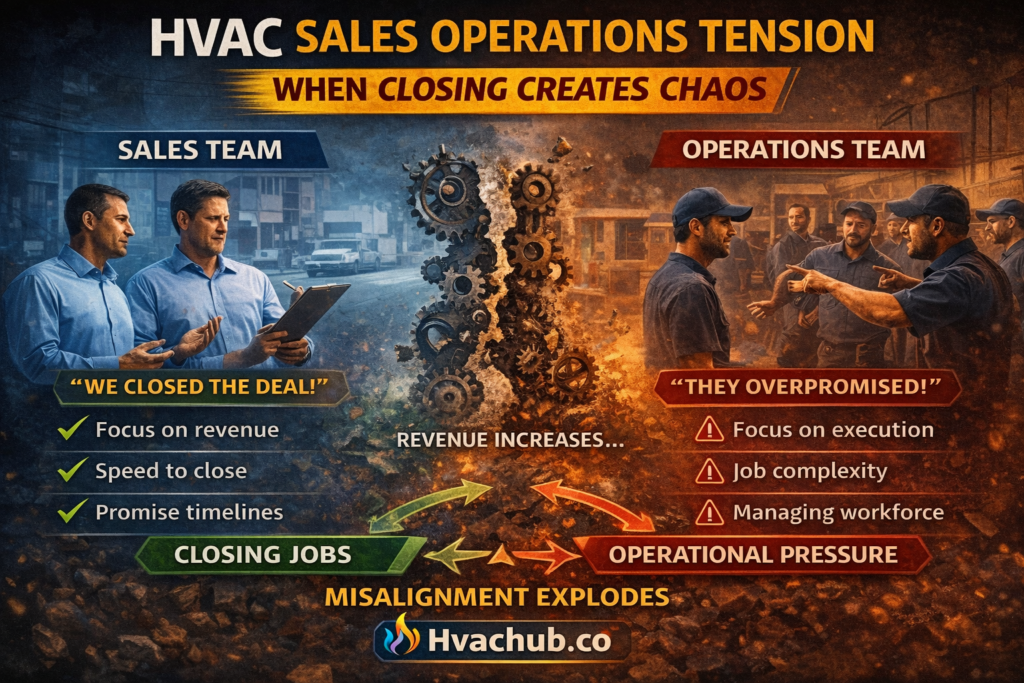
HVAC sales operations tension often appears right after revenue increases.
The sales team closes more jobs. Bookings rise. The pipeline looks strong.
At first, this feels like success.
However, installs begin running behind. Service teams feel pressure. Schedules tighten.
That is when friction grows.
Why Closing More Jobs Doesn’t Always Create Stability
Sales teams focus on opportunity.
They aim to win contracts, secure deposits, and move quickly. Their performance depends on closing volume.
Operations teams focus on execution.
They must schedule correctly, manage labor, order materials, and deliver quality work.
Because these goals differ, alignment requires structure.
Without it, strong sales performance creates operational strain.
How Revenue Can Trigger Chaos
When HVAC sales operations tension increases, warning signs appear:
- Incomplete job details handed to installers
- Unrealistic timelines promised to customers
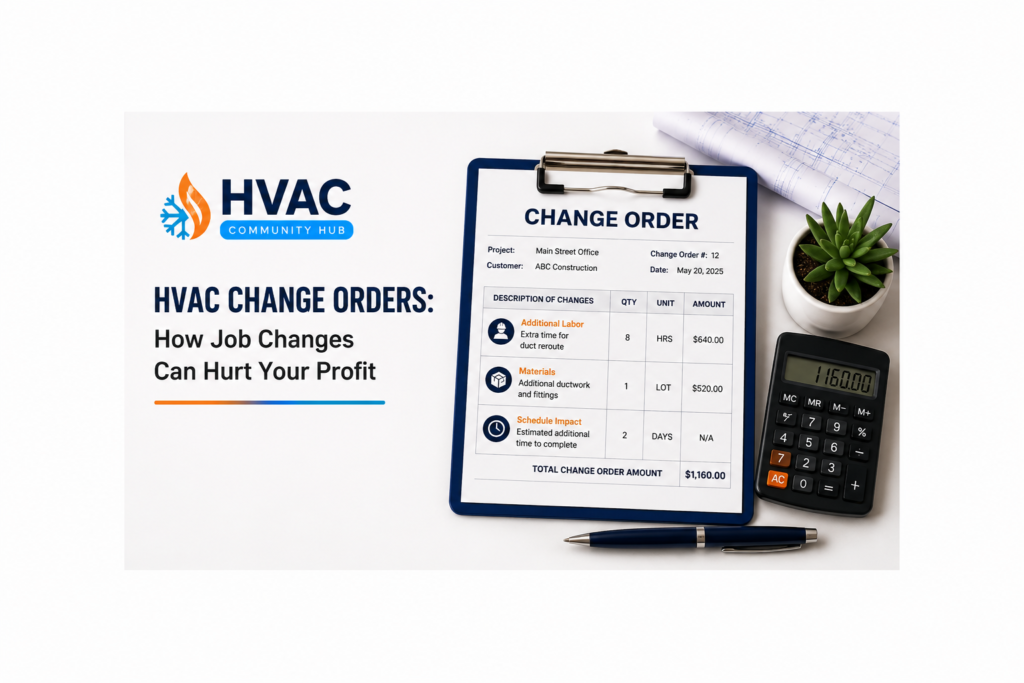
- Scope changes not clearly documented
- Material orders rushed at the last minute
- Field teams blaming sales for “overpromising”
These issues rarely stem from bad intent.
Instead, they come from misaligned incentives.
Sales wins the job.
Operations inherits the pressure.
Why Growth Magnifies the Problem
As volume rises, small communication gaps expand.
For example, missing information that once caused minor confusion now affects multiple crews. Meanwhile, rushed estimates create cascading scheduling conflicts.
Because both departments work hard, frustration builds quickly.
Sales feels unappreciated.
Operations feels overloaded.
HVAC sales operations tension intensifies when leadership fails to define clear handoff standards.
The Handoff Is the Real Battlefield
The issue is not sales skill.
The issue is transition clarity.
A strong structure defines:
- Required job documentation before approval
- Clear scope confirmation
- Realistic install timelines
- Defined change-order processes
When these checkpoints exist, tension reduces.
Without them, every job becomes negotiation between departments.
Incentives Must Align
If sales bonuses depend only on volume, pressure increases naturally. Meanwhile, operations absorbs the complexity.
However, when incentives reflect both revenue and execution quality, behavior shifts.
For example, rewarding clean documentation or realistic timelines improves cooperation.
Structure protects relationships.
Stability Requires Shared Accountability
HVAC sales operations tension decreases when both sides share ownership of outcomes.
Sales should understand capacity limits. Operations should communicate constraints clearly.
Leadership must define decision rights and enforce standards consistently.
Growth should create smoother systems.
If revenue increases chaos, structure needs reinforcement.
Sales and delivery teams can work together more consistently with clear HVAC quotes, stronger field-office coordination, and more productive conversations about expectations.
Final Thought
Closing jobs is not the problem.
Unstructured growth is.
When strong sales create strain instead of stability, examine the handoff between departments.
Revenue without alignment produces friction.
Revenue with structure produces scale.
Join the HVAC Community Hub
If you want frameworks that align sales and operations for stable growth, join now HVAC Community Hub.
Inside, we focus on building HVAC businesses that scale with coordination — not conflict.
Responses