
HVAC Peak Season Failures: Why Companies Struggle

Peak season should be the time when HVAC businesses grow the fastest. But for many companies, it becomes the most stressful part of the year. HVAC peak season failures usually happen because systems, communication, and team coordination break down under pressure. The good news is that these problems are easy to identify and fix.
Here are the most common reasons HVAC companies struggle during peak season – and how to avoid them.
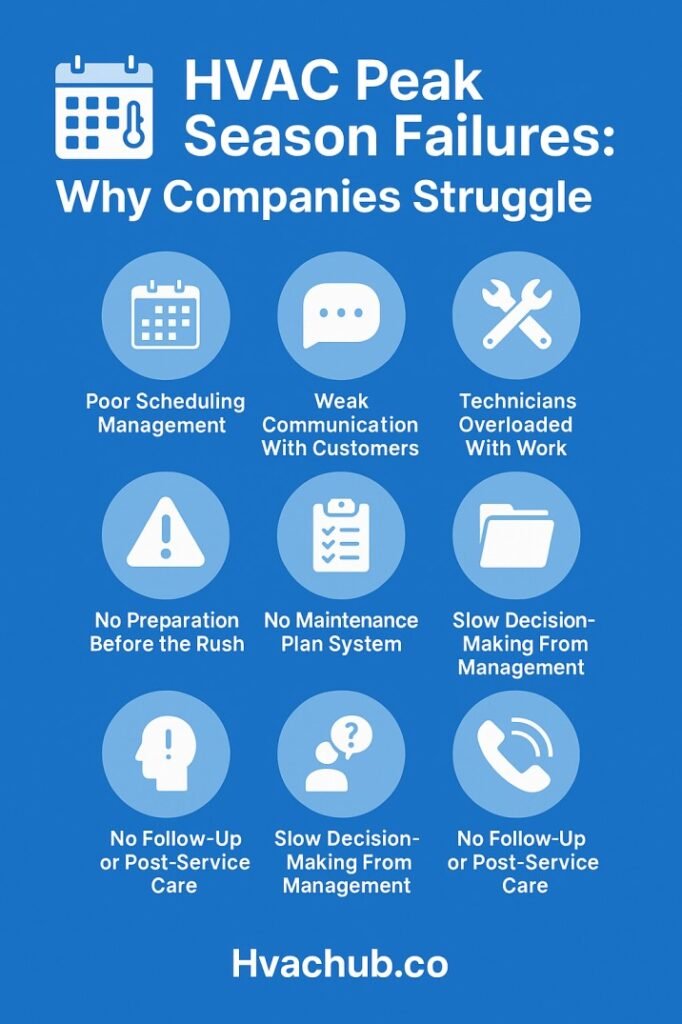
1. HVAC Peak Season Failures: Poor Scheduling Management
Most problems start with scheduling.
During peak months, the volume of calls increases and the schedule gets overloaded.
Common issues include:
- Overbooking
- Long wait times
- Last-minute changes
- No real-time updates
A structured schedule keeps operations steady when demand spikes.
2. HVAC Peak Season Failures: Weak Communication With Customers
Customers expect updates during busy times.
When communication slows down, frustration rises fast.
Red flags include:
- No arrival confirmations
- Slow replies
- Missed calls
- Vague explanations
Clear communication reduces stress for customers and your team.
3. Technicians Overloaded With Work
Peak season often leads to technicians rushing jobs just to keep up.
This results in:
- Lower-quality work
- Incomplete diagnosis
- Missed details
- Higher callback rates
Balanced workloads lead to better performance and fewer failures.
4. HVAC Peak Season Failures: No Preparation Before the Rush
Many companies are unprepared for the sudden increase in demand.
This includes:
- No pre-season equipment checks
- Not enough parts stocked
- No plan for scheduling overflow
- No plan for technician rotation
Preparation determines how well you survive the season.
5. Poor Internal Communication
When things get busy, internal communication often breaks down.
This creates:
- Confusion
- Missed job notes
- Mixed instructions
- Delayed decisions
Strong internal communication keeps the business stable during pressure.
6. No Maintenance Plan System
Companies without maintenance agreements feel peak season the hardest.
Without maintenance plans:
- Demand becomes unpredictable
- Workload surges uncontrollably
- Customer loyalty drops
- Technicians become overwhelmed
Maintenance plans stabilize the busy season and reduce chaos.
7. HVAC Peak Season Failures: Weak Record-Keeping
Missing details from previous jobs slows technicians down and causes repeat mistakes.
This includes:
- No equipment history
- Missing notes
- No past recommendations
- No customer preferences
Good records make peak operations smoother and faster.
8. Slow Decision-Making From Management
During peak times, decisions need to be immediate.
Delays cause:
- Slower job completion
- Confusion in the field
- Technician frustration
- Customer dissatisfaction
Fast and clear decisions keep the operation on track.
9. No Follow-Up or Post-Service Care
During peak season, companies often forget to follow up with customers after service.
This leads to:
- Missed customers
- More complaints
- Lower repeat business
- Weak customer trust
Simple follow-ups strengthen customer loyalty even in the busiest months.
Final Thoughts
Most HVAC peak season failures come from weak systems, rushed work, and poor communication. When scheduling, preparation, and internal coordination improve, peak season becomes an opportunity — not a stress point.
If you want better systems, support, and a community designed to help HVAC owners operate with confidence…
👉 Join the HVAC Community Hub today.
Grow smarter. Work smoother. Stay in control during peak season.

Responses