
Reactive HVAC Management: Hidden Costs Businesses Ignore

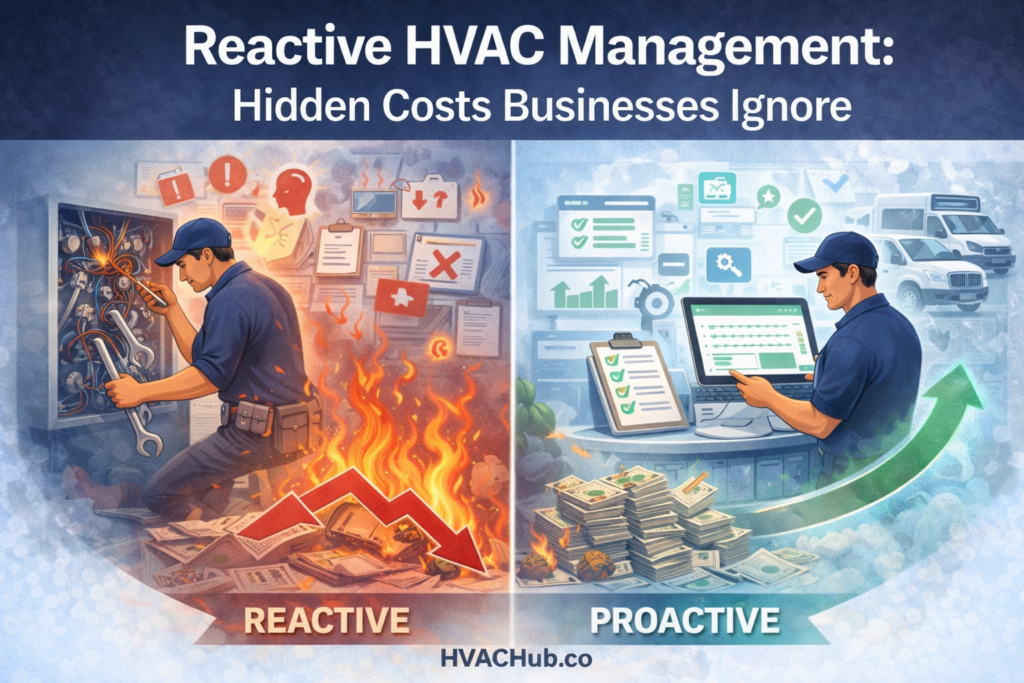
Many HVAC businesses operate in a constant state of urgency. Phones ring nonstop, schedules change by the hour, technicians troubleshoot unexpected issues, and owners spend their days putting out fires. This approach is known as reactive HVAC management – and while it may feel productive, it quietly creates long-term costs that limit growth.
Reactive management doesn’t usually start by choice. It develops when systems, processes, and planning fail to keep pace with business demands. Over time, this way of operating becomes expensive, stressful, and unsustainable.
Below are the hidden costs HVAC businesses face when they rely on reactive management instead of proactive systems.
1. Reactive HVAC Management Increases Operational Inefficiency
When teams operate reactively, work happens in response to problems rather than through structured workflows.
This leads to:
- Last-minute scheduling changes
- Poor route planning
- Incomplete job preparation
- Delays caused by missing information or parts
Technicians spend more time adjusting than executing. Even highly skilled teams become inefficient without predictable processes.
2. Reactive Management Drives Higher Labor Costs
Labor is one of the largest expenses in HVAC businesses. Reactive environments inflate this cost quickly.
Common issues include:
- Overtime due to poor planning
- Rework caused by rushed diagnostics
- Callbacks from incomplete repairs
- Time lost coordinating instead of servicing
When labor is unmanaged, profitability erodes — even when revenue looks strong.
3. Reactive Management Damages Customer Experience
Customers feel the effects of reactive operations immediately, even if they don’t label it that way.
Symptoms customers notice:
- Missed or late appointments
- Inconsistent communication
- Unclear expectations
- Last-minute rescheduling
- Lack of follow-up
Trust is built through consistency. Reactive systems make consistency nearly impossible.
4. Reactive Management Prevents Data-Driven Decisions
In reactive businesses, decisions are made based on urgency, not insight.
Without structured systems, owners struggle to track:
- Job profitability
- Technician performance
- Conversion rates
- Maintenance plan renewals
- Marketing effectiveness
Operating without reliable data forces leadership to guess – and guessing leads to costly mistakes.
5. Reactive Management Leads to Team Burnout
Constant urgency creates pressure on every role in the business.
Over time, this causes:
- Technician fatigue
- Dispatcher stress
- Office overload
- Owner burnout
Talented team members leave environments that feel chaotic. Retention suffers when work lacks structure and predictability.
6. Reactive HVAC Management Limits Scalability
What works for a small operation quickly breaks as volume increases.
Reactive systems fail when:
- Call volume grows
- New technicians are added
- Service areas expand
- Multiple teams operate simultaneously
Scaling requires repeatable processes. Without them, growth creates disorder instead of opportunity.
7. Reactive Management Keeps Owners Trapped in Daily Operations
One of the most overlooked costs is personal.
Owners stuck in reactive mode:
- Can’t delegate effectively
- Can’t step away from daily decisions
- Can’t focus on strategy or growth
- Constantly manage symptoms instead of causes
This limits both business potential and quality of life.
Moving From Reactive to Proactive Operations
Proactive HVAC businesses don’t eliminate problems — they reduce surprises.
They rely on:
- Standard operating procedures
- Clear ownership of tasks
- Automation for scheduling and follow-ups
- Structured communication
- Data visibility across operations
These systems create stability, clarity, and long-term growth.
Final Thoughts
The true cost of reactive HVAC management isn’t always visible on financial statements. It shows up in stress, inefficiency, customer dissatisfaction, and stalled growth. Businesses that move toward proactive systems gain control, predictability, and the ability to scale without chaos.
If you want to learn how modern HVAC businesses replace reactive operations with structured systems…
👉 Join the HVAC Community Hub
Build proactive processes. Strengthen operations. Grow with confidence.

Responses