

HVAC Customer Service: How to Keep Customers Coming Back

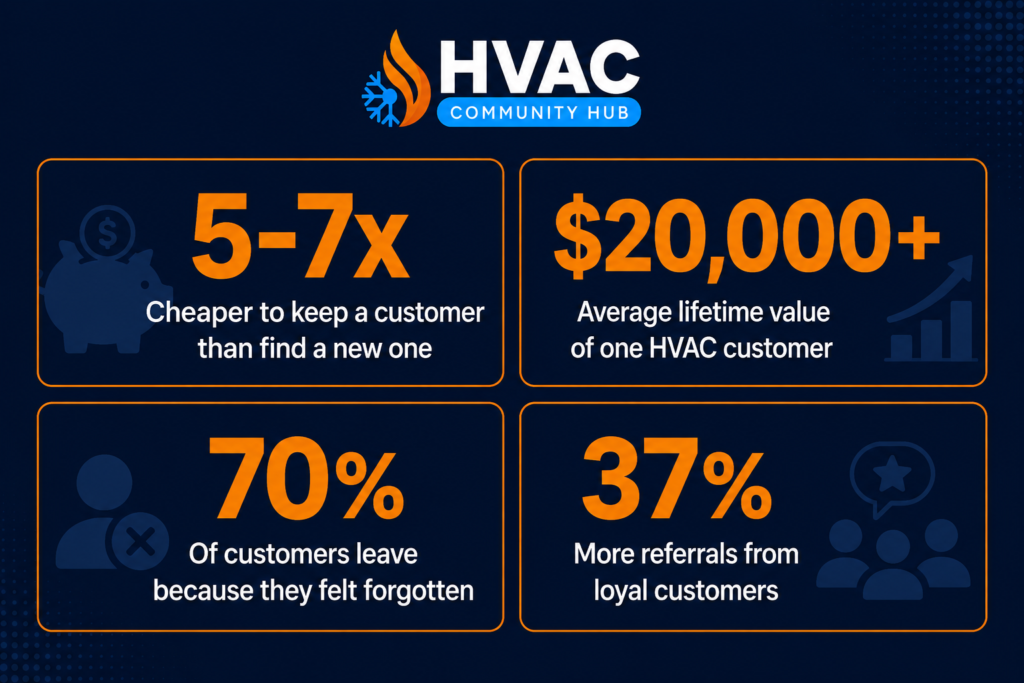
Most HVAC business owners focus all their energy on getting new customers. However, the real growth in any HVAC customer service business comes from keeping the ones you already have. In fact, acquiring a new customer costs five to seven times more than keeping an existing one. Furthermore, a loyal customer is worth far more than a one-time job — the average lifetime value of an HVAC customer can exceed $20,000 when you factor in maintenance agreements, repairs, upgrades, and referrals. This guide shows you exactly how to deliver customer service that keeps people coming back — and sends their friends your way too.
Why HVAC Customer Service Is Your Most Powerful Growth Tool
Many HVAC owners think marketing means chasing new leads. However, the most profitable HVAC businesses grow by keeping the customers they already have. Acquiring a new HVAC customer costs five times more than retaining one — often $200 to $300 per customer. Furthermore, a 5% increase in retention can raise profits by 25 to 95%.
Loyal customers also do something no ad campaign can do — they refer their friends. Referred customers are 37% more likely to come back than those from cold leads. So every customer you keep happy becomes a free source of new business.
What Customers Actually Want From Your HVAC Business
Before you can improve your customer service, you need to understand what customers value most. Today’s homeowners research online, read reviews, and compare businesses before making a call. What keeps them coming back is not always the lowest price.
Customers want clear and honest communication about what is happening and what it will cost. They want reliability and punctuality. They want technicians who are trained, courteous, and careful in their homes. They also want transparent pricing with no hidden fees or surprise charges at the end.
When your business delivers all of these things consistently, customers stop shopping around. They call you first — every single time.
The Real Cost of Poor Customer Service
Losing a customer is more expensive than most owners realise. The average lifetime value of an HVAC customer can exceed $20,000 when you factor in maintenance agreements, repairs, upgrades, and eventual system replacement. Losing that customer over a missed follow-up or a billing issue is an enormous hidden cost.
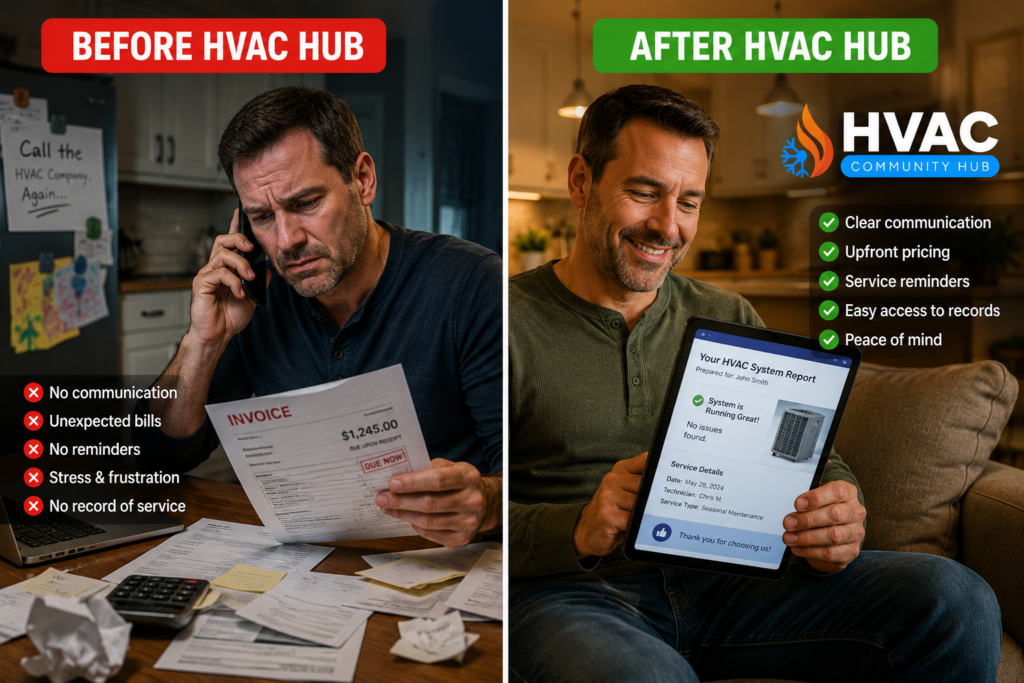
Nearly 70% of customer losses are tied to one issue — customers did not feel valued enough to return. Most customers do not leave because your work was bad. They leave because they felt forgotten. Fixing this does not require a big budget. It requires a consistent system.
7 Ways to Deliver Outstanding HVAC Customer Service
Here are the seven most effective things you can do to improve your customer service and keep customers coming back year after year.
1. Show Up on Time — Every Time
Punctuality is the foundation of trust. When a technician arrives late without any communication, the customer’s confidence drops immediately. When your team shows up on time — or sends a message if they are running late — it signals respect for the customer’s time.
Set a company rule today. Every technician calls or texts the customer 30 minutes before arriving. This one simple habit reduces complaints and improves first impressions on every single job.
2. Communicate Clearly Before, During, and After Every Job
Good communication separates average HVAC businesses from great ones. Before the job, confirm the appointment and explain what to expect. During the job, keep the customer informed about what you are doing and why. After the job, explain what was done, what was found, and what they should watch for next.
When technicians explain what they are doing and why, customers feel informed rather than pressured. Education builds trust faster than discounts ever will. A customer who understands the work is far more likely to approve additional recommendations and book again next year.
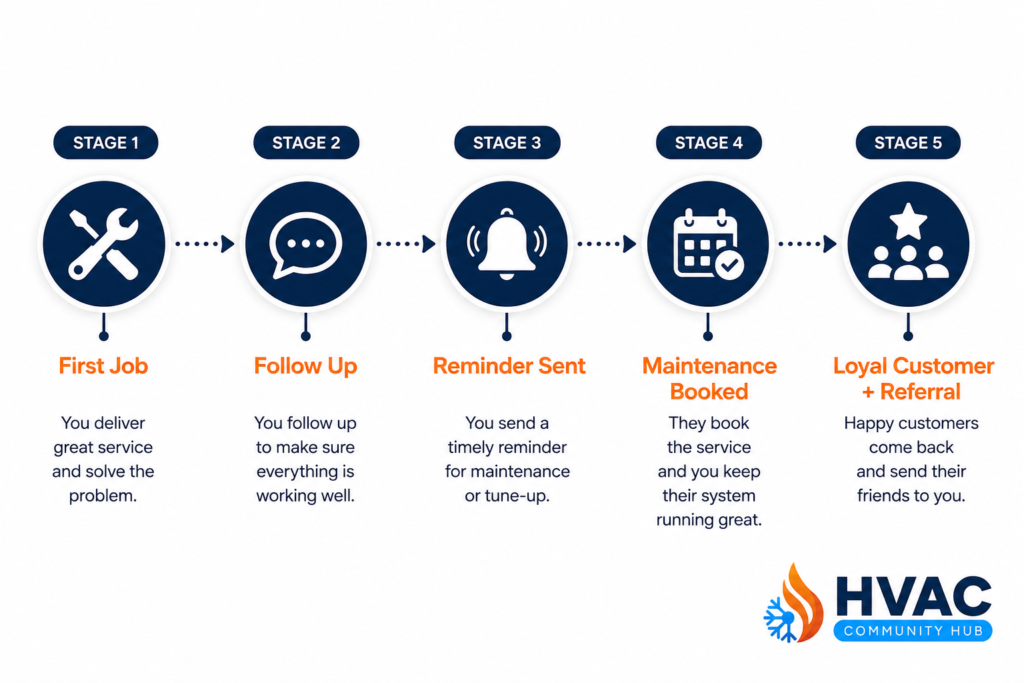
3. Follow Up After Every Job
Most HVAC businesses finish a job and move straight on to the next one. However, a simple follow-up message sent within 24 hours of job completion shows the customer that you care beyond the transaction.
Your follow-up does not need to be complicated. A short text or email asking whether everything is working well is enough. Furthermore, this is also the perfect moment to ask for a Google review — when the customer is still happy and the experience is fresh. You can learn more about building your review system in our full reputation guide.
4. Send Maintenance Reminders and Stay in Touch
Most homeowners do not switch HVAC companies because of bad work. They switch because they forgot about you. Staying in touch between jobs is one of the simplest and most effective customer service strategies available to any HVAC business.
Set up automated reminders through your CRM to contact customers when their next service is due. Send a seasonal email before summer and before winter reminding them to book a tune-up. A customer who hears from you twice a year between jobs is a customer who calls you first when something goes wrong. You can read more about how to set this up in our CRM guide — HVAC CRM playbook
5. Offer Maintenance Agreements to Every Customer
Preventive maintenance contracts account for nearly 40% of total HVAC revenue industry-wide. Furthermore, customers on maintenance agreements are more loyal, spend more money, and refer more business than those without one.
Offer a maintenance agreement to every single customer at the end of every job. Make it easy to say yes. Offer monthly payment options, clearly explain the benefits, and show the customer exactly what they get. Around 30% of customers already use maintenance plans — which means 70% of your customer base is still an opportunity waiting to be converted.
6. Handle Complaints Quickly and Professionally
Every HVAC business receives complaints at some point. The difference between businesses that lose customers over complaints and those that win loyalty from them comes down to how fast and how well they respond.
When a customer complains, acknowledge the issue straight away. Take responsibility where appropriate. Explain clearly what you will do to fix it. Then fix it quickly and follow through. A complaint handled well can actually strengthen loyalty and show customers your true commitment to doing the right thing. A customer whose complaint was resolved fast is often more loyal than one who never had a problem at all.
7. Reward Loyal Customers
Customers who have been with your business for several years deserve recognition. A simple loyalty reward — a discounted service, a free filter replacement, or priority scheduling during peak season — shows them that their continued business is valued and appreciated.
Returning customers are 50% more likely to purchase add-ons like air purifiers, smart thermostats, or duct sealing. So rewarding loyal customers is not just a nice gesture — it directly creates more revenue on every single visit.
How to Build a Customer Service System — Not Just Good Habits
Good intentions are not enough. The HVAC businesses with the best customer service do not rely on individual technicians to remember to follow up or send reminders. Instead, they build systems that make great customer service automatic and consistent on every single job.
Use a CRM to Track Every Customer Interaction
A CRM stores every customer’s details, job history, equipment information, and service dates in one place. When a customer calls, your team can see everything about them instantly — making every interaction feel personal and well-informed.
Furthermore, a CRM lets you automate follow-up messages, maintenance reminders, and review requests. As a result, your customer service runs consistently even on your busiest days. You never forget a follow-up. You never miss a reminder. No customer ever feels forgotten again.
Train Your Technicians on Customer Service — Not Just Technical Skills
Your technicians are the face of your business. Every time they enter a customer’s home, they represent your brand directly. Therefore, training should cover more than technical skills. It should include how to greet customers, how to explain work clearly, how to handle objections calmly, and how to ask for referrals naturally at the end of every job.
A technician who is technically excellent but poor with people will cost you customers over time. In contrast, a technician who is both technically excellent and great with people will win loyal customers for life.
Set Customer Service Standards and Measure Them
Define exactly what great customer service looks like in your business. How fast should calls be answered? How quickly should complaints be resolved? What follow-up should happen after every completed job? Write these standards down and share them clearly with your whole team.
Then measure them regularly. Track your Google review score, your response times, and your customer retention rate. What gets measured gets improved. When your team knows that customer service is being tracked, they take it more seriously every single day.
Frequently Asked Questions About HVAC Customer Service
How do I get more Google reviews from HVAC customers?
Ask every customer at the end of every job. The best time to ask is when the customer is still happy — right after a completed visit. Send a follow-up text within 24 hours with a direct link to your Google review page. Make it as easy as possible for them to leave a review in just one tap.
How often should I follow up with past HVAC customers?
At a minimum, contact past customers twice a year — once before the cooling season and once before the heating season. A short reminder email or text about seasonal maintenance keeps you top of mind without feeling pushy or salesy.
What is a good customer retention rate for an HVAC business?
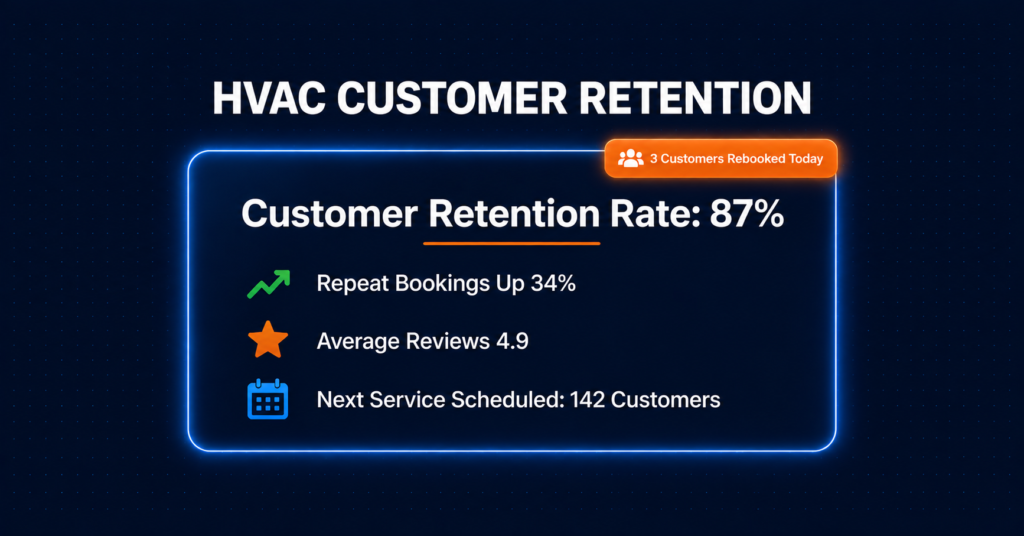
A strong retention rate for HVAC companies is 40 to 60% for general service customers and 80 to 90% for maintenance agreement members. If your overall retention is below 30%, your business is essentially rebuilding its customer base from scratch every single year.
How do maintenance agreements improve customer service?
Maintenance agreements keep you in regular contact with customers throughout the year. They give customers priority scheduling, discounted repairs, and real peace of mind. As a result, agreement customers feel more valued — and they are far more likely to stay loyal and refer their friends and neighbours.
How do I handle a difficult HVAC customer complaint?
Listen without interrupting. Acknowledge the problem clearly. Apologise where appropriate. Explain exactly what you will do to fix it. Then fix it quickly and follow up after the resolution to confirm the customer is satisfied. A complaint handled this way almost always ends with a stronger relationship than before the complaint happened.
Great HVAC Customer Service Is a Business System — Not a Personality Trait
The best HVAC customer service does not depend on which technician shows up or which team member answers the phone. It is built into every process — from the first call to the follow-up message after the job is done.
Great customer service also means handling difficult moments and keeping customer relationships strong. Explore complaint resolution and HVAC customer retention.
Start Building Your System Today
First, set up a simple follow-up process for every completed job. Then add maintenance reminders to your CRM. Then train your technicians on one new customer service habit each month. Small and consistent improvements compound into a business that customers trust, recommend, and stay with for many years.
Furthermore, if you want support building your customer service system — including CRM setup, technician training resources, and a community of HVAC owners sharing what works — HVAC Hub is exactly where to start.
Visit hvachub.co to join free and start building the customer service system that keeps your customers coming back in 2026. Explore our HVAC referral program guide to see how better service leads to more referrals.


Responses