

HVAC Maintenance Plans: Build Recurring Revenue

HVAC maintenance plans can give your business a stronger relationship with customers while creating more predictable service demand. Instead of waiting for customers to call when something breaks, a maintenance plan gives you a reason to stay connected throughout the year.
For customers, the value is also clear. Regular maintenance can help them stay ahead of potential equipment problems and keep their HVAC systems on a consistent service schedule.
However, simply offering a maintenance plan does not guarantee that customers will sign up or renew. Your plan needs to be easy to understand, useful to the customer, and simple for your team to manage.
A well-designed HVAC maintenance plan can become an important part of a growing service business. It can encourage repeat visits, strengthen customer relationships, and create opportunities for technicians to identify problems before they become emergency calls.
What Is an HVAC Maintenance Plan?
An HVAC maintenance plan is a service agreement that gives customers scheduled maintenance for their heating and cooling equipment.
The exact services can vary from one company to another. Some businesses offer one annual visit, while others provide seasonal maintenance visits. Plans may also include additional benefits such as priority scheduling, discounts, reminders, or reduced diagnostic fees.
The important part is that the customer understands exactly what they are receiving.
A maintenance plan should not feel like another complicated product. Customers should be able to quickly understand what the plan includes, why it is useful, and what they can expect from your company.
When the value is clear, the conversation becomes much easier.
Why HVAC Maintenance Plans Matter for Customers
Most homeowners do not think about their HVAC system until something goes wrong.
That creates a reactive relationship.
The customer calls when the air conditioner stops working, the furnace struggles to heat the home, or an unusual noise appears.
A maintenance plan changes that relationship.
Instead of waiting for a problem, the customer has a regular reason to have the system checked. This gives the HVAC company more opportunities to identify developing issues and explain recommended work.
Customers also get a more predictable service experience.
They know when maintenance is due, who is servicing their equipment, and what the visit is intended to accomplish.
That convenience can be valuable, especially for homeowners who do not want to remember maintenance schedules themselves.
How Maintenance Plans Create Recurring Customer Relationships
The biggest difference between a one-time service call and a maintenance plan is the relationship.
A one-time customer may contact your company once and disappear until another HVAC problem occurs.
A maintenance-plan customer has an ongoing reason to interact with your business.
That creates more opportunities to provide useful service and build familiarity.
Your technicians become familiar with the equipment. Your office has a better understanding of the customer’s service history. The customer becomes more familiar with your company and your process.
Over time, that familiarity can strengthen trust.
The relationship becomes less about one emergency and more about maintaining the customer’s HVAC system over its lifetime.
What Should an HVAC Maintenance Plan Include?
There is no single maintenance plan that works for every HVAC business.
Your plan should reflect the equipment your customers have, the services your technicians provide, and the type of relationship you want to create.
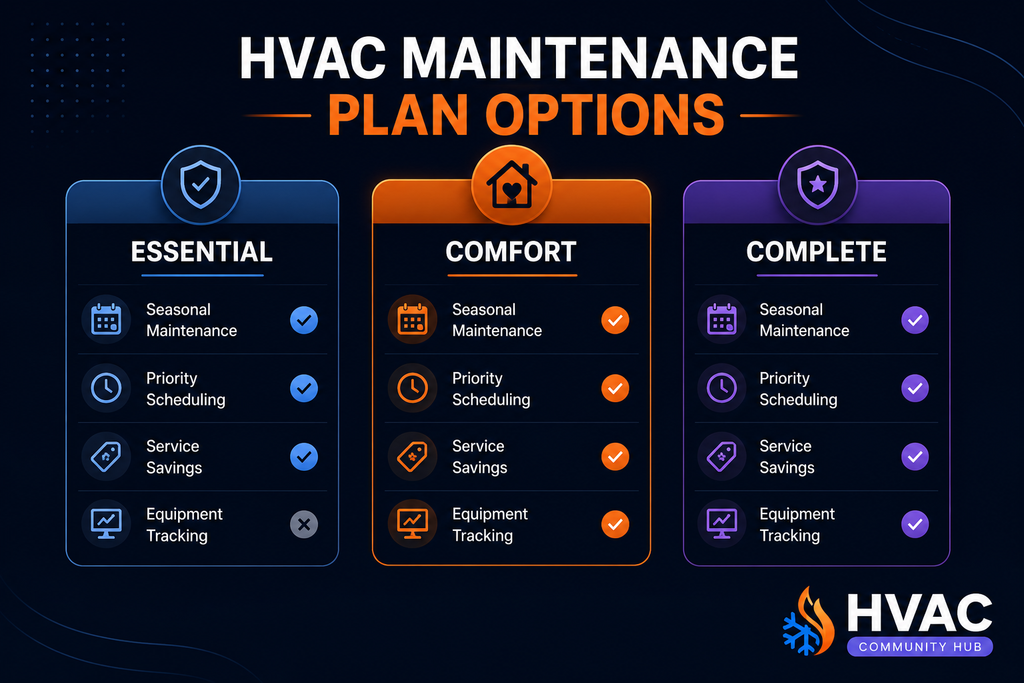
A basic plan might include scheduled heating and cooling maintenance.
A more comprehensive plan could add priority scheduling, service discounts, reminders, or other customer benefits.
The important thing is to avoid adding benefits simply to make the plan look larger.
Customers should understand the actual value.
Your team should also be able to deliver every promised benefit consistently.
Common maintenance-plan features can include:
- Scheduled seasonal maintenance
- System inspection
- Basic cleaning and adjustments
- Priority scheduling
- Service discounts
- Maintenance reminders
- Equipment history tracking
- Preferred customer support
The exact combination should depend on your business model and the needs of your customers.
Keep Your Maintenance Plan Easy to Understand
One of the easiest ways to weaken a maintenance plan is to make it confusing.
If customers need several minutes to understand what they receive, they may hesitate to sign up.
Keep the offer simple.
Explain what visits are included.
Explain when maintenance takes place.
Explain what benefits the customer receives.
Also explain what the plan does not include.
Clear expectations protect both sides.
The customer knows what they are purchasing, and your team knows what it needs to deliver.
A simple plan is also easier for technicians to explain during a service call.
How Technicians Can Introduce Maintenance Plans Naturally
Technicians have an important opportunity to introduce maintenance plans because customers already trust them for HVAC advice.
However, the conversation should feel helpful rather than forced.
If a technician notices that a customer has an older system, inconsistent maintenance history, or recurring service needs, they can explain how a maintenance plan works.
The technician does not need to give a long sales pitch.
A simple explanation can be enough.
For example, the technician can explain that regular maintenance gives the customer a scheduled service reminder and helps the company stay familiar with the equipment.
The office can then provide the full plan details.
This approach keeps the conversation focused on the customer’s situation rather than making every service call feel like a sales opportunity.
Use Maintenance Visits to Build Customer Trust
A maintenance visit should provide real value.
Technicians should arrive prepared, inspect the system properly, document relevant findings, and explain important issues clearly.
Customers should not feel that the visit exists only to create another sales opportunity.
Trust grows when technicians provide useful information without unnecessary pressure.
If a problem needs attention, explain what it is.
If the system is operating normally, say that too.
That honesty can strengthen the relationship.
Customers are more likely to continue with a maintenance plan when they believe the company is looking after their equipment rather than looking for reasons to sell additional work.
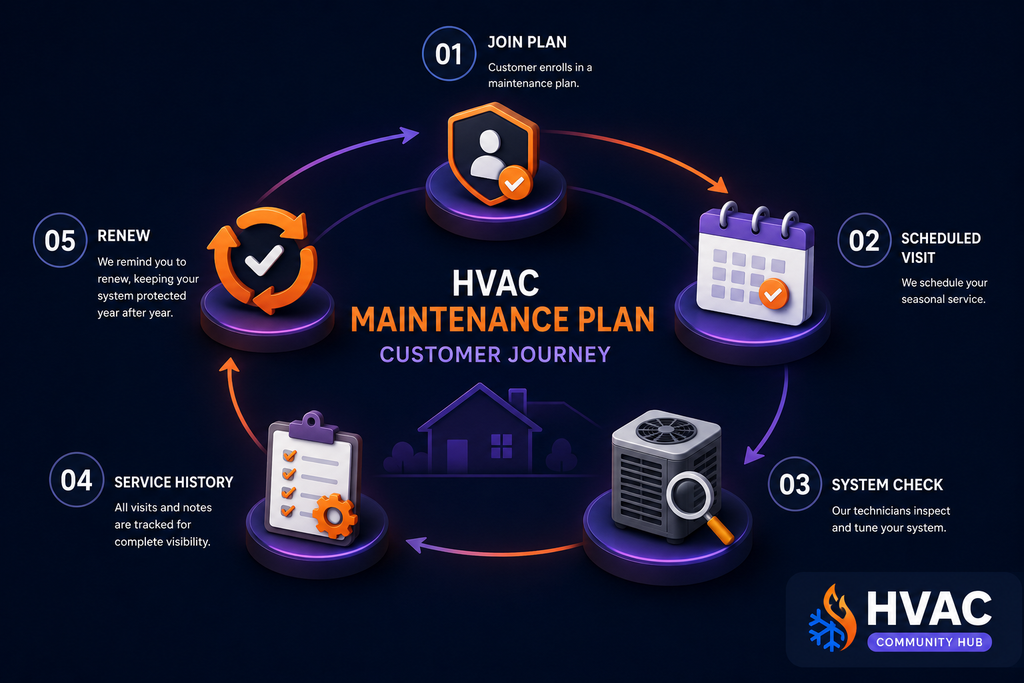
Make Scheduling Part of the System
A maintenance plan only works when scheduled visits actually happen.
That means your office needs a reliable process for tracking upcoming maintenance.
Do not rely entirely on customers remembering to call.
Use reminders and internal follow-ups to keep scheduled visits moving.
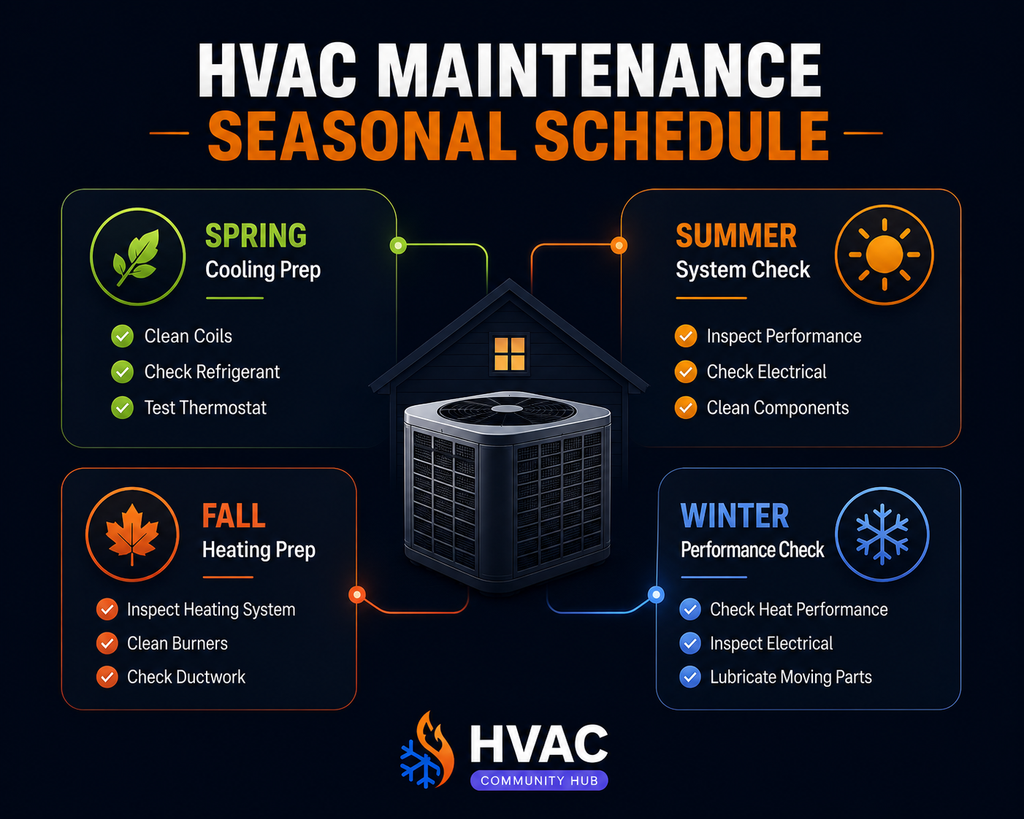
Seasonal timing can also help.
Cooling maintenance may make sense before the busy cooling season, while heating maintenance can be scheduled before colder weather arrives.
The exact timing depends on your market and the equipment being serviced.
What matters is creating a predictable process.
When your team knows which customers are due for maintenance, the office can plan ahead and customers receive a smoother experience.
Maintenance Plans Can Help Balance Seasonal Demand
HVAC businesses often experience changes in demand throughout the year.
Emergency service calls may increase during extreme weather, while other periods can be quieter.
Maintenance plans can provide another source of scheduled work.
Instead of relying entirely on emergency calls, your business can plan maintenance appointments in advance.
That does not eliminate seasonal changes.
However, it can give the team more predictable work to schedule around other service demands.
This can also make planning easier for the office.
Upcoming maintenance appointments are easier to anticipate than emergency calls.
Track Maintenance Plan Renewals
Getting a customer to join a plan is only the beginning.
Renewals matter because they show whether customers continue to see value in the service.
Keep track of when each plan starts and when it needs renewal.
Send reminders before the renewal date.
Make the process simple for the customer.
You should also review why customers do not renew.
Some customers may forget.
Others may not understand the benefits.
Some may feel that they did not receive enough value.
That feedback can help you improve the plan.
Common HVAC Maintenance Plan Mistakes
Some HVAC companies make their maintenance plans too complicated.
They add too many conditions, benefits, and exclusions until the customer struggles to understand the offer.
Another mistake is failing to deliver the promised benefits consistently.
If a company advertises priority scheduling but treats plan customers exactly like everyone else, the promised value becomes less meaningful.
Poor follow-up can also hurt the program.
A customer who signs up and never receives a reminder may question why they joined.
Finally, some businesses focus too heavily on selling the plan and not enough on delivering a good maintenance experience.
The service itself remains the foundation.
How to Improve Your HVAC Maintenance Plan Over Time
Your first maintenance plan does not have to be perfect.
Start with a clear offer that your team can deliver consistently.
Then watch how customers respond.
Which benefits do they ask about?
Which parts of the plan do they use?
What questions come up most often?
Why do some customers renew while others leave?
Use that information to improve the program.
You may discover that customers value convenience more than discounts. Another business may find that priority scheduling is especially useful during busy periods.
Your customers can tell you what matters most if you pay attention to their feedback.
Frequently Asked Questions About HVAC Maintenance Plans
What is an HVAC maintenance plan?
An HVAC maintenance plan is a service agreement that provides customers with scheduled maintenance and may include additional benefits such as priority scheduling, service discounts, or reminders.
Are HVAC maintenance plans worth offering?
They can be valuable when the plan provides clear benefits and your business can deliver the promised service consistently. A well-managed plan can strengthen customer relationships and create more predictable scheduled work.
What should an HVAC maintenance plan include?
The plan should include services that customers understand and value. Scheduled maintenance, reminders, equipment tracking, priority scheduling, and service-related benefits are common options.
How should HVAC companies sell maintenance plans?
Focus on the customer’s needs rather than using a hard sales pitch. Explain how regular maintenance can make HVAC service more convenient and give the customer a predictable service schedule.
How can HVAC businesses improve maintenance plan renewals?
Provide a good service experience, communicate clearly, send timely reminders, and make renewal simple. Reviewing why customers do not renew can also help improve the plan.
Can maintenance plans help during slower seasons?
Scheduled maintenance can give HVAC businesses additional planned work outside emergency service demand. The exact effect depends on the size of the customer base and how the company schedules maintenance visits.
HVAC Maintenance Plans Are About More Than Recurring Revenue
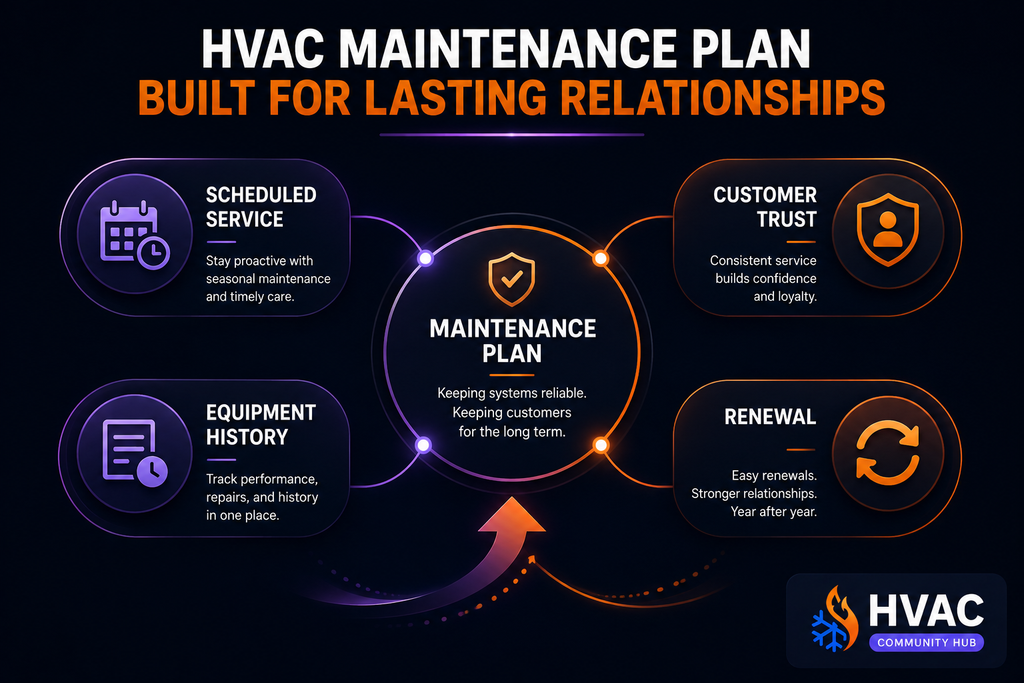
A maintenance plan can create recurring revenue, but that should not be the only reason to offer one.
The strongest programs create value for both sides.
Customers receive a more organized way to care for their HVAC equipment.
Your business gets more opportunities to maintain customer relationships.
Technicians become more familiar with customer equipment.
The office gains better visibility into upcoming service needs.
Over time, these benefits can create a stronger service relationship.
The key is to keep the plan simple, deliver what you promise, and make the customer feel that the agreement provides genuine value.
When customers understand the benefit, maintenance becomes more than another service purchase.
It becomes an ongoing relationship with your HVAC company.
Take the Next Step
If your HVAC company does not currently offer a maintenance plan, start by looking at the services your customers already request regularly.
Identify which maintenance tasks can become part of a simple recurring service program.
Then decide what additional benefits genuinely make the plan more useful.
Keep the offer easy to explain.
Train your office team and technicians so everyone understands what the plan includes.
Finally, create a process for scheduling visits, sending reminders, tracking service history, and handling renewals.
You do not need a complicated membership program to get started.
You need a useful offer, consistent service, and a clear process.
HVAC Hub provides resources for HVAC business owners who want to build stronger systems, improve customer relationships, and create more organized service operations.
Visit HVACHub.co to explore more resources for growing HVAC businesses.
You can also connect this article with your existing HVAC Customer Retention, HVAC Customer Complaints, and other customer-management resources.


Responses