
HVAC Job Review Happens After the Work Is Done

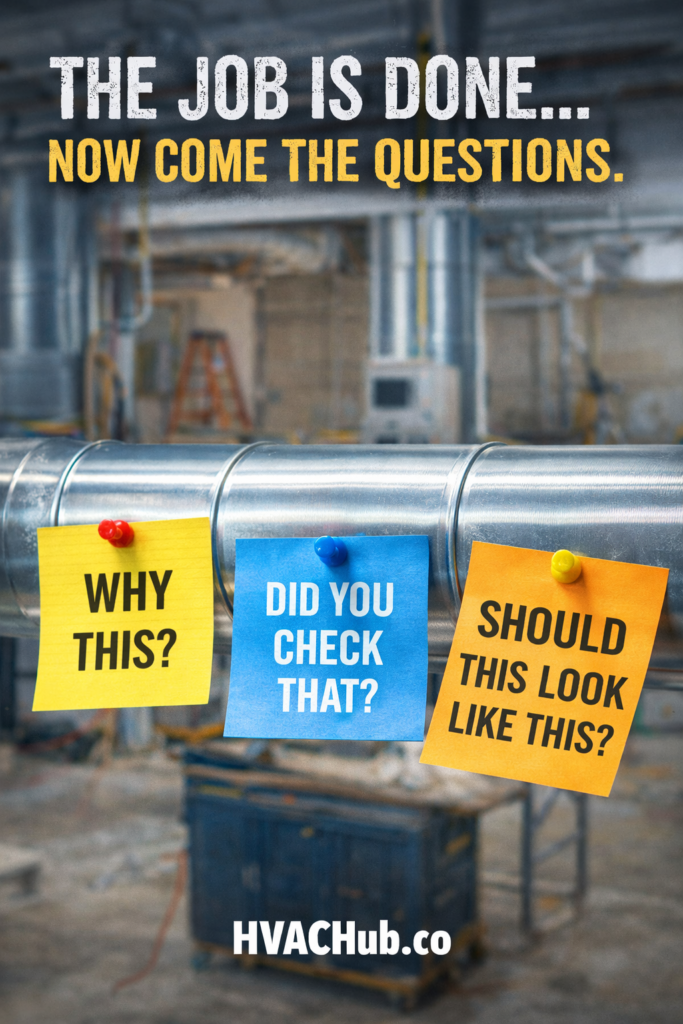
HVAC Job Review often begins only after the work is finished, and that timing creates most of the frustration. While the job is active, people walk through the site, look around quickly, and move on. Everyone stays busy, and no one slows the work down to question small details.
Once the system is handed over, the mood changes.
Questions start coming in.
Comments begin to surface.
Details that felt invisible earlier suddenly matter.
The work stays the same.
The site stays the same.
Only the moment has changed.
The Pain Behind a Late HVAC Job Review
This moment hits technicians the hardest.
During the work, no one stops to review each step. No one asks for changes. After completion, however, the same work faces close inspection. That shift feels unfair, even when no one means harm.
As a result, frustration builds quietly.
The effort stays the same, but the judgment increases.
Over time, repeated HVAC job review situations like this drain motivation. Techs begin to feel exposed instead of supported.
The Fear Owners Feel After Completion
Owners feel something different.
Late HVAC job review comments create fear. The job is already complete, yet questions reopen it. Costs feel uncertain. Time feels at risk. Trust suddenly feels fragile.
Because the work is finished, every concern feels heavier than it would have during the job. Instead of teamwork, the moment feels defensive. That fear grows quickly, even when the issue is small.
Why HVAC Job Review Timing Changes Perception
This pattern rarely comes from bad intent.
During active work, everyone stays in action mode. Noise, movement, and pressure keep attention forward. People assume answers will come later.
After the work stops, the brain shifts gears. Action ends, and review begins. Because of that shift, the same work receives more focus than before.
In simple terms, job review feels stricter because the job feels complete.
The Cost of Late Review Cycles
Late HVAC job review affects more than feelings.
It strains trust.
It creates tension.
It weakens confidence.
Technicians feel questioned.
Owners feel unprotected.
Teams lose momentum instead of gaining it.
Final Thought
Most HVAC job review issues are not about poor workmanship.
They come from timing, pressure, and delayed attention. Still, that delay carries weight.
In HVAC work, when something gets questioned often matters as much as what gets questioned. Understanding this does not remove frustration or fear, but it explains why the same pattern keeps repeating.
And in a HVAC community Hub built on real jobs and real pressure, naming that truth is the first step toward better conversations.

Responses