
If You Took a Week Off, Would Your HVAC Business Survive?

HVAC business survive is not a question most owners ask out loud. Not because they don’t care, but because the answer often feels uncomfortable. On the surface, everything looks fine. Jobs are booked. The team is working. Customers are calling.
Yet very few owners truly step away long enough to test what would actually happen.
Not for a day.
Not for a weekend.
A full week.
That hesitation alone usually says more than any report.
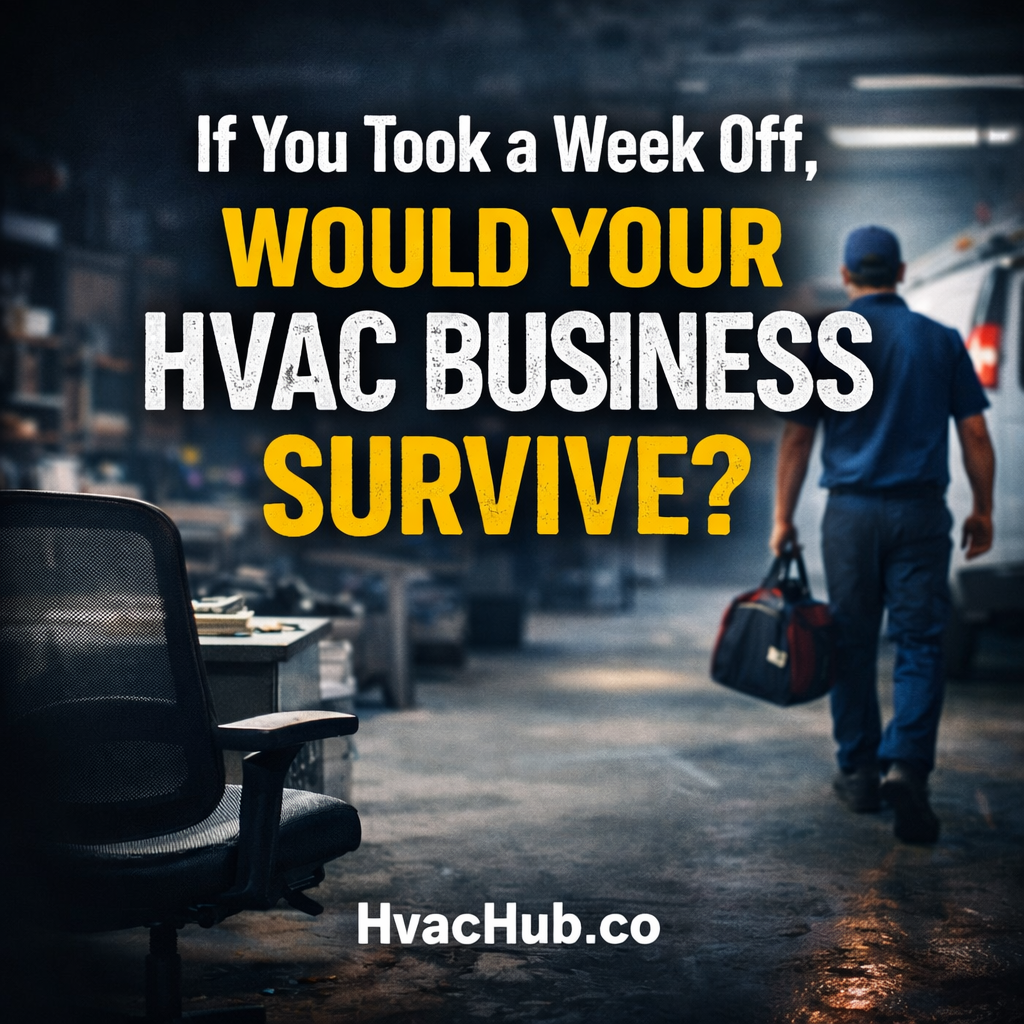
Why “HVAC Business Survive” Is a Real Test, Not a Thought Exercise
When owners imagine taking time off, they don’t picture rest. They picture problems. Missed calls. Wrong decisions. Jobs going sideways. Customers asking questions no one else can answer.
That fear isn’t random. It’s built through daily patterns.
Most HVAC businesses don’t struggle because of poor demand or bad workmanship. They struggle because the business relies heavily on the owner’s constant presence to function smoothly.
If the owner steps away, everything slows down.
What Happens When HVAC Business Survive Depends on One Person
In many businesses, the owner becomes the system without realizing it.
They approve estimates.
They resolve issues.
They make final calls.
They handle escalations.
Each action feels responsible. Each one helps in the moment. Over time, however, they create dependency.
The business doesn’t collapse, but it also doesn’t operate independently.
That’s the problem.
An HVAC business survive scenario shouldn’t depend on memory, availability, or constant supervision. When it does, growth feels heavier instead of easier.
The Hidden Signals Owners Often Ignore
Most owners don’t notice the warning signs because nothing is “broken.”
Phones are answered.
Jobs are completed.
Revenue looks steady.
However, certain patterns quietly reveal the truth:
- Decisions stall when the owner isn’t available
- Team members hesitate instead of acting
- Small issues escalate unnecessarily
- Progress pauses instead of continuing
These aren’t team failures. They’re structure gaps.
And they only become obvious when the owner isn’t there to fill them.
Can HVAC Business Survive Without Daily Owner Involvement?
This isn’t about disappearing or letting go completely. It’s about understanding how much of the business runs because of systems versus personal intervention.
If you took a week off:
- Would decisions still move forward?
- Would customers feel supported?
- Would the team know what to do next?
- Would problems resolve themselves-or wait?
If the answer depends on “checking in,” then the business still depends on you more than you think.
That doesn’t make you a bad owner. It makes you a necessary one.
But necessity shouldn’t be the long-term plan.
Why Owners Avoid Asking This Question
Many owners avoid this question because it challenges how they see responsibility. Being needed feels important. Being involved feels safe. Stepping back feels risky.
Yet, the goal of a strong business is not constant involvement. It’s consistency without constant oversight.
When HVAC business survive depends on one person, pressure builds silently. The owner carries the mental load even when things appear stable.
That weight doesn’t disappear with growth. It increases.
What Strong HVAC Businesses Do Differently
Businesses that operate smoothly without constant owner involvement don’t rely on heroic effort. They rely on clarity.
Clear processes.
Clear ownership of decisions.
Clear expectations.
When systems guide daily operations, the owner becomes a leader instead of a bottleneck. Problems still happen, but they don’t wait for permission to be solved.
That’s the difference between staying busy and becoming resilient.
Final Thought
The question isn’t whether you deserve time off.
The real question is whether your HVAC business survive without you for a short period of time.
If the answer feels uncertain, it’s not a failure. It’s information.
And information is the first step toward building a business that works-even when you’re not watching it every day.
Join HVAC Community Hub to connect with owners who are building businesses that don’t pause when they step away.
Responses