
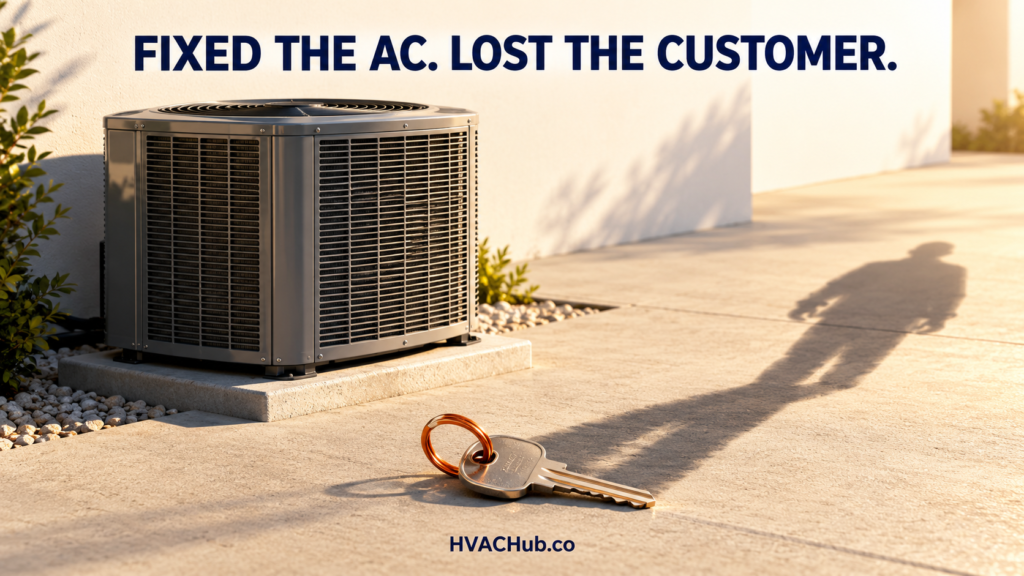
The HVAC Technician Fixed the Problem. So Why Did the Customer Call Another Company?

The technician arrived on time, found the fault, replaced the failed component, and restored cooling. The system ran properly when they left. The invoice was paid. No callback. No complaint. Six months later, the homeowner needed service again—and called a different HVAC company.
For an HVAC business owner, that can be more confusing than a bad review. How do you lose a customer after doing the technical work correctly? The answer is often that a successful HVAC repair and a successful customer experience are not the same thing.
Consider the story below a composite, illustrative scenario rather than a documented customer case. It is designed to examine the small moments that can influence which contractor a homeowner calls next.
The Repair Was Right. The Relationship Still Broke.
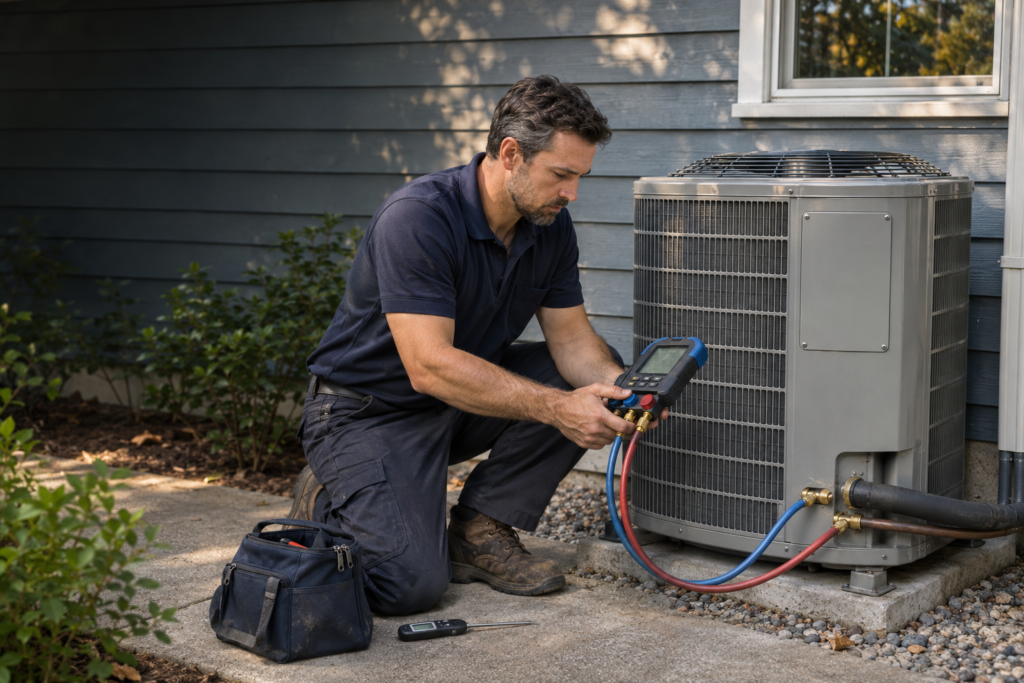
Picture an air conditioner that stops cooling during a hot week. The technician tests the system, identifies a failed electrical component, explains the price, completes the repair, and verifies operation. From a technical perspective, the job is a success.
But the homeowner remembers a different sequence: a narrow arrival window that became a long wait; a repair description full of unfamiliar terminology; a rushed conversation at the door; and a final invoice that did not clearly explain what changed. They may not feel mistreated. They may simply feel unsure.
When a neighbor later recommends another contractor, the homeowner has little reason to resist trying someone new. The original company never hears why.
The Repair Wasn’t the Problem
Customers cannot always evaluate the technical quality of HVAC work. Most cannot independently verify refrigerant diagnostics, electrical testing, airflow measurements, or whether a replacement part was necessary. They often judge the experience through signals they can observe: communication, respect, clarity, cleanliness, reliability, and how confident they feel afterward.
That does not mean presentation matters more than competent workmanship. It means good workmanship is essential but may be invisible to the person paying for it.
The arrival experience
Did the office give a realistic arrival window? Did anyone notify the customer about a delay? Did the technician introduce themselves and confirm the concern before starting? Small failures before the diagnostic work begins can shape how the entire visit feels.
The explanation
“Bad capacitor; replaced it” may be technically accurate but insufficient for a homeowner who wants to know why the equipment stopped and what the repair accomplishes. A clear explanation should distinguish observed findings from possibilities and avoid exaggerated certainty.
The price conversation
A customer can accept a price and still leave uneasy about it. The technician should explain the proposed work and cost before proceeding, obtain authorization, and identify any limitations. A paid invoice is not proof that the homeowner felt the charge was fair.
The exit
Did the technician show the system running, summarize the repair, mention any unresolved concerns, and explain what to do if the problem returns? A hurried goodbye can make an otherwise professional visit feel transactional.
The Job Ended. The Doubt Didn’t.

Some homeowners are reluctant to challenge a technician face to face. They may nod through an explanation they do not understand, then search online after the truck leaves. They may wonder whether the problem was really fixed, whether they were overcharged, or whether another failure is coming.
None of those doubts proves the contractor did anything wrong. But unanswered questions create room for a competitor’s clearer message to win the next call.
Five questions worth answering before leaving
- What did we find, and what evidence supports the diagnosis?
- What did we repair or replace, and what was the agreed price?
- What tests show the equipment is operating as expected now?
- Is there anything we did not repair, and what symptoms should the customer watch for?
- Who should the homeowner contact if the same issue returns?
A short, plain-language service summary can answer these questions without overwhelming the homeowner with technical details. It also creates a record the office can use if a future concern arises.
Why a Happy-Sounding Customer Might Never Return
Not every lost customer is dissatisfied. A homeowner might move, sell the property, use a home warranty provider, respond to a family referral, or choose a company with better availability. Sometimes the competitor is closer, cheaper, or simply top of mind.
That is why businesses should resist treating every non-returning customer as evidence of technician failure. The important question is not “Who messed up?” but “What do we actually know about why the customer chose differently?”
It also helps to separate two situations: customers who deliberately left after a negative experience and customers who had no strong reason to remember the company. The first calls for service recovery; the second may call for clearer identity, appropriate follow-up, and more consistent communication.
Who Gets the Next Call?
A customer often makes the next service decision long after the original repair. They may have saved the invoice but not the phone number, forgotten the technician’s name, or received no useful explanation of what the company does beyond that one job.
A helpful, low-pressure follow-up can reinforce trust: confirm the repair is holding, invite questions, and make it easy to reach the office. Avoid turning every service interaction into a barrage of promotional texts or review requests. Follow consent requirements and communication preferences.
If the homeowner reports a concern, treat it as information rather than an argument. A calm response and clear next step can matter more than a polished marketing message.
What HVAC Owners Can Measure Without Blaming Their Techs
Repeat-business numbers can be useful, but they are easy to misread. HVAC systems may not need another repair for years, and customers with maintenance plans behave differently from one-time emergency callers. Compare similar customer groups over a meaningful period instead of declaring a technician successful or unsuccessful from raw repeat-call counts.
- Review a sample of completed invoices for understandable repair summaries.
- Track complaints and unresolved questions separately from mechanical callbacks.
- Ask customers whether the explanation and authorization process were clear.
- Look at appointment-window communication and missed-update patterns.
- Examine how quickly the office handles post-service questions.
- Invite technicians to describe where the process makes good communication difficult.
Use findings to improve training, dispatch coordination, documentation, and customer expectations—not to create a simplistic leaderboard of who “loses” customers.
What Technicians Wish Owners Understood
The technician may be carrying a packed route, responding to urgent dispatch changes, and working in extreme temperatures. A company cannot demand a thoughtful customer experience while allowing no time for it.
Owners should give technicians practical scripts, straightforward estimate approval tools, and enough room to complete a useful handoff. Dispatchers should provide accurate job information, and managers should support technicians when a diagnosis requires additional time.
Likewise, technicians should be able to flag customers who seem confused or unhappy without fearing that every concern will become a disciplinary issue. Trust inside the company helps build trust outside it.
A Better Service Visit: Before, During, and After
Before the visit
Confirm the problem as the homeowner describes it, set a realistic arrival expectation, and notify them if the schedule changes. Share any diagnostic fee or other known charges clearly.
During the visit
Listen first, investigate systematically, explain findings in everyday language, present options accurately, and obtain approval before chargeable work. Do not overpromise the outcome.
Before leaving
Verify operation using appropriate procedures, summarize the work, explain limitations and relevant warranty details, and make sure the customer knows how to contact the company.
After the visit
Send a clear service record and, where appropriate and permitted, a brief check-in. Resolve concerns promptly and respect customers who do not want marketing communications.
Frequently Asked Questions
Why do HVAC customers switch companies after a successful repair?
Reasons can include communication, pricing expectations, availability, referrals, convenience, or a lack of a memorable relationship. Technical quality is important but is not the only factor in future service choices.
How can an HVAC technician build trust during a service call?
Explain the diagnosis and options clearly, ask for authorization, respect the property, document the work, verify the repair, and answer questions without pressuring the homeowner.
Should HVAC companies contact customers after every repair?
A relevant service follow-up can be helpful, especially after a significant repair, but it should be proportionate, respect customer preferences, and comply with applicable communications rules.
Does a customer not calling back mean the technician did something wrong?
No. The system may not need service again, the customer may have moved, or another provider may be more convenient. Look for evidence and patterns rather than assuming blame.
The Hardest Customer to Lose Is the One Who Never Complains
A callback gives the contractor a chance to investigate. A complaint gives the office a chance to respond. The customer who quietly chooses someone else offers neither. That makes the quality of everyday communication worth examining even when the equipment works perfectly.
Contractors and technicians: have you ever learned that a customer switched companies even though your repair was successful? What turned out to matter most? Share your experience with other professionals at HVAC Community Hub.



Responses