
Why Good HVAC Technicians Don’t Follow Systems

Good HVAC technicians are often blamed when systems are not followed, yet the real issue usually starts earlier. Most owners hire skilled technicians who care about quality and know their work. Still, processes get skipped, steps get adjusted, and systems slowly fall apart.
This gap creates confusion. Over time, it also creates frustration.
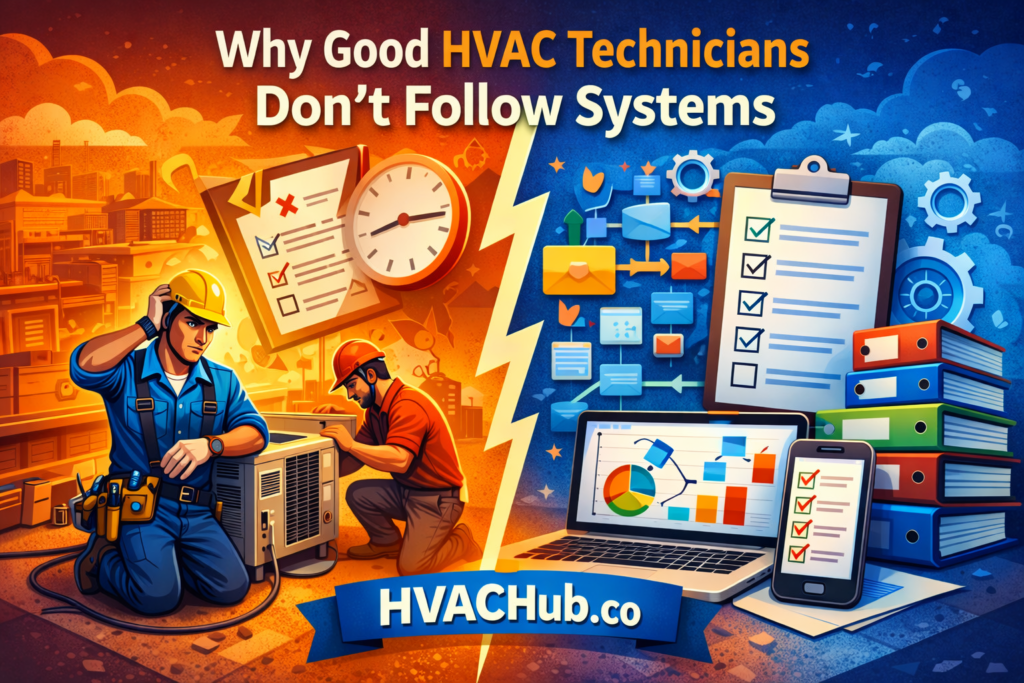
Why Good HVAC Technicians Push Back on Systems
Good HVAC technicians rarely ignore systems because they don’t care. Instead, they work under pressure that systems don’t always account for.
Jobs run late.
Customers wait.
Phones keep ringing.
When time feels tight, technicians choose what keeps the job moving. If a system feels slow, unclear, or disconnected from the work, they work around it without making a big deal out of it.
When Systems Don’t Match How HVAC Technicians Work
Another issue shows up in how systems are built.
Many systems live in folders, apps, or office conversations. However, HVAC technicians work in basements, on rooftops, and in crowded mechanical rooms. When systems don’t fit those conditions, they feel distant and impractical.
Over time, good HVAC technicians trust their experience more than written steps. That’s not rebellion — it’s survival in real job conditions.
The Pressure This Creates for Owners
For owners, this situation creates a quiet strain.
You see inconsistency but don’t always see the cause.
You feel responsible but unsure where to intervene.
You add controls, which builds resistance.
Or you relax standards, which creates chaos.
Neither option feels right, and the cycle continues.
What This Really Means for Good HVAC Technicians
When good technicians stop following systems, it usually points to a design problem, not a people problem.
Systems should:
- Reduce pressure, not add to it
- Fit real job conditions
- Make sense in the middle of work, not just in theory
Until systems match reality, even strong technicians will default to what works fastest in the moment.
Final Thought
Good technicians don’t avoid systems because they lack discipline. They avoid systems that don’t help them do the job.
When systems support real work instead of fighting it, consistency improves naturally. Blame disappears, trust grows, and frustration drops on both sides.
That understanding is where better HVAC businesses start.
You can join the HVAC Hub community to take part in honest conversations like this, learn how others are handling it, and think through problems without blame or pressure.

Responses