

Your HVAC Business Is Getting More Customers. So Why Is Running It Getting Harder?

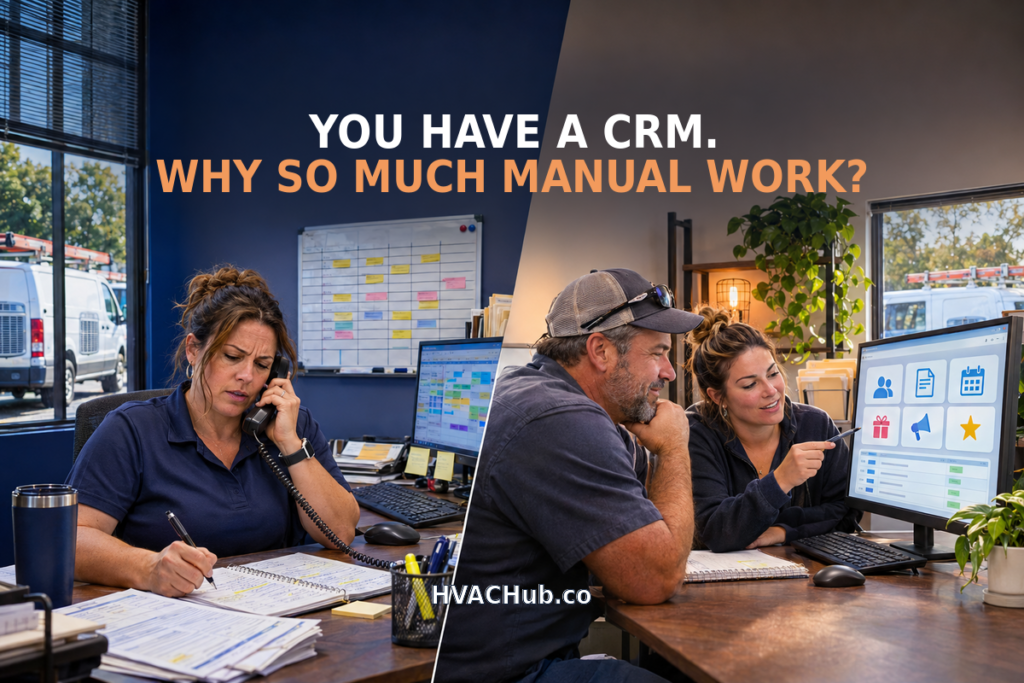
Your HVAC company is getting more calls. The calendar looks full, technicians are busy, and the owner is finally seeing the demand they worked so hard to build. Yet something feels wrong. The office is more stressed, invoices take longer, and customers keep asking for updates that nobody has time to send. More customers should be good news. So why does every new booking seem to create another problem? Growth changes the way an HVAC company operates. The habits that work for one truck and a part-time office assistant may not hold up when five technicians are serving dozens of homes each week. The answer is not always to hire another person or buy another subscription. First, identify where everyday work gets stuck. This guide explains the hidden costs of HVAC business growth, the six responsibilities that need clear ownership, and practical steps contractors can take to make a busy operation easier to manage.
A Full HVAC Schedule Can Hide an Overloaded Business
Picture a residential HVAC contractor at the start of a summer heat wave. Three service vans leave the shop before 8 a.m. The office answers calls about no-cooling systems, moves a maintenance appointment to make room for an urgent repair, and promises to update a homeowner when a technician is on the way. By lunchtime, two customers have called back about arrival times. One technician needs approval for a replacement part. Another finished a job but has not submitted complete notes. The owner is out checking an installation and cannot answer every question. The company has plenty of work. What it lacks is a reliable way to move information from one person to the next. When every decision depends on a phone call or someone remembering a detail, more customers can mean more confusion. Busy does not automatically mean profitable, organized, or ready for the next stage of growth.
Why Growing HVAC Companies Start Feeling Harder to Run
The owner becomes the answer to every question
In a small company, the owner often knows every customer, every technician, and every job. That personal knowledge can be a strength. It becomes a bottleneck when employees must ask the owner where to send a technician, whether an invoice is ready, or how to handle a return visit. Growth requires clear rules for routine decisions. The owner should still handle important exceptions, but everyday work needs an agreed process that other people can follow.
Office work grows faster than expected
Every booked call creates more than one calendar entry. Someone must confirm the appointment, provide the right customer details, track job progress, review charges, answer questions, and maintain accurate records. A single visit may also lead to a follow-up repair, warranty question, or future maintenance reminder. If each step requires a separate phone call, spreadsheet, or handwritten note, the office workload can rise quickly even when the number of technicians changes only slightly.
Small mistakes become expensive habits
A missing apartment number may waste a technician’s time. An outdated phone number can delay an arrival update. A forgotten invoice can slow collections. An incomplete service history may make a return visit harder than necessary. One mistake may seem minor. Repeated across hundreds of jobs, the same gaps can create real cost and customer frustration. The first goal is consistency, not perfection.

Six Parts of Your HVAC Business That Must Grow Together
A growing service company needs more than strong technical work. Customer records, invoices, appointments, loyalty programs, campaigns, and reviews all affect the customer experience. They do not have to live in one system, but the people responsible for them must understand how each step connects to the next.
1. Customers: Know who you are serving
When a repeat homeowner calls, the office should be able to find the right contact details, service address, and past job information. That is harder when customer records are scattered across personal phones, paper folders, and separate spreadsheets. Keep a clear process for adding new customers, updating details, and avoiding duplicate records. Store only information the company needs and protect access to customer data. Accurate records help the next employee pick up the conversation without asking the homeowner to explain everything again.
2. Invoices: Finish the financial side of the job
Technicians may complete excellent repairs while invoices sit unfinished in the office. Missing labor notes, unclear parts, or unapproved changes can delay billing and cause disputes. Decide who checks completed work, who approves the final amount, and when the customer receives an invoice. Make payment terms easy to understand. Faster invoicing matters, but accuracy and customer trust matter more.
3. Appointments: Keep the schedule believable
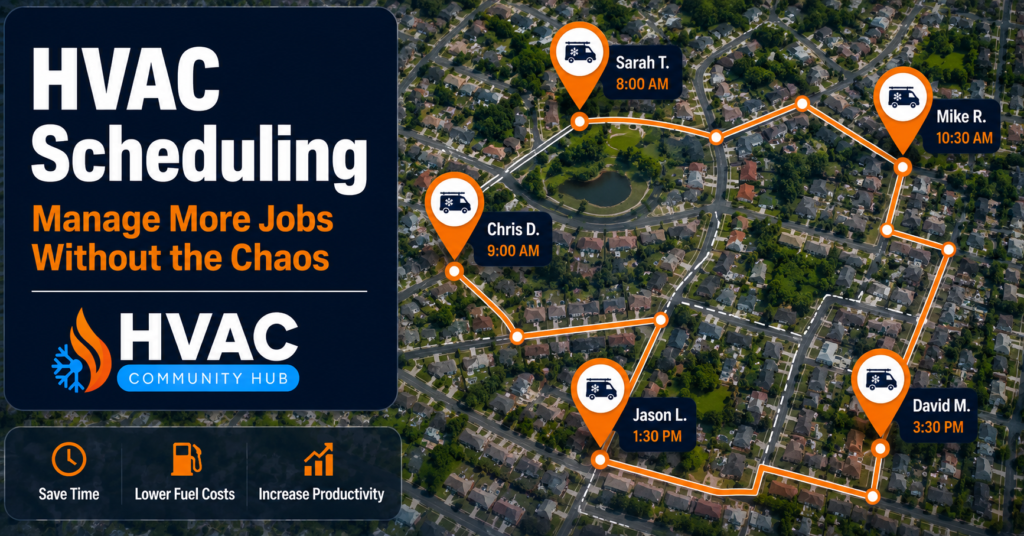
A calendar is useful only when it reflects what is happening in the field. Emergency calls, traffic, equipment delays, and jobs that take longer than expected can change the plan. Set rules for confirming appointments, updating technicians, and contacting customers when arrival windows change. Give dispatch a clear view of who owns each job. Avoid promising precise arrival times when the team cannot support them.
4. Loyalty rewards: Give returning customers a reason to remember you
Many HVAC businesses work hard to earn a first service call, then do little to maintain the relationship. A thoughtful loyalty program may help customers remember the company when they need service again. Keep the rules simple. Customers should know what they can earn, when they can use a reward, and which services qualify. Never imply that a reward guarantees a repair outcome or applies to work outside its stated terms.
5. Campaigns: Stay useful between service visits
Seasonal maintenance messages, service updates, and relevant offers can keep an HVAC business connected to past customers. But a campaign should solve a real communication need rather than fill an inbox. Use accurate service history when available. Respect customer preferences and applicable consent requirements. A short, well-timed reminder can be more helpful than repeated generic promotions.
6. Reviews: Learn what customers experienced
Reviews can help future customers understand what working with a contractor may be like. They can also reveal problems the owner does not see from the shop. Ask for honest feedback through a consistent, policy-compliant process. Do not pressure customers to leave only positive reviews or offer prohibited incentives. Pay attention to the complaints as well as the praise, and respond professionally when something needs attention.

What Happens When These Six Responsibilities Do Not Connect?
Consider a homeowner who books an AC repair. The office creates the appointment, but the technician cannot see the customer’s earlier service notes. After the repair, the technician leaves without recording the final work details. The invoice waits for someone to ask what happened. Two weeks later, the homeowner calls about the same issue, and the office must rebuild the story from memory. No single employee necessarily caused the whole problem. Each person completed part of the job, but the handoffs failed. Now imagine a simpler process. The booking links to the right customer record. The technician receives relevant history before arriving. After the visit, the team records the work and sends it for invoice review. The office knows whether further action is needed. When appropriate, the company can follow up with useful information. That is what better organization looks like. It does not require pretending every decision can be automated. It requires clear steps and dependable information.
Five Warning Signs Your HVAC Business Has Outgrown Its Processes
Your office asks technicians for the same updates repeatedly
If dispatch must call every technician to learn whether a job has started or finished, review how the team records job status. Keep the process simple enough that field employees will use it consistently.
Customers call because nobody updated them
An arrival delay is sometimes unavoidable. Silence makes it worse. Decide who contacts the customer when the schedule changes and how the team confirms that the message went out.
Invoices depend on one person’s memory
When billing stalls because only one employee knows which jobs are complete, define a handoff that another trained person can follow. Build in a review step for unusual charges and disputed work.
Past customers disappear after the first visit
A satisfied homeowner may not remember the contractor’s name next summer. Keep service records organized and consider appropriate maintenance communications or loyalty benefits that give the customer a useful reason to stay in touch.
The owner cannot take a day away
If every routine question requires the owner’s approval, the business may have a decision-making problem rather than a staffing problem. Document which decisions staff can make, which need approval, and what to do when the owner is unavailable.
Do You Need More Employees or Better Workflows?
Sometimes the answer really is more staff. A dispatcher cannot handle unlimited calls, and a technician cannot safely rush through complex work. But hiring should not be the first response to every administrative delay. Start by watching how work moves through the company. Are employees doing the same data entry twice? Do they search multiple places for customer information? Does the office have to ask whether a task is complete because no one updates its status? Remove needless steps before adding people to carry them out. Then evaluate staffing based on actual call volume, service quality, employee workload, and customer needs. A growing company should protect technicians from unsafe scheduling pressure and give office staff realistic time to handle exceptions.
How to Make Your HVAC Business Easier to Manage
Step 1: Follow a real customer journey
Choose three recent jobs: a routine maintenance visit, an urgent repair, and a return visit. Track what happened from the first call through the final invoice and follow-up. Note each time someone had to request information that another person already knew.
Step 2: Assign ownership for every handoff
Write down who confirms appointments, updates job status, reviews invoices, handles complaints, and sends appropriate follow-up messages. If two people both think the other person owns a task, the task may not happen.
Step 3: Make the process easy to follow
A process with twelve screens and several duplicate forms will not last long during peak season. Use plain language, consistent status names, and short checklists where they help. Ask the people doing the work to test the process before making it company policy.
Step 4: Choose tools around the work
Review what your current business tools can already do. Ask whether customer details, appointments, invoices, and communication records are easy to locate and update. Avoid buying features that the team will never use. If you evaluate another platform, ask for a demonstration using a realistic HVAC service call. Confirm the limits, support arrangements, costs, and any steps that still require human attention.
Step 5: Measure one improvement at a time
Choose a practical measure such as time from job completion to invoice review, missed appointment updates, or the number of calls needed to confirm job status. Compare results over several weeks while accounting for changes in workload. The goal is not a perfect dashboard. It is fewer avoidable delays and a better experience for employees and customers.
A Simple 30-Day Growth Check for HVAC Owners
During the first week, ask your office team to list the five tasks that interrupt them most often. Do not assume the owner already knows the answer. Look for repeat work, missing information, and unclear responsibility. In week two, choose one workflow to improve. Appointment updates or completed-job handoffs are good candidates when they cause frequent problems. Set a clear owner and define the exceptions. In week three, test the change on a small group of jobs. Watch how technicians and office staff actually use it. Fix confusing steps instead of blaming employees for workarounds. In week four, review the results. Did customers get clearer updates? Did staff spend less time chasing information? Were invoices easier to review? Keep the change only if it helps in practice. Repeat the process as the business grows. Small, steady improvements often work better than changing every system at once.
A Community Opportunity for Growing HVAC Businesses
HVAC Community Hub shares practical ideas to help contractors discuss the challenges of running an HVAC company. For owners exploring ways to organize everyday business tasks, there is also an affiliated software option worth evaluating. HVACB Business Suite brings together six areas of business management: Customers, Invoices, Appointments, Loyalty Rewards, Campaigns, and Reviews. HVACB.com offers the platform and is affiliated with HVAC Community Hub. This mention is a disclosed community offer, not an independent third-party recommendation. Whether those tools fit your company depends on how your team works, the features you need, and the terms of the offer. Ask questions, review the details, and test the tasks that matter most to your business.

Interested in exploring the current Black Friday free-access opportunity? Use the official HVACB Black Friday claim form to request a promotional slot, subject to the stated terms and availability. You can also visit HVAC Community Hub for contractor conversations and industry resources. The form explains the applicable offer; do not assume a slot is confirmed until the provider confirms it.
Frequently Asked Questions
Why does an HVAC business get harder to manage as it grows?
More jobs create more scheduling changes, customer records, invoices, field updates, and follow-up tasks. Without clear handoffs, the office may spend more time coordinating work than expected.
What should a small HVAC company organize first?
Start with the process that causes the most repeated work or customer confusion. Appointment updates, job completion notes, and invoice handoffs are common places to look.
Will software solve all HVAC business growth problems?
No. Tools can help organize information, but companies still need trained people, clear responsibilities, sound pricing, safe technical work, and good customer communication.
How can HVAC companies encourage repeat customers?
Provide dependable service, keep accurate history, communicate when useful, and offer clear, appropriate maintenance or loyalty options. Avoid sending irrelevant promotions or making promises you cannot support.
How do I know whether a new business tool is worth trying?
Test it against real tasks. Check how easy it is for the office and field teams to use, what support is available, what the total costs are, and whether it reduces avoidable work.
Growth Should Give You More Opportunity, Not Just More Chaos
More customers are a sign that people are choosing your HVAC business. The challenge is building a company that can serve them well without relying on the owner to solve every small problem. Start with clear customer records, reliable appointments, accurate invoices, thoughtful follow-ups, and honest feedback. Improve the handoffs one at a time. A well-run HVAC business does not need to look complicated. It needs to work when the next call comes in. What became harder to manage when your HVAC company grew? Share your experience with other contractors at HVACHub.co.

Responses