
HVAC Data Clarity: Why Numbers Still Confuse Owners

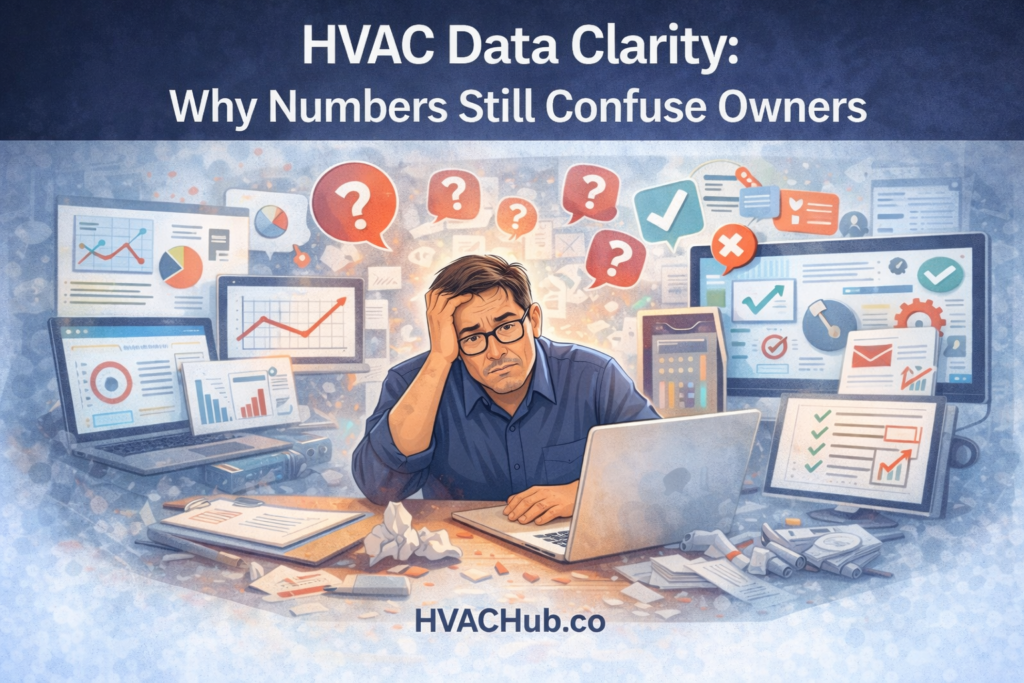
Many HVAC owners track numbers every day. Revenue, calls, jobs completed, technician hours, marketing spend – the data exists. Yet despite all this information, many owners still feel unsure about decisions. This gap is not about missing data. It’s about missing HVAC data clarity.
Data alone doesn’t create confidence. Clarity comes from understanding what the numbers actually mean, how they connect, and what actions they should trigger. Without that clarity, numbers become noise instead of guidance.
Below are the real reasons HVAC owners have data but still feel uncertain – and what’s missing behind the scenes.
1. Data Clarity Fails When Numbers Are Viewed in Isolation
Most HVAC businesses track numbers separately instead of as a system.
Examples include:
- Revenue without job-level profit
- Lead volume without conversion rate
- Technician hours without productivity context
- Marketing spend without return analysis
When numbers aren’t connected, they don’t tell a complete story. Owners see activity but can’t interpret performance.
2. Data Clarity Is Lost Without Clear Benchmarks
Numbers mean very little without comparison.
Many HVAC owners ask:
- Is this profit margin healthy?
- Are callbacks too high?
- Is our cost per lead acceptable?
- Is technician efficiency improving or declining?
Without benchmarks, every decision feels like a guess. Clarity comes from knowing what “good” actually looks like.
3. Data Clarity Breaks Down When Data Isn’t Actionable
Tracking data is only useful if it leads to action.
Common issues include:
- Reports reviewed but never discussed
- Dashboards checked but not acted upon
- Trends noticed but ignored
- Problems identified but not owned
Data without ownership creates awareness, not improvement. Clarity requires decisions tied directly to numbers.
4. Data Clarity Suffers From Too Much Information
More data does not equal better clarity.
Many HVAC businesses track:
- Too many metrics
- Too many reports
- Too many dashboards
This creates confusion instead of insight.
Clarity comes from focusing on the right numbers, not all numbers.
5. HVAC Data Clarity Requires Context, Not Just Accuracy
Accurate data still fails without context.
For example:
- Lower revenue may be acceptable if margins improve
- Higher labor cost may be justified during training phases
- Slower job times may reflect more complex service work
Without context, numbers appear negative when they may actually support long-term growth.
6. Data Clarity Depends on Team Alignment
Data clarity isn’t just for owners.
When teams don’t understand:
- Why numbers matter
- How their role affects results
- What success looks like
…data becomes disconnected from daily execution.
Clear communication turns numbers into shared goals instead of management tools.
7. HVAC Data Clarity Is a System, Not a Report
True clarity comes from structured systems that:
- Track the right metrics
- Present data clearly
- Assign responsibility
- Review performance regularly
- Link numbers to decisions
This transforms data from information into leadership guidance.
Final Thoughts
Most HVAC owners don’t lack data – they lack HVAC data clarity. Numbers alone don’t create confidence. Understanding, context, and action do. When data is organized, focused, and connected to decisions, owners gain control, direction, and confidence in how they lead their business.
If you want to turn data into clarity, decisions, and smarter growth…
👉 Join the HVAC Community Hub
Learn how modern HVAC businesses turn numbers into clear direction and confident leadership.

Responses