
HVAC Indoor Air Quality: What Every Homeowner Should Know

Indoor air quality affects nearly every home, yet most homeowners only think about it after allergies, dust, or a musty smell become impossible to ignore. The air inside a typical home can be two to five times more polluted than the air outside, according to the EPA. Dust, pet dander, mold spores, and even cooking fumes build up in a sealed, well-insulated house. This guide explains what affects indoor air quality, the warning signs of a problem, and the most effective ways to fix it.
Why Indoor Air Quality Matters More Than Most People Realize
Modern homes are built tighter than ever. Better insulation keeps energy bills lower, but it also traps pollutants inside. Without enough fresh air exchange, dust, allergens, and humidity have nowhere to go.
Poor indoor air quality doesn’t just cause occasional sneezing. It can trigger asthma attacks, disrupt sleep, and worsen allergy symptoms year-round. Furthermore, some pollutants — like mold spores and volatile organic compounds (VOCs) from paint or cleaning products — build up slowly and go unnoticed until symptoms become chronic.
Children, older adults, and anyone with a respiratory condition are especially sensitive to these changes. Even a modest improvement in air quality often leads to noticeably better sleep and fewer allergy flare-ups within a few weeks.
Common Causes of Poor Indoor Air Quality
Several everyday factors quietly lower the air quality inside a home. Understanding the source is the first step to fixing the problem.
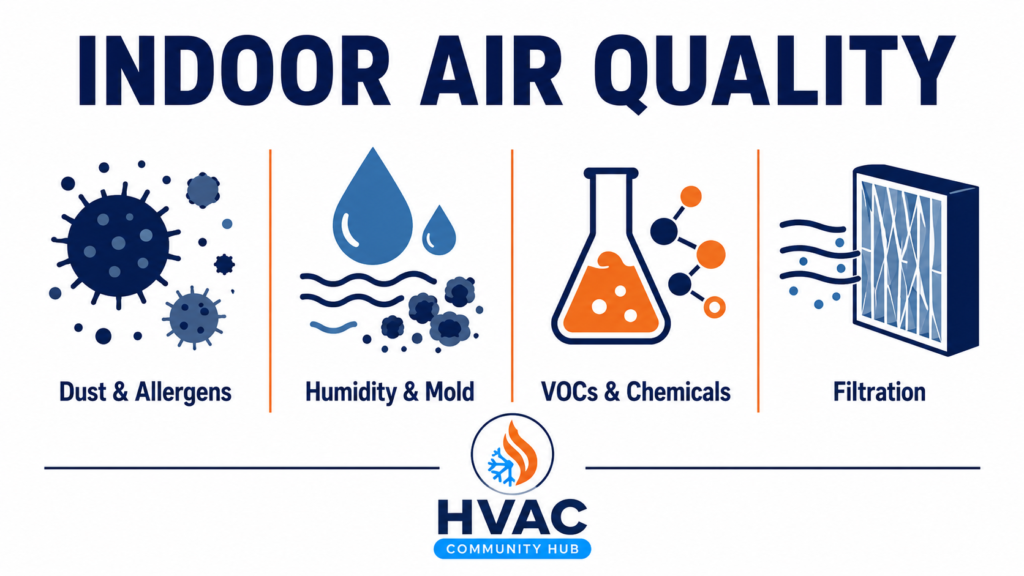
Dust, Pet Dander, and Allergens
Dust accumulates constantly, even in clean homes. Pet dander adds another layer, especially in homes with cats or dogs. Both circulate through the HVAC system and settle in carpets, vents, and bedding. Over time, this buildup becomes a steady source of irritation for allergy-prone household members.
Excess Humidity and Mold
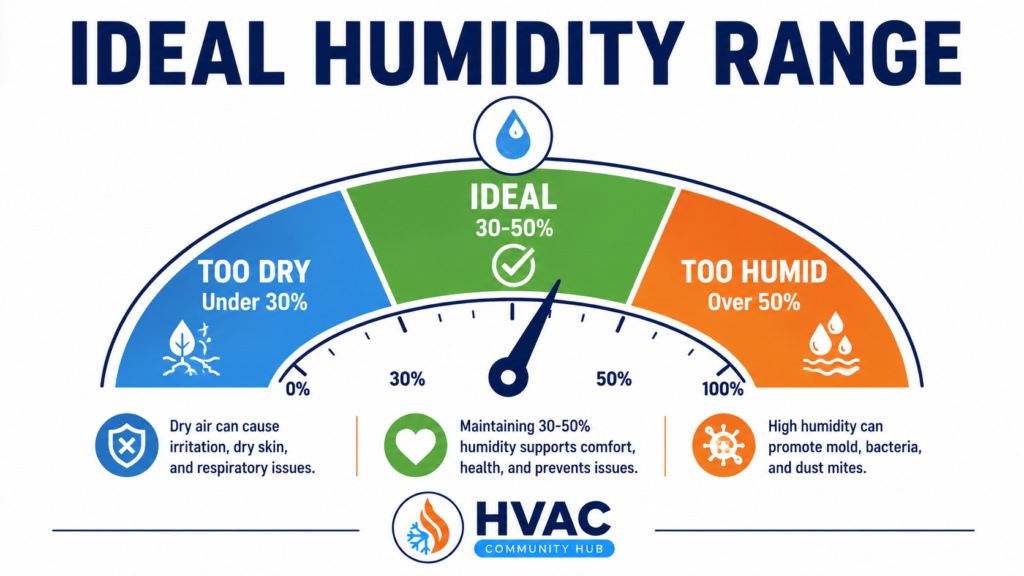
Humidity above 50% creates ideal conditions for mold and dust mites. Bathrooms, basements, and poorly ventilated kitchens are common trouble spots. Mold spores spread through the air and can trigger respiratory issues long before visible mold appears on a wall or ceiling.
VOCs and Household Chemicals
Paint, furniture, cleaning sprays, and even some flooring materials release VOCs into the air. These chemicals build up especially fast in newly renovated or newly furnished rooms with limited airflow. Good ventilation is essential during and after any renovation project.
A Dirty or Outdated HVAC Filter
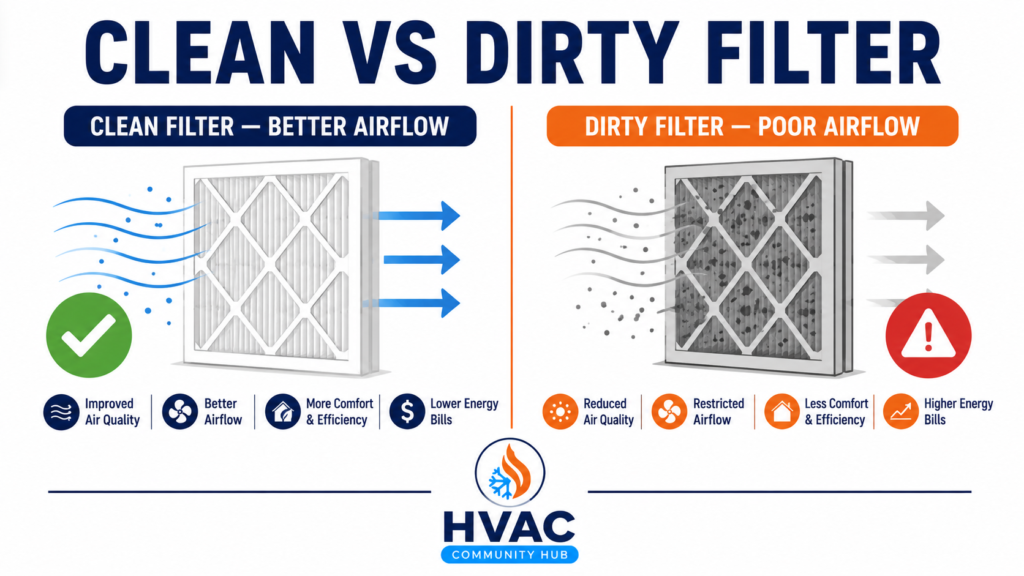
The HVAC filter is the first line of defense against airborne particles. A clogged or low-quality filter lets dust and allergens recirculate through the home instead of trapping them. This is often the simplest and most overlooked fix.
Warning Signs Your Indoor Air Quality Needs Attention
A few signs point to a real air quality problem, not just normal household dust.
- Persistent dust on surfaces shortly after cleaning
- Family members waking up congested or sneezing
- A musty smell, especially in basements or bathrooms
- Visible condensation on windows during colder months
- Worsening allergy or asthma symptoms while at home
If two or more of these sound familiar, it’s worth having a technician test the air rather than assuming it’s unavoidable.
Proven Ways to Improve Indoor Air Quality
The good news: most indoor air quality problems have a clear, fixable cause. Here are the most effective solutions, from simple to advanced.
1. Upgrade Your HVAC Filter
A higher MERV-rated filter captures smaller particles, including dust, pollen, and some bacteria. However, going too high without checking your system’s compatibility can restrict airflow and strain the equipment. A technician can recommend the right MERV rating for your specific system.
2. Add a Whole-Home Air Purifier
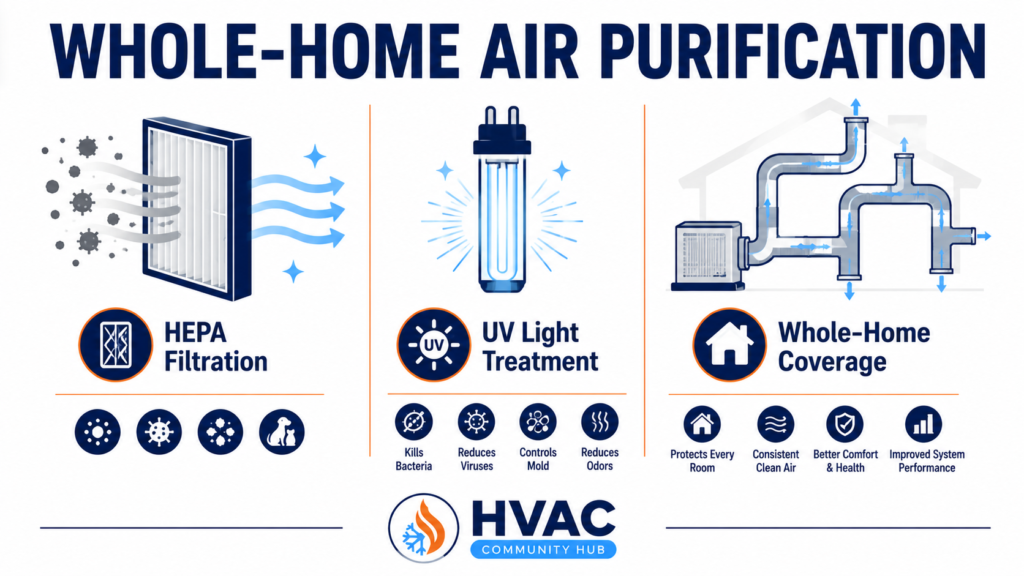
Unlike portable purifiers that clean one room, a whole-home air purifier installs directly into the HVAC system. It treats every cubic foot of circulated air, including HEPA-level filtration or UV light systems that neutralize mold spores and bacteria.
3. Control Humidity With a Dehumidifier
Keeping indoor humidity between 30% and 50% prevents mold growth and dust mites from thriving. A whole-home dehumidifier integrates with the HVAC system and runs automatically, which is more reliable than portable units that need constant emptying.
4. Improve Ventilation
Many homes don’t bring in enough fresh outdoor air. An energy recovery ventilator (ERV) or heat recovery ventilator (HRV) exchanges stale indoor air for fresh outdoor air without wasting heating or cooling energy.
5. Schedule Regular HVAC Maintenance
A neglected HVAC system spreads dust and allergens instead of filtering them out. Routine maintenance — filter changes, coil cleaning, and duct inspection — keeps the system working as an air quality solution rather than a contributor to the problem. You can read more about what a proper service visit should include in our HVAC maintenance checklist.
Simple DIY Checks You Can Do This Week
Not every fix requires a technician. A few simple checks help homeowners catch problems early, before they affect comfort or health.
- Hold a tissue near a return air vent — heavy dust buildup on it within seconds signals a filter overdue for replacement
2.Check basement and bathroom corners for a musty smell or visible dark spots, both early signs of mold
3. Use an inexpensive digital hygrometer to check whether indoor humidity sits above 50%
4. Inspect window sills for condensation on cold mornings, a sign that humidity is too high for the season
These checks take only a few minutes but often reveal a problem long before it becomes serious or expensive to fix.
How Much Does Improving Indoor Air Quality Cost?
Costs vary widely depending on the solution. A basic filter upgrade costs very little and can be done immediately. A whole-home air purifier or UV light system typically adds a moderate one-time installation cost. A whole-home dehumidifier or ventilation system sits at the higher end, but often pays off through better comfort and fewer health-related costs over time.
Homeowners dealing with severe allergies, mold-prone climates, or respiratory conditions in the family often find the investment worthwhile fairly quickly, even if the upfront cost feels significant. Many HVAC companies also offer financing options that spread the cost across manageable monthly payments.
Indoor Air Quality for Pet Owners
Homes with pets face an extra layer of air quality challenges. Pet dander, hair, and odors circulate constantly, even with regular grooming and cleaning. A higher-MERV filter combined with more frequent filter changes helps significantly. Some homeowners also add a dedicated air purifier in rooms where pets spend the most time, such as a living room or bedroom.
Seasonal Indoor Air Quality Tips
Air quality challenges shift with the seasons. In spring and summer, pollen entering through doors and windows raises allergen levels indoors. In fall and winter, closed windows and constant heating trap dust and dry out the air, which can irritate sinuses and skin. Adjusting filter changes and humidity targets seasonally — rather than using one fixed setting all year — keeps air quality consistent regardless of the time of year.
Frequently Asked Questions About Indoor Air Quality
How often should I change my HVAC filter for better indoor air quality?
Most standard filters should be changed every 60 to 90 days, though homes with pets or allergy sufferers often benefit from changing them every 30 to 45 days.
Can houseplants improve indoor air quality?
Houseplants offer a small benefit but are not a substitute for proper filtration and ventilation. They work best as a complement to, not a replacement for, mechanical air quality solutions.
Is indoor air quality worse in new homes or old homes?
New homes are often more airtight, which traps pollutants more easily. Older homes can have more natural air leakage but may also carry more dust, mold, or outdated materials. Both benefit from active air quality management.
When to Call a Professional
Simple steps like changing a filter or running a portable purifier are fine as immediate measures. However, persistent musty smells, visible mold, or ongoing health symptoms call for a professional inspection. A trained technician can test airflow, humidity levels, and air quality directly, rather than guessing at the cause.
The EPA’s Indoor Air Quality guidance (epa.gov/indoor-air-quality-iaq) offers a useful overview of pollutant sources and ventilation standards for homeowners who want to understand the science behind these recommendations in more depth.
Improve Your Indoor Air Quality With Confidence
Indoor air quality is one of the most overlooked parts of home comfort — yet it has a direct impact on health, sleep, and day-to-day wellbeing. Identifying the cause, whether it’s dust, humidity, or poor filtration, makes the fix far more effective than guessing. A combination of the right filter, proper humidity control, and regular HVAC maintenance solves the vast majority of indoor air quality problems homeowners face.
Take the Next Step
First, identify which symptom matches your home — dust, musty smell, or allergy flare-ups. Second, start with the simplest fix, usually a filter upgrade, before investing in bigger equipment. Third, bring in a professional if symptoms persist after the basic fixes.
If you are an HVAC business owner looking to guide your customers through this decision with confidence, HVAC Hub offers training, pricing tools, and a community of contractors sharing what works every day.
Visit hvachub.co to join free and build the systems your business needs to sell and explain indoor air quality solutions with confidence in 2026. You can also read our HVAC maintenance checklist to see how routine service connects directly to better air quality.




Responses