HVAC Training: How to Build a Skilled and Reliable Team

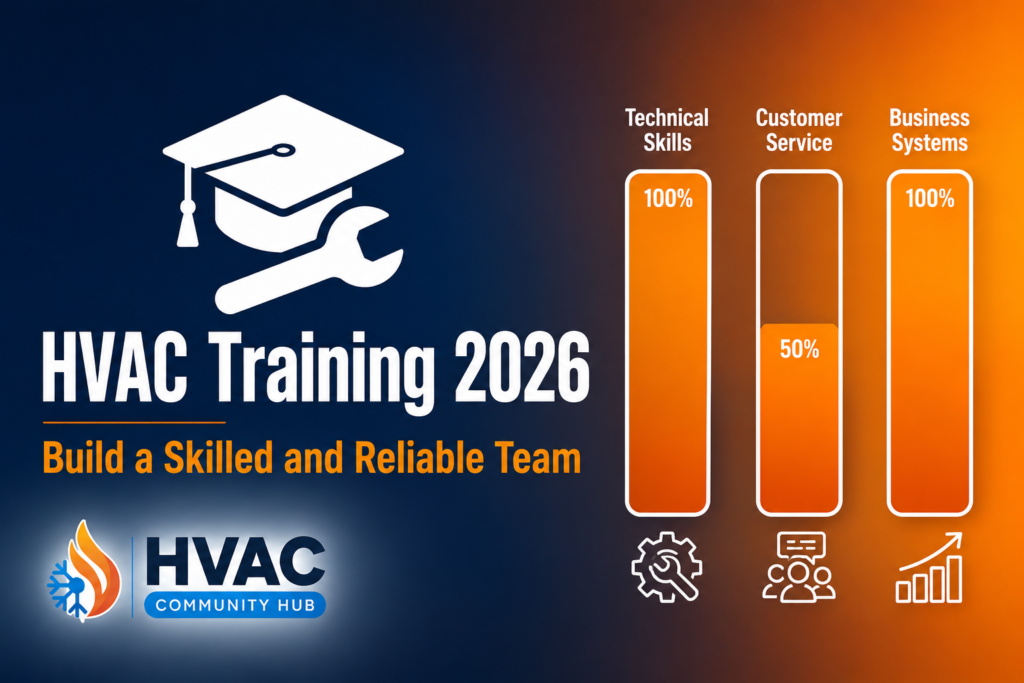
Investing in HVAC training is one of the most powerful things an HVAC business owner can do to grow their company in 2026. The skilled trades are facing a massive talent gap — some estimates suggest a need for 546,000 new trade professionals in a single year to meet demand. Furthermore, companies that use immersive training tools get new technicians job-ready 4.3 months faster than those using traditional methods alone. The result is clear — businesses that train consistently produce better technicians, win more jobs, and keep their best people for longer. This guide covers exactly how to build an HVAC training programme that improves your team’s skills, boosts your first-time fix rate, and makes your business the kind of place great technicians want to stay and grow.
Why HVAC Training Is the Highest-Return Investment Your Business Can Make
Most HVAC business owners focus on marketing and equipment when they think about growing their business. However, investing in HVAC training consistently produces a higher return than almost any other business investment. A well-trained technician completes more jobs per day, fixes problems right the first time, upsells appropriately, and leaves customers feeling confident enough to refer friends and book again next year.
Furthermore, the connection between training and retention is direct. Technicians who receive regular training feel valued and see a future with your business. Those who receive no training feel stagnant and start looking elsewhere. In a market where finding skilled technicians is already hard and getting harder, keeping the ones you have through a strong training culture is not just a nice gesture — it is a business survival strategy.
The Real Cost of Undertrained Technicians
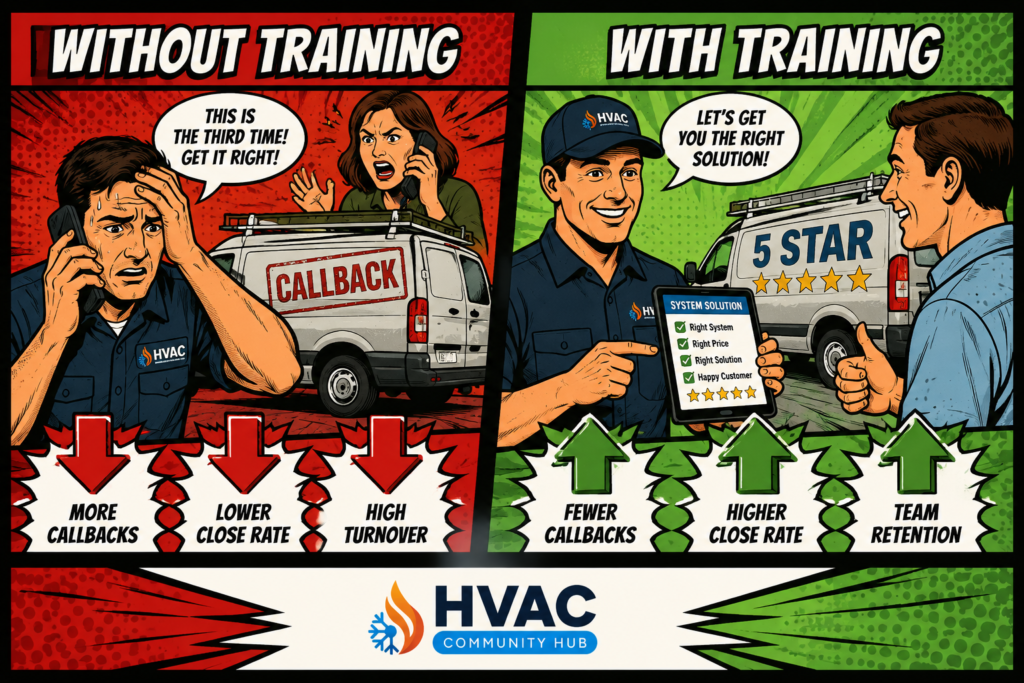
Undertrained technicians create expensive problems. They take longer to complete jobs, which reduces your daily revenue per van. They make more mistakes, which generates callbacks and warranty claims. They give customers less confidence, which reduces upsell acceptance and referral rates. And they struggle to adapt when systems or tools change, which slows down your whole operation.
Many HVAC owners are surprised when they calculate the true cost of a poor first-time fix rate. Every callback costs an average of $150 to $300 in labour, fuel, and lost opportunity — before accounting for any damage to your reputation. A training programme that improves your first-time fix rate by just 10% can recover thousands of dollars per month in recovered labour and saved callbacks.
What a Strong Training Culture Does for Your Business
Businesses with a strong training culture attract better candidates, retain technicians longer, and deliver more consistent service. When word gets out in the local trades community that your business invests in its people, the best technicians come to you — rather than you having to chase them.
Furthermore, a training culture signals professionalism to customers. When a technician can clearly explain what they are doing, why they are doing it, and what the customer should expect — that level of communication builds trust that no marketing campaign can replicate. You can learn more about building a team that customers love in our customer service guide — HVAC CUSTOMER SERVICE
The 5 Types of HVAC Training Every Business Should Provide
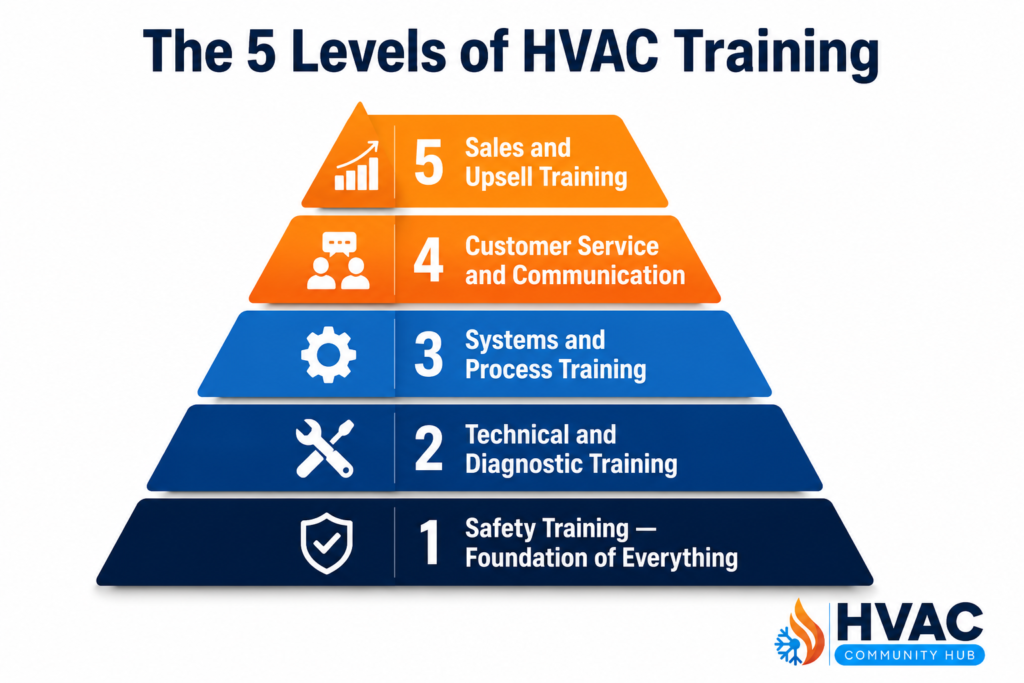
Effective HVAC training is not just about technical skills. The most successful HVAC businesses train their teams across five distinct areas — and each one contributes directly to business performance.
1. Technical and Diagnostic Training
Technical training is the foundation of everything else. Your technicians need to diagnose problems accurately, install systems correctly, and troubleshoot faults efficiently. The good news is that technical training has never been more accessible in 2026.
Online simulation platforms offer hundreds of hours of HVAC training covering everything from basic theory to advanced diagnostics. Companies using these tools get new technicians job-ready 4.3 months faster than traditional methods. Furthermore, simulation-based training allows technicians to practise complex tasks repeatedly without real-world risk — building confidence and muscle memory in a safe environment.
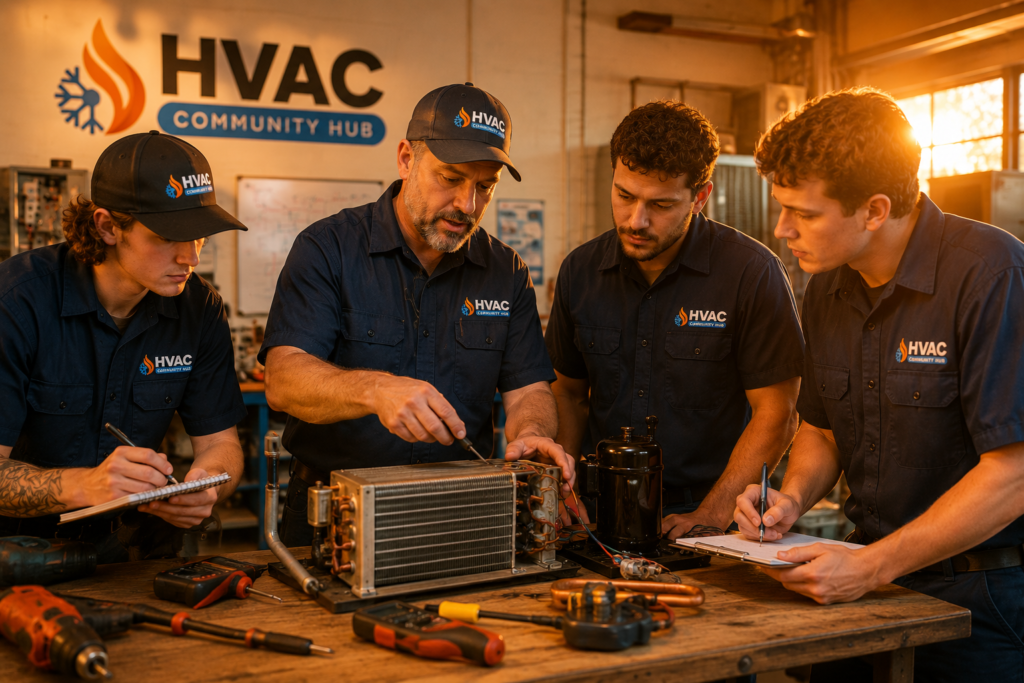
Regular in-house training sessions — where your senior technicians share knowledge with newer team members — are equally valuable and cost nothing but time. Schedule one hour every two weeks and document what is covered. Over a year, this builds a significant knowledge base across your whole team.
2. Customer Service and Communication Training
Technical excellence means nothing if a technician cannot communicate clearly with a customer. In fact, research consistently shows that most customer complaints in HVAC are about communication — not the quality of the work itself. Customers who feel well-informed and respected become loyal, referring customers. Those who feel talked down to or ignored do not come back.
Train your technicians on how to greet customers professionally, how to explain work in simple language, how to handle questions without becoming defensive, and how to ask for reviews naturally at the end of every job. Role-play these scenarios regularly — it feels awkward at first but produces results quickly. You can read more about building a customer-focused team in our full guide — HVAC CUSTOMER SERVICE
3. Sales and Upsell Training
Every maintenance or repair visit is an opportunity to recommend additional products or services that genuinely benefit the customer. However, most technicians feel uncomfortable with sales and avoid bringing up recommendations even when they are clearly in the customer’s best interest.
Sales training for HVAC technicians is not about pressure tactics. It is about helping technicians feel confident making honest recommendations based on what they observe. For example, if a technician notices a capacitor showing signs of wear during a routine maintenance visit, they should feel comfortable saying — “I noticed your capacitor is starting to show wear. It is not urgent yet, but replacing it now costs around $80. If it fails in summer, it typically costs $250 as an emergency call-out. Would you like me to replace it while I am here?”
That is not selling. That is professional advice. Training your technicians to make these observations and recommendations confidently can add $50 to $200 to the average job value — without any additional marketing spend.
4. Systems and Process Training
Your business runs on systems. Scheduling, invoicing, quoting, job reporting — all of these require your team to follow specific processes consistently. However, many HVAC businesses introduce new systems and then wonder why adoption is low. The reason is almost always that the training was insufficient.
When you introduce any new system or process, provide hands-on training rather than just sending a written guide. Walk through the process together, answer questions in real time, and check in after two weeks to address anything that is not working. Well-trained teams adopt new systems faster and use them more consistently — which means better data, better compliance, and fewer errors across the board.
5. Safety Training — Non-Negotiable and Ongoing
HVAC work involves real physical risk every day. Electrical hazards, falls from height, refrigerant exposure, and burns from brazing equipment are all genuine dangers that affect HVAC technicians regularly. Ongoing safety training is not just a legal requirement in most markets — it is a moral responsibility to every person on your team.
Schedule formal safety training at least twice per year. Cover electrical safety, working at height, refrigerant handling, and emergency procedures. Document every training session. Furthermore, reinforce safety standards daily through toolbox talks — short five-minute briefings at the start of each day covering one specific safety topic. These small daily habits build a safety culture that protects your team and reduces your insurance costs over time
How to Build an HVAC Training Programme From Scratch
You do not need a large budget or a dedicated training department to build an effective HVAC training programme. Here is a simple and practical approach that any HVAC business can implement immediately.
Step 1 — Identify Your Training Gaps
Start by identifying where your team is currently weakest. Look at your callback rate — if it is above 5%, technical training is your priority. Look at your review scores — if customers mention communication issues, customer service training is your priority. Look at your average job value — if upsells are rare, sales training is your priority.
Choose the one area with the highest impact and start there. Trying to train on everything at once produces poor results. A focused, consistent approach on one area at a time builds momentum and produces measurable improvements.
Step 2 — Choose Your Training Formats
Different skills require different training formats. Technical skills develop best through simulation, hands-on practice, and mentoring from senior technicians. Customer service skills develop best through role-play and real-world feedback. Sales skills develop best through scripted practice and reviewing real job outcomes.
Online training platforms like Interplay Learning offer structured HVAC technical training that technicians can complete on their phones between jobs. In-house role-play sessions work well for communication and sales training. Weekly toolbox talks build safety knowledge over time without requiring dedicated training days.
Step 3 — Make Training a Regular Habit — Not an Event
The biggest mistake HVAC businesses make with training is treating it as a one-time event. They send everyone to a one-day course once a year and then wonder why behaviour does not change. Consistent small doses of training produce far better results than occasional large blocks.
Commit to one in-house training session every two weeks. Each session should cover one specific topic for 45 to 60 minutes. Rotate through technical, communication, sales, and safety topics across the year. Document every session, record attendance, and note any outcomes or changes you observe in the following weeks.
Step 4 — Use HVAC Hub Courses to Train Your Team
HVAC Hub offers a full library of courses specifically designed for HVAC business owners and their teams — covering CRM, email pipelines, pricing, reputation management, client onboarding, and more. These courses give your team the business knowledge they need to operate at a higher level — not just the technical knowledge.
Furthermore, HVAC Hub’s community connects you with hundreds of other HVAC business owners who are actively training and developing their teams. Sharing what works, what does not, and how to overcome common training challenges is one of the most valuable resources any HVAC owner can access. Visit hvachub.co to explore our full course library and community.
How to Measure Whether Your HVAC Training Is Working
Training without measurement is guessing. Here is how to track whether your training programme is actually producing results.
Track Your First-Time Fix Rate
Your first-time fix rate is the percentage of jobs completed correctly on the first visit without a callback. A healthy first-time fix rate for residential HVAC is above 85%. If yours is lower, technical training is the priority. Track this monthly and watch for improvement after each training focus area.
Track Your Average Job Value
If sales and upsell training is working, your average job value should increase over time. Track the average revenue per job before and after introducing sales training. Even a $50 improvement in average job value across 200 jobs per month adds $10,000 to monthly revenue.
Track Your Google Review Score and Customer Feedback
Customer communication training should show up in your review scores and in the specific language customers use in their feedback. If reviews start mentioning how clearly technicians explained the work, your communication training is working. If reviews still mention confusion or poor communication, more training is needed.
Track Technician Retention
If your training culture is strong, technician turnover should decrease over time. Track how long technicians stay with your business year over year. A business that retains technicians longer spends less on recruitment, produces more consistent service, and builds a team culture that becomes one of its strongest assets.
Frequently Asked Questions About HVAC Training
How often should I train my HVAC technicians?
At a minimum, hold one formal training session every two weeks. Safety training should happen at least twice a year as a formal session, with daily toolbox talks reinforcing key points throughout the year. Technical training should be ongoing — at least monthly — to keep pace with new systems and regulations.
What is the best online HVAC training platform in 2026?
Interplay Learning is widely regarded as one of the most effective platforms for HVAC technical training in 2026, offering simulation-based learning that gets technicians job-ready faster than traditional methods. Furthermore, HVAC Hub provides business-focused courses covering CRM, pricing, reputation, and client management — the skills that turn good technicians into great business contributors.
How do I train technicians on sales without making them feel pushy?
Frame sales training as professional advice — not selling. Train technicians to make honest observations and present recommendations the way a trusted advisor would. Role-play common scenarios until the language feels natural. Technicians who genuinely believe their recommendations help the customer will present them confidently without feeling pushy.
How do I get technicians to actually follow through on training?
Make training consistent, short, and directly relevant to their daily work. Long classroom sessions produce poor engagement. Short focused sessions on one specific skill produce far better results. Furthermore, recognise and reward improvement publicly — a technician whose callback rate drops or whose upsell rate improves should hear about it from you directly.
Should I pay technicians for training time?
Yes — always. Asking technicians to train in their own time signals that you do not value the training enough to invest in it properly. Pay for training time, cover the cost of certifications, and where possible offer additional bonuses for completing advanced qualifications. The return on this investment, in both performance and retention, far exceeds the cost
Build a Training Culture and Watch Your Business Transform
The most successful HVAC businesses in 2026 are not just technically excellent. They are learning organisations — businesses where every team member is constantly improving, sharing knowledge, and growing in their role. This culture does not happen by accident. It is built deliberately, one training session at a time.
Start With One Session This Week
First, identify your single biggest training gap right now. Second, schedule a 45-minute session for your team this week to address it. Third, document what was covered and set a date for the next session. That is how a training culture starts — not with a grand plan but with a single consistent commitment.
Furthermore, if you want access to courses, frameworks, and a community of HVAC owners who are actively building better teams — HVAC Hub is exactly the right place to start.
Visit hvachub.co to explore our full course library and join free today. You can also read our HVAC hiring guide to see how training connects to finding and keeping great people — HVAC HIRING

Responses