

Big Brands Remember Their Customers. Why Does Your HVAC Company Start From Zero Every Time?

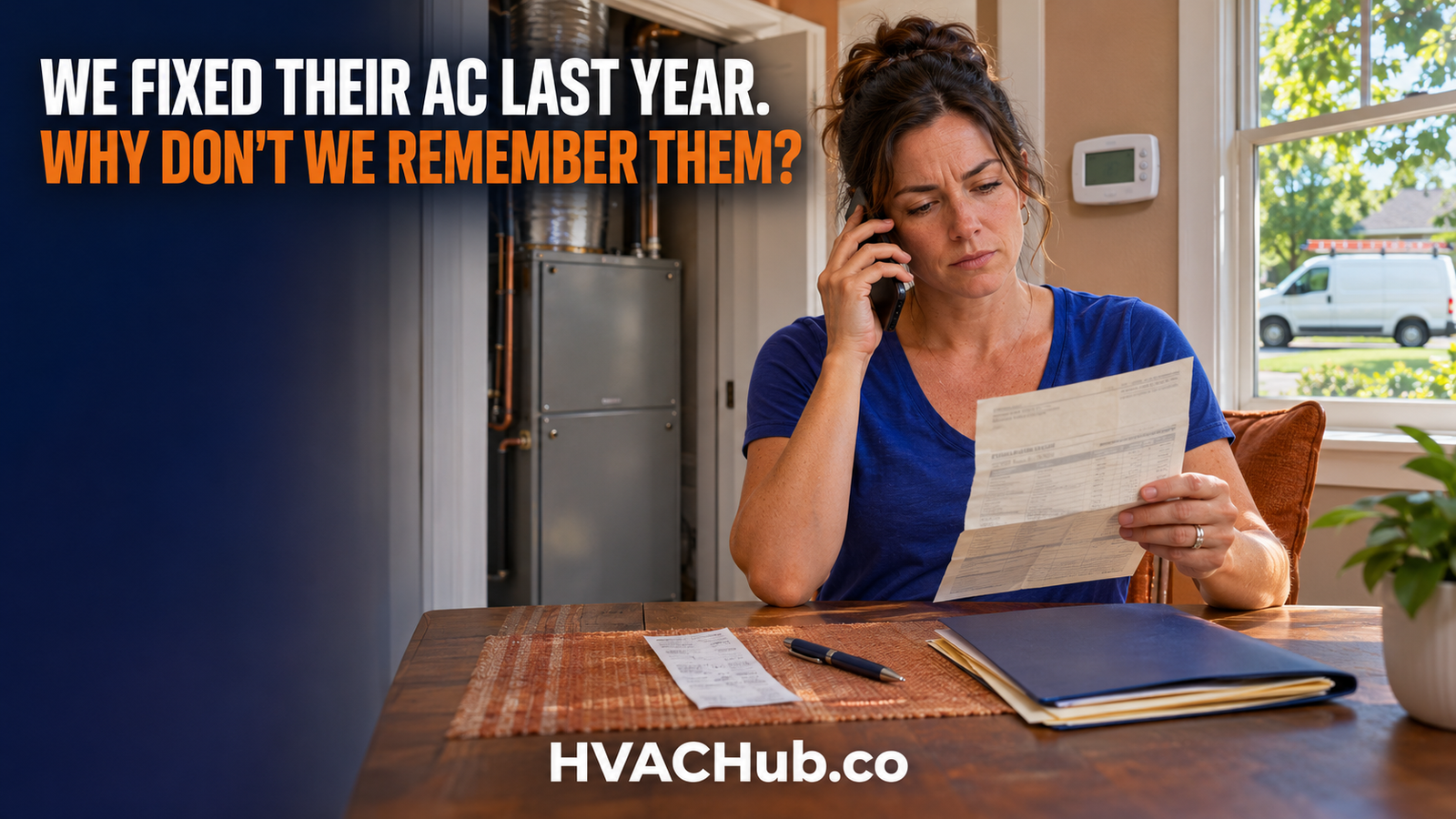
A homeowner calls an HVAC contractor they used last summer. The company fixed their air conditioner, sent an invoice, and left a good impression. Now the same homeowner needs help again. The first question from the office is familiar: “Have we worked at your address before?” Then come more questions about the equipment, previous repair, and contact details. The customer has to find an old invoice just to explain the history.
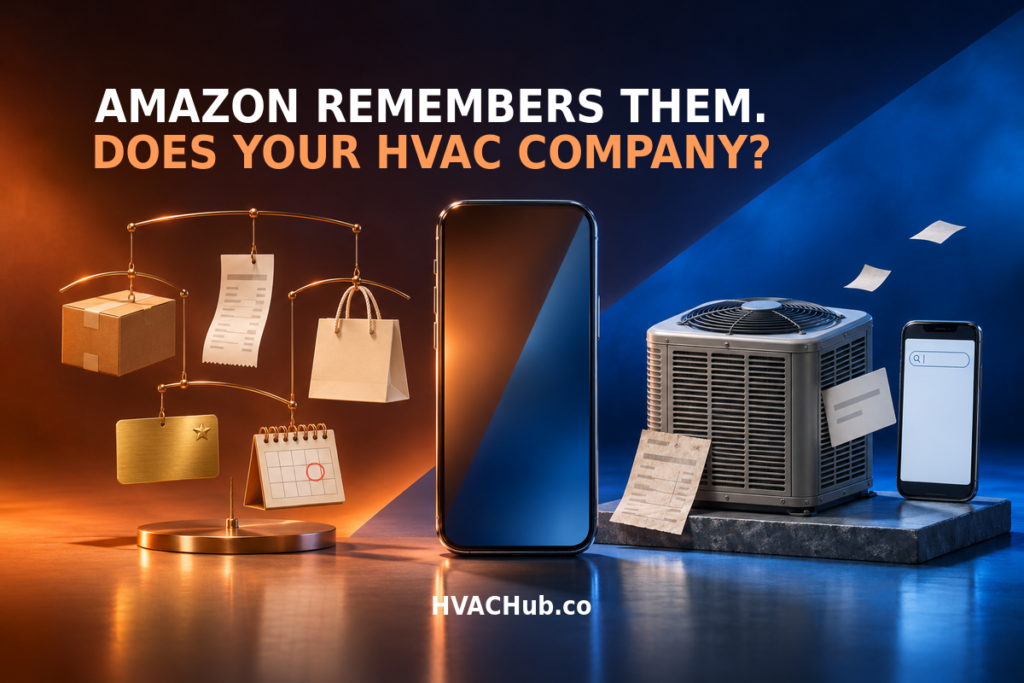
Compare that with a familiar retail experience. A store may recognize a returning customer, provide a digital receipt, and explain relevant loyalty benefits. The customer does not have to reconstruct every past purchase. HVAC service is more complex than retail, of course. But the expectation is similar: if a business already knows me, why must I start from zero?
This is not a call for small contractors to imitate national chains or bombard homeowners with marketing. It is a practical question about trust, useful records, and how an HVAC business treats people after the first service call.
What Big Brands Get Right About Returning Customers
Retailers have learned that a sale is not always the end of a relationship. Customers appreciate accurate receipts, convenient support, clear policies, and relevant communication. A loyalty program can add value when its terms are easy to understand. These experiences feel simple to customers because the business has organized information behind the scenes.
HVAC contractors face a different reality. Equipment needs skilled diagnosis, emergency calls interrupt schedules, and no two homes are identical. Still, several lessons transfer well: remember the right details, avoid unnecessary repetition, explain the next step, and follow through on promises.
A contractor does not need a huge marketing budget to do those things. A one-truck operation can make a returning homeowner feel recognized by recording accurate service notes and using them on the next call.
The HVAC Customer Who Has to Tell the Same Story Twice
Imagine a homeowner named Mark. Last July, a technician replaced a failed component in Mark’s cooling system. The technician explained the repair, confirmed that the system was operating, and left a written invoice. Mark was satisfied.
This year, Mark notices a new cooling problem. He calls the same company. The dispatcher cannot quickly locate the old visit, so Mark describes the earlier repair from memory. He searches his email for the invoice. When a technician arrives, the homeowner repeats the story yet again.
The company may still deliver excellent technical service. But the repeated questions make the experience feel disconnected. Mark begins to wonder whether the business remembers him at all.
The better alternative is not to assume that the old repair explains the new issue. A technician must diagnose the current condition independently. Instead, the office should make relevant history available so the team starts informed and asks better questions.
Recognition Starts With Reliable Customer Records
A useful customer record begins with accurate contact information, service address, and a way to find previous visits. When appropriate, it may include equipment details, work performed, parts used, warranty information, and customer preferences. Staff should know which information to record and where to find it.
Avoid treating the record as a place to collect everything about a homeowner. Keep information relevant to the service relationship, limit access to employees who need it, and follow applicable privacy rules. If a customer corrects a phone number or address, make the update consistently.
A repeat customer should not need to remember a technician’s name or locate an old paper invoice before the office can help. Clear records also protect the company when staff members change or an experienced technician leaves.
The Six Moments That Shape an HVAC Customer Relationship
1. Booking: Make the first conversation easier
When a returning homeowner calls, confirm the address and current issue, then check the available service history. Ask only the questions needed to prepare for the visit. Offer a realistic appointment window and explain how updates will be communicated.
Online booking may be convenient for routine appointments, but urgent or complex service requests can still need a conversation. The goal is not to force every customer through the same channel. It is to make scheduling clear and reliable.
2. Service: Use history without skipping diagnosis
Before arriving, the technician can review relevant notes from past visits. That context may reveal equipment age, prior repairs, access instructions, or a recurring complaint. It should guide questions, not replace testing.
During the visit, explain the findings in plain language. Distinguish what needs attention now from what can be planned later. Give the homeowner a chance to ask questions without feeling pressured.
3. Invoice: Leave a clear record of the work
An invoice is more than a request for payment. It can help the homeowner remember the service date, what was done, and what charges were approved. Provide an understandable description of work and make the document easy to retrieve.
Digital delivery can be convenient, but respect customers who need another format. Review the invoice for accuracy before sending it. If the homeowner has a billing question, the office should know where to find the relevant job notes.
4. Feedback: Listen after the technician leaves
A follow-up request for honest feedback gives customers a chance to share what went well and what needs attention. Do not pressure people for positive ratings or offer incentives that violate review-platform rules.
A complaint about communication may point to a process issue even when the technical repair was correct. Treat feedback as useful operational information rather than only a public rating.
5. Reminder: Stay helpful between visits
Homeowners rarely think about their HVAC system every week. A relevant seasonal maintenance reminder can be useful, particularly when it reflects the service history and local climate. Messages should be accurate, appropriately timed, and consistent with customer consent and preferences.
Avoid making every reminder sound like an emergency. A thoughtful message explains why a check may be useful and lets the homeowner decide what to do next.
6. Return visit: Pick up the relationship where it left off
When the homeowner returns, the office can verify the existing record, review past work, and arrange the new visit without rebuilding the whole story. The technician can arrive with context while still evaluating the present problem on its own merits.
That is the practical meaning of customer recognition in HVAC: fewer repeated explanations, clearer expectations, and a service team that appears prepared.

Should an HVAC Contractor Send Birthday Wishes and Special Offers?
A birthday message or seasonal offer can feel personal when a customer welcomes it. It can also feel intrusive when a business collects personal details without a clear reason or sends frequent promotional messages. Contractors should not copy retail marketing habits without considering their customers.
Start with communications that have a direct service purpose: appointment confirmations, requested estimates, service documents, and relevant maintenance information. If you want to send promotional campaigns, obtain any required consent, explain the purpose, and make opting out straightforward.
Personal attention does not have to mean personal data. Remembering that a homeowner prefers an afternoon appointment or needs a call before a technician arrives may be more valuable than sending a generic birthday greeting.
Loyalty Rewards Can Help, but Trust Comes First
A simple loyalty benefit may give a homeowner another reason to consider the same contractor for eligible future service. Yet rewards should never disguise the true price of work or create pressure to approve an unnecessary repair.
Explain how a customer qualifies, what the reward covers, whether it expires, and any exclusions. Train office staff to answer questions consistently. If the program is too complicated to explain in a short conversation, consider simplifying it.
Most importantly, do not confuse a loyalty reward with customer loyalty itself. Homeowners return because they trust the work, communication, and overall experience. A benefit can support that relationship; it cannot replace it.
Why Small HVAC Businesses Have an Advantage
Large brands may have more staff and bigger budgets. Small HVAC companies often have something equally valuable: personal knowledge of the neighborhoods and homeowners they serve. A technician may recognize a house, remember an access issue, or know which equipment was installed.
The challenge is turning that knowledge into a dependable company process rather than leaving it in one employee’s memory. When the right information is available to the team, the business can preserve a personal experience even as it grows.
That matters when a dispatcher takes a day off, a technician changes routes, or the owner is unavailable. A customer relationship should belong to the service company and its commitment to the homeowner, not depend on one person’s phone.
Five Practical Changes Contractors Can Make This Month
Review ten repeat-customer calls
Listen to how the office identifies returning homeowners. Are staff members asking for information the company already has? Are addresses or names difficult to find? Note the repeated points of friction without blaming the people handling the calls.
Standardize the service history
Choose a short set of fields that technicians and office staff can complete consistently. Record the equipment serviced, the work performed, and any follow-up that was promised. Do not make the process so long that employees avoid it during busy days.
Make the invoice easy to find
Check whether customers can obtain a copy of an earlier invoice without several calls. Confirm that staff can locate it using the right customer or service address. Correct obvious gaps in the filing process.
Choose one useful follow-up
Start with a clear post-service message or an appropriate maintenance reminder. Make sure it is accurate and welcome. Review responses before expanding the program to more types of communication.
Ask customers what felt inconvenient
Rather than assuming customers want more messages, ask what would have made the experience easier. Some may value appointment updates most. Others may care about clear invoices, quick access to history, or being able to reach a real person.
How to Tell Whether the Experience Is Improving
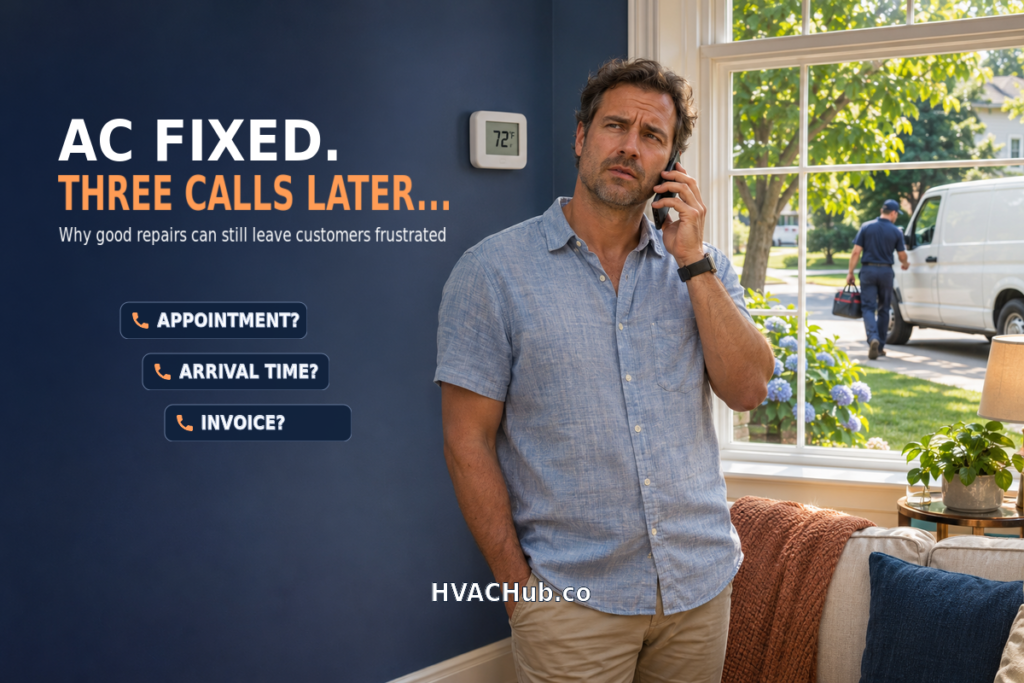
A better customer experience is not measured only by the number of messages sent. Look for practical signals: fewer repeat questions during booking, fewer missing job notes, faster access to invoices, and fewer calls asking for appointment updates.
Review complaints and compliments for patterns. If customers say they appreciate how prepared the technician was, that may indicate the handoff is working. If they still have to repeat details, investigate where information is getting lost.
Measure changes over time and account for seasonal demand. An HVAC office during a heat wave faces different pressures than one in a quieter month. Keep the focus on reliable service, not impressive-looking numbers.
Where Business Management Tools Fit
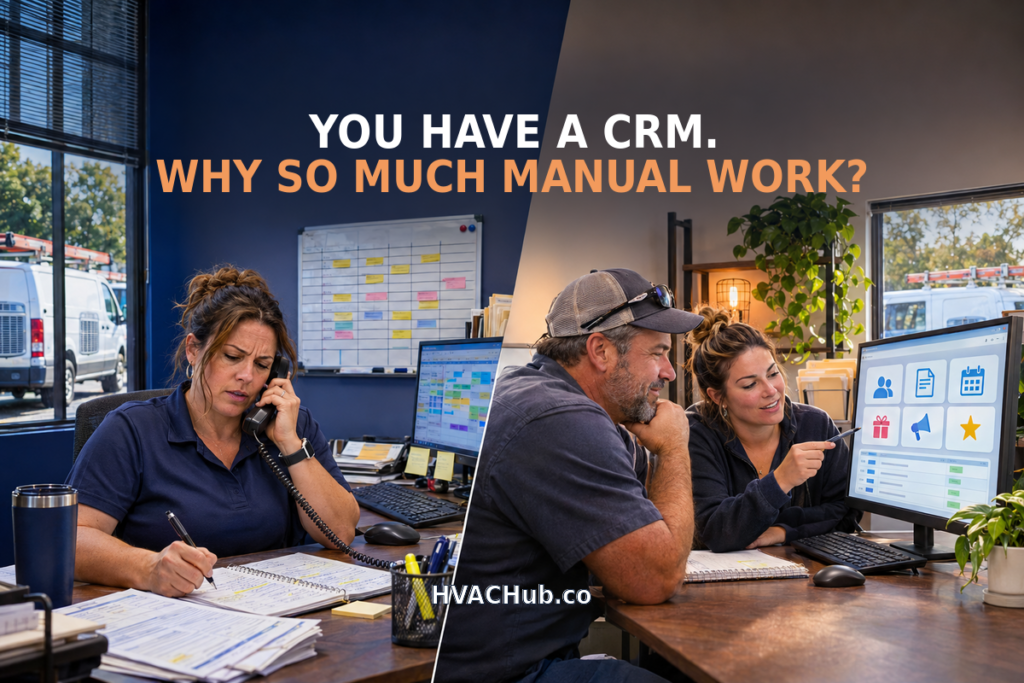
Some contractors manage these steps with a well-run combination of records, scheduling tools, and clear procedures. Others prefer a business platform that brings related work into one place. Neither approach works automatically without staff training and consistent habits.
When evaluating tools, ask whether employees can find customer records, handle appointments, review invoices, and manage appropriate customer communications without unnecessary duplicate work. Confirm the features, limitations, pricing, and setup support directly with the provider.
Do not choose a tool just because a demonstration looks polished. Test it against a realistic repeat-customer scenario: a homeowner calls about a new problem, needs an appointment, wants the old invoice, and later asks about follow-up service.
An Opportunity Shared With the HVAC Community
HVAC Community Hub shares practical ideas for contractors who want to improve service and business operations. For readers considering a more connected approach, HVACB Business Suite is an affiliated option to explore. HVACB.com and HVAC Community Hub are affiliated; this is a disclosed community offer, not an independent endorsement.
HVACB Business Suite brings together six business-management areas: Customers, Invoices, Appointments, Loyalty Rewards, Campaigns, and Reviews. Whether it suits your company depends on your needs, the current features, and the offer terms. The provider can explain setup support and help you assess the fit.

To explore the current free-access promotion, review the details and submit the official HVACB Black Friday claim form. Promotional slots are subject to the stated terms and availability; submitting a form does not by itself guarantee a confirmed slot. For more industry conversations, visit HVAC Community Hub.
Frequently Asked Questions
How can an HVAC company make returning customers feel recognized?
Keep accurate service history, confirm existing details rather than starting over, communicate clearly, and make invoices and appointment information easy to access.
Do HVAC customers really want loyalty programs?
Some may appreciate a clear, useful benefit. Others care more about dependable service and convenience. Ask customers and avoid making rewards the center of the relationship.
Should HVAC companies send maintenance reminders?
Relevant reminders can help customers plan service. Use accurate information, respect communication preferences, and avoid misleading urgency or unwanted promotional messages.
Does a customer record replace a technician’s diagnosis?
No. Previous service notes provide context, but technicians must evaluate the current issue and follow appropriate technical and safety procedures.
Does a small HVAC contractor need expensive technology to improve customer experience?
Not necessarily. Clear records, consistent handoffs, and thoughtful communication can make a meaningful difference. Evaluate tools only after identifying the processes you need to support.
Make the Second Call Feel Easier Than the First
The best sign of a lasting customer relationship may be surprisingly simple: when a homeowner calls again, they feel the company remembers the service it provided. They still get a proper diagnosis, a clear explanation, and a fair opportunity to make decisions. But they do not have to start the relationship from scratch.
Big brands did not invent good customer service. HVAC contractors can deliver it every day by keeping promises, preserving useful information, and treating the next call as a continuation of the last. What helps your company recognize returning homeowners? Join the conversation at HVACHub.co.


Responses