
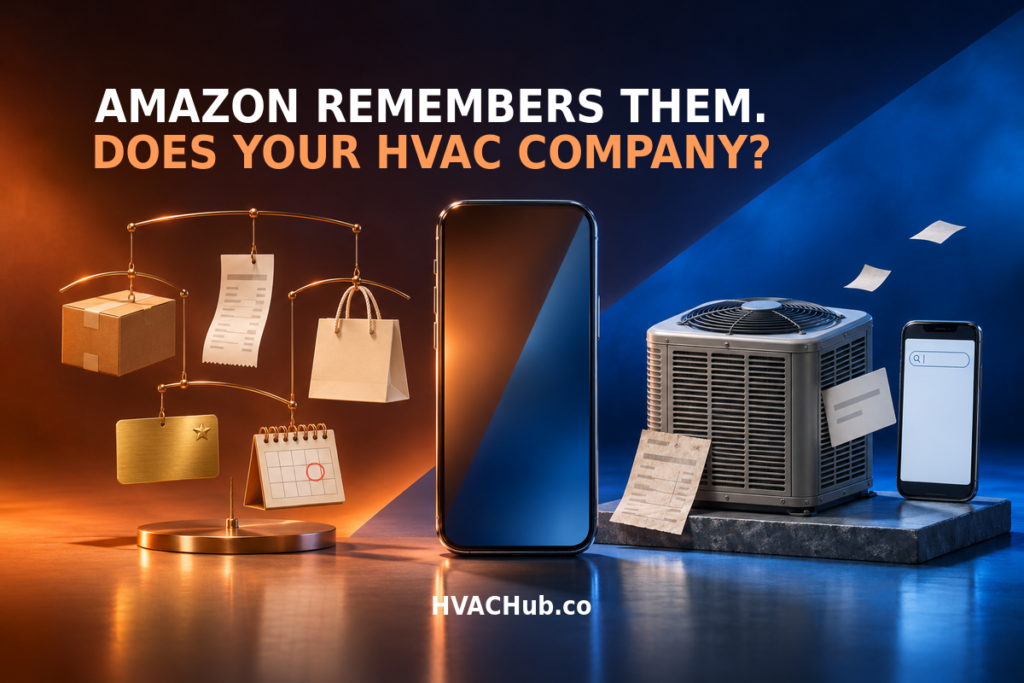
Your HVAC Customer Trusts Amazon With Their Next Purchase. Why Do They Forget Your Company After One Repair?

A homeowner buys a replacement filter online. The store remembers the delivery address, shows previous orders, and makes reordering straightforward. Months later, that same homeowner needs air-conditioning service again—but cannot remember which HVAC company repaired the system last summer.
The contrast is striking. The contractor may have delivered an excellent repair. The homeowner may even have left a five-star review. Yet when the next service need arrives, the company is effectively starting from zero in the customer’s mind.
This is not an argument that HVAC contractors should copy an online retailer’s entire business model. It is a lesson about convenience. Customers are more likely to consider returning when they can identify the provider, find their history, and arrange the next visit without unnecessary effort.
The Contractor Did the Hard Part—and Still Became Forgettable
Picture an ordinary residential service call. An air conditioner stops cooling during a hot week. The homeowner searches for a contractor, books a visit, and pays for a successful repair. The technician is punctual, explains the issue clearly, and leaves the system running.
The homeowner appreciates the service. Then life continues. School schedules, work deadlines, deliveries, and household expenses compete for attention. The service receipt sits in an email inbox or a kitchen drawer. The contractor’s number is not saved.
A year later, the system needs maintenance or develops another problem. The homeowner does not necessarily dislike the previous contractor. They simply cannot recall the business name or locate the contact information quickly.
So they search again. A different company appears first, offers a convenient booking path, and gets the call. The original contractor may never learn that a satisfied customer was lost through friction rather than dissatisfaction.
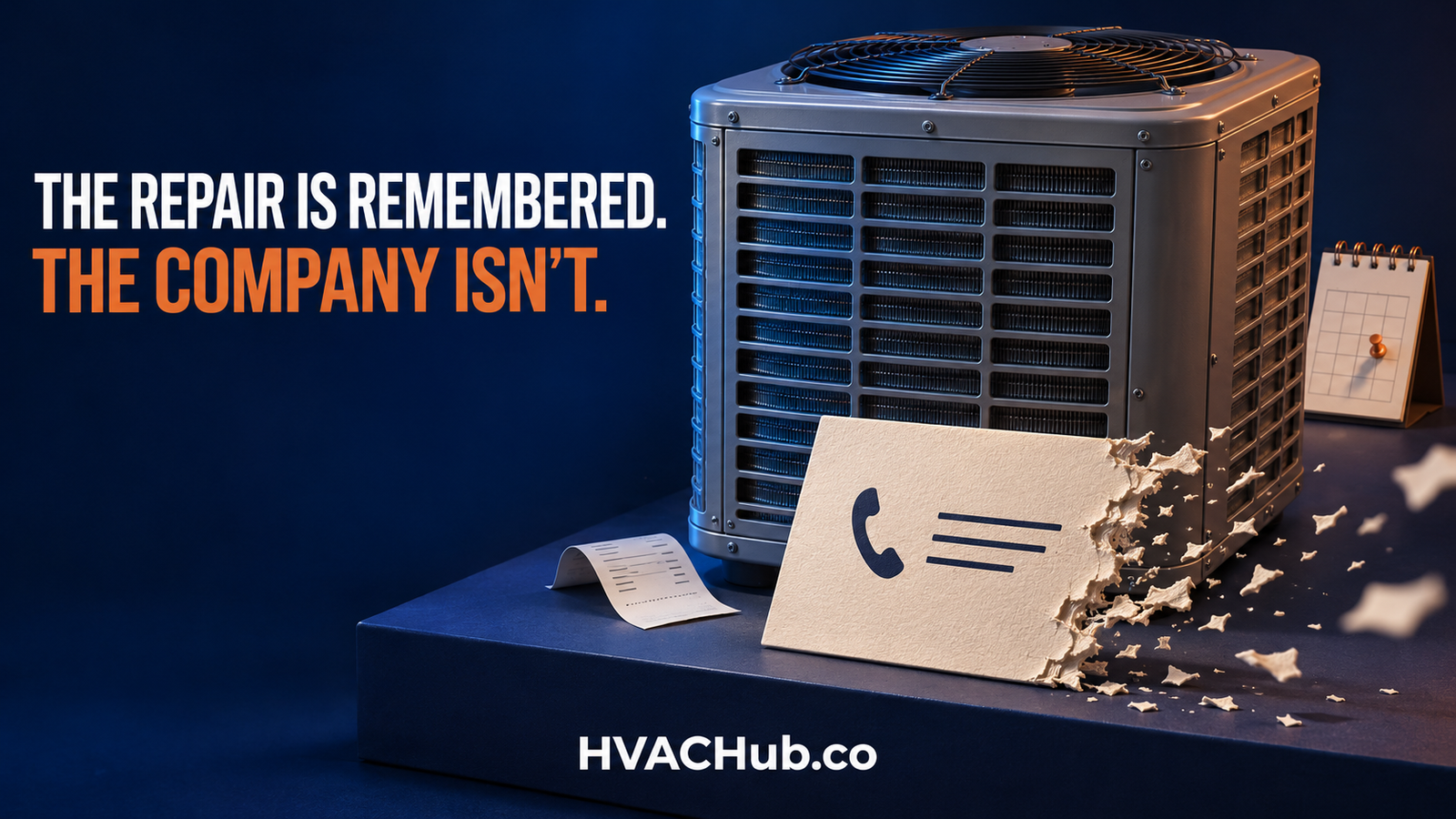
Why Familiar Shopping Experiences Feel Easier
Large shopping platforms have trained consumers to expect certain conveniences. They can often find past orders, reuse delivery details, view receipts, and make another purchase without starting from scratch. Amazon is a familiar example of this general shopping experience, not a model every contractor must imitate or a company affiliated with this article.
Those features reduce the mental effort required to return. Customers do not need to remember an order number or explain their entire history each time. They can see what happened before and decide what to do next.
HVAC service is different. Repairs require diagnosis, technical judgment, scheduling, property access, and sometimes urgent attention. A repeat appointment cannot be reduced to clicking a reorder button. Still, the underlying lesson applies: make it easier for customers to recognize the business and retrieve useful information.
Being Remembered Is Not the Same as Being Trusted
Trust is earned through competent work, honest explanations, fair treatment, and reliable follow-through. Recognition is more basic: when the homeowner needs help, do they remember whom to contact?
A customer can trust a technician and forget the company name. They may remember the friendly person in the navy polo but not the business on the van. They may remember paying for a capacitor replacement but have no idea where the invoice went.
This is why good workmanship and a five-star review do not guarantee the next booking. The company must also make its identity and service information easy to find after the visit.
The Five Friction Points That Make Returning Hard
1. The customer cannot find the company’s contact information
A business card handed over at the end of a visit may disappear. A clear digital invoice or service summary that identifies the company and provides accurate contact details can be easier to retrieve later. Ask whether the customer wants to save the number before the technician leaves.
2. The customer cannot remember what was repaired
Homeowners rarely retain technical descriptions for months. A plain-language summary of the diagnosis, work performed, and relevant recommendations can help them understand their history without reconstructing it from memory.
3. Booking another visit feels like starting over
If a returning customer must repeat the address, equipment details, and previous service history every time, the company is making a familiar relationship feel unfamiliar. Confirm existing information rather than assuming it remains correct, and avoid asking for details the team can already access appropriately.
4. Nobody explains when future service might be useful
A homeowner may not know when to schedule seasonal maintenance or whether a recommendation from the previous visit still matters. A relevant, accurate reminder can help when it reflects real equipment needs and the customer’s communication preferences. Do not manufacture urgency or imply that every system needs identical service.
5. The company only appears when it wants a sale
Customers notice when every message is a promotion. Useful service information, a clear invoice, or a follow-up on an unresolved issue can be more valuable than another generic discount. Communication should respect consent and provide a straightforward way to manage preferences.
Make the Next Call the Easy Choice
The goal is not to create an elaborate loyalty program before the company has reliable basics. Start with a customer journey that works after the technician leaves.
First, provide an understandable service summary. Second, make the company name and contact details easy to save. Third, keep accurate records so a returning homeowner does not need to explain everything again. Fourth, offer a simple path to request another appointment.
Then consider relevant reminders or offers where they fit. These additions should build on a trustworthy service experience, not compensate for a poor one.

What an HVAC Customer Record Should Actually Help With
A useful record is more than a phone number. It may include the service address, preferred contact method, relevant equipment details, appointment history, completed work, invoices, and documented customer decisions.
Keep the information accurate, relevant, and protected. Not every employee needs access to every detail. Collect only what the business reasonably needs, follow applicable privacy rules, and give customers appropriate choices about communications.
Good records help the next office employee or technician understand the situation. They should not replace a fresh diagnosis or lead staff to assume that an old repair explains a new problem.
Recognize the returning homeowner without making assumptions
Imagine the homeowner calls again. Instead of opening with a blank record, the office can confirm the address and reference the previous service: ‘I see we visited last summer. Is this the same system, or is something different happening now?’
That question acknowledges the relationship while leaving room for new information. It saves time without pretending the company already knows the cause of the current issue.
The Invoice Is Also a Future Contact Point
Contractors often treat the invoice as the end of the transaction. For the homeowner, it may become the easiest way to identify the company months later.
Use a clear business name, contact details, service date, and understandable description of the completed work. Deliver it through the agreed channel and make corrections promptly when needed.
An invoice should never double as permission to send unrelated marketing messages. Keep essential transaction communication separate from optional promotional outreach, and follow applicable consent requirements.
Service Reminders Work Best When They Are Relevant
A reminder can be helpful when it connects to the homeowner’s actual service history, equipment, season, or an agreed maintenance plan. A generic message sent to every contact may be less useful and may irritate people who did not ask for it.
For example, a contractor may note that a homeowner requested a follow-up about an earlier maintenance recommendation. Reaching out at the agreed time with clear context is different from repeatedly sending urgent-sounding sales messages.
Avoid promising that a reminder will prevent a breakdown or that maintenance always produces a specific saving. Describe the service honestly and let the homeowner decide.
Can Loyalty Rewards Make an HVAC Customer Return?
Rewards may give some customers an additional reason to consider the same provider. But HVAC service is not a routine retail purchase, and a reward cannot overcome poor workmanship, confusing pricing, or unreliable scheduling.
If a contractor offers rewards, explain how they are earned, when they can be used, whether they expire, and which services qualify. Make the terms accessible before the customer relies on the offer.
Treat rewards as one optional part of a broader customer experience. Clear records, reliable service, and convenient booking usually deserve attention first.
What Not to Copy From Online Retail
Retailers often encourage frequent purchases. HVAC contractors should not manufacture service needs or push unnecessary work just to create more transactions. The ethical goal is to be easy to reach when genuine service is appropriate.
Do not send personal birthday messages or highly tailored offers unless the customer has knowingly provided relevant information and agreed to that use where required. Personalization should feel helpful, not intrusive.
Do not assume that every customer wants texts, emails, and phone calls. Give people choices and respect opt-outs. A relationship built on convenience can be damaged quickly by unwanted messages.
A Practical Before-and-After Customer Journey
Before: A good repair with no lasting connection
A technician repairs the AC, accepts payment, and leaves. The homeowner receives minimal paperwork and does not save the number. The company has no consistent follow-up process. When another issue appears, the homeowner searches online and chooses whichever provider looks convenient.
After: A good repair that is easier to return to
The technician completes the same quality repair. The homeowner receives a clear summary and invoice with the company’s contact details. The office retains accurate service records. If the customer later calls, staff can confirm the history and help schedule the appropriate next step.
Where the homeowner has opted in, the company may also send a relevant reminder or offer. Nothing guarantees the repeat booking. The difference is that the customer has fewer obstacles to returning.
How a Small HVAC Company Can Start This Week
Review five recent completed jobs
Look at the documents each customer received. Could the homeowner identify your business six months later? Could they find the phone number? Would the invoice explain what was done? If not, improve those basics first.
Test a repeat booking
Ask a team member to simulate a returning homeowner contacting the office. Can staff locate the previous service record quickly and accurately? Does the booking process feel straightforward? Note the steps that cause unnecessary repetition.
Create one useful follow-up standard
Decide when a follow-up is genuinely appropriate: an outstanding recommendation, a promised callback, or an opted-in maintenance reminder. Assign responsibility and make sure the message has a clear purpose.
Check your communication permissions
Review how contact preferences and marketing consent are recorded. Train the team to distinguish service-related messages from promotional campaigns. Respect applicable laws and customer requests.
Measure Convenience, Not Just Message Volume
Sending more messages is not proof of a stronger customer relationship. Look for practical signals: repeat customers who can book without repeating their history, fewer questions about missing invoices, accurate contact records, and useful responses to opted-in reminders.
Review feedback from homeowners and office staff. If customers report that messages are repetitive or irrelevant, change the approach. If returning customers still struggle to identify the business, improve the documents and contact information they receive.
Customer convenience is an ongoing process, not a single campaign.
Where Business Management Tools Can Help
Some HVAC companies manage these tasks with disciplined existing systems. Others may benefit from a platform that brings customer records, appointments, invoices, and outreach-related work into a more organized workflow.
Before choosing software, test real scenarios. Can staff find a returning customer’s record? Can they retrieve the invoice? How are contact preferences handled? Which reminders, campaigns, or reward functions are supported, and which require manual setup? Verify capabilities instead of assuming every workflow is automatic.
An Affiliated Opportunity for HVAC Community Hub Readers
HVAC Community Hub shares business discussions and practical resources for contractors. HVACB Business Suite is an affiliated business-management option for readers who want to explore a more organized approach to everyday operations. HVAC Community Hub and HVACB.com are affiliated; this is a disclosed community offer, not an independent third-party recommendation.
HVACB Business Suite brings together Customers, Invoices, Appointments, Loyalty Rewards, Campaigns, and Reviews. These feature areas do not guarantee repeat bookings or mean every customer reminder happens automatically. Check the current product capabilities and promotion terms before deciding whether it fits your company.

To explore the current free-access opportunity, review the official HVACB Black Friday claim form. Availability and eligibility depend on the stated terms; submitting the form does not itself confirm a promotional slot. You can find additional contractor discussions at HVACHub.co.
Frequently Asked Questions
Why do satisfied HVAC customers call another contractor?
There are many reasons, including availability, price, location, changing needs, and convenience. Some simply cannot recall the previous provider or find its contact information. A good repair alone does not guarantee a repeat booking.
How can an HVAC contractor become easier to remember?
Provide clear service documents with recognizable branding and contact information, maintain accurate records, and make future booking straightforward. Use relevant follow-ups only when appropriate and permitted.
Should HVAC businesses send maintenance reminders?
Reminders can be useful when tied to genuine service needs, accurate records, and customer preferences. Follow applicable consent rules and avoid misleading urgency.
Are loyalty rewards necessary for HVAC customer retention?
No. They are optional. Trustworthy workmanship, clear communication, and convenient service remain important regardless of whether a company offers rewards.
Can software guarantee repeat HVAC customers?
No. Software can help organize records and workflows, but customers still choose based on service quality, relevance, availability, price, and other factors.
Don’t Make a Happy Customer Start From Zero
The most valuable lesson from familiar shopping experiences is not that HVAC service should become retail. It is that returning should not require unnecessary detective work.
When a homeowner can recognize your business, find their previous service details, and request another appointment easily, you have removed barriers that can quietly weaken a good relationship. The technician’s work earns trust. The experience after the visit helps the homeowner find that trust again.
How does your HVAC company make it easy for a satisfied homeowner to return? Share your experience with other contractors at HVACHub.co.


Responses