

HVAC Change Orders: How Job Changes Can Hurt Your Profit

HVAC jobs rarely go exactly as planned. A customer may request an additional modification, a technician may discover that the original scope does not cover the actual work required, or a project may need extra materials before it can be completed. These situations are where HVAC change orders become important.
A small change can seem harmless at first. However, extra labor, materials, equipment, travel, and scheduling time can quickly reduce the profit you expected from the original job. If the change is not clearly documented, it can also create confusion between your team and the customer.
The good news is that change orders do not have to become a source of conflict. With a consistent process, HVAC businesses can manage additional work, protect their margins, and keep customers informed throughout the project.
What Are HVAC Change Orders?
An HVAC change order is a documented adjustment to the original scope of work agreed upon with a customer.
The change may involve additional labor, different materials, extra equipment, revised installation requirements, or work that was not included in the original agreement.
For example, an HVAC contractor may begin an installation and discover that additional ductwork is required. The customer might also ask for another vent, a different equipment configuration, or additional electrical work.
Instead of simply completing the extra work and adding the cost later, the contractor should document what is changing, why it is changing, what it will cost, and how it may affect the schedule.
That simple step gives both sides a clear reference point.
Why Small Job Changes Can Reduce HVAC Profit
The biggest problem with job changes is not always the additional charge itself. The real issue is what happens when the extra work is completed without properly accounting for its cost.
Imagine a technician spends two additional hours on a job. The company also needs to purchase extra materials and make another trip to the supplier. If those costs are never added to the customer’s approved scope, the business absorbs them.
Now consider the scheduling impact.
That extra work may delay the technician’s next appointment. Another customer could be pushed back. The office may need to reschedule jobs. The technician may also work later than expected.
One small change can therefore affect several parts of the business.
This is why HVAC change orders should be treated as an operational process, not simply another piece of paperwork.
Common Situations That Create Change Orders
Change orders can happen for several different reasons. Some begin with the customer, while others appear after work has started.
The Customer Requests Additional Work
Customers sometimes see an opportunity to add work once a technician is already on-site.
They may ask for another register, additional ductwork, a different installation option, or another improvement. The request may sound simple, but your team still needs to account for labor, materials, and time.
A clear change order makes the additional request separate from the original agreement.
The Actual Job Differs From the Original Scope
Sometimes the customer does not cause the change.
A technician may open an area and discover unexpected conditions. Existing ductwork might require modification. Access could be more difficult than expected. Additional work may also be required before the planned installation can continue.
In these situations, the technician should communicate the issue to the office and customer before moving ahead with additional billable work whenever practical.
Materials or Requirements Change
A project may also change because the required materials, installation method, or site requirements differ from the original plan.
Instead of treating these differences as informal adjustments, document them. The record should explain what changed and how that change affects the job.
Never Let Extra Work Become Informal Work
One of the most expensive habits in an HVAC business is saying, “We’ll just take care of it.”
Your technician may want to keep the customer happy. At the same time, your office team may want to avoid another conversation. The owner may also feel that the extra work is too small to worry about.
However, repeated small exceptions can create a serious financial problem.
When technicians regularly perform extra work without documentation, your company loses track of the true cost of each job. You may also create different pricing for similar work.
Instead, create a simple rule: review additional work before it becomes part of the job.This rule does not mean every minor adjustment needs a complicated contract process. Your team simply needs a consistent way to identify, approve, record, and price changesWhat Every HVAC Change Order Should Include
What Every HVAC Change Order Should Include
A useful change order does not need to be complicated. It simply needs to remove confusion.
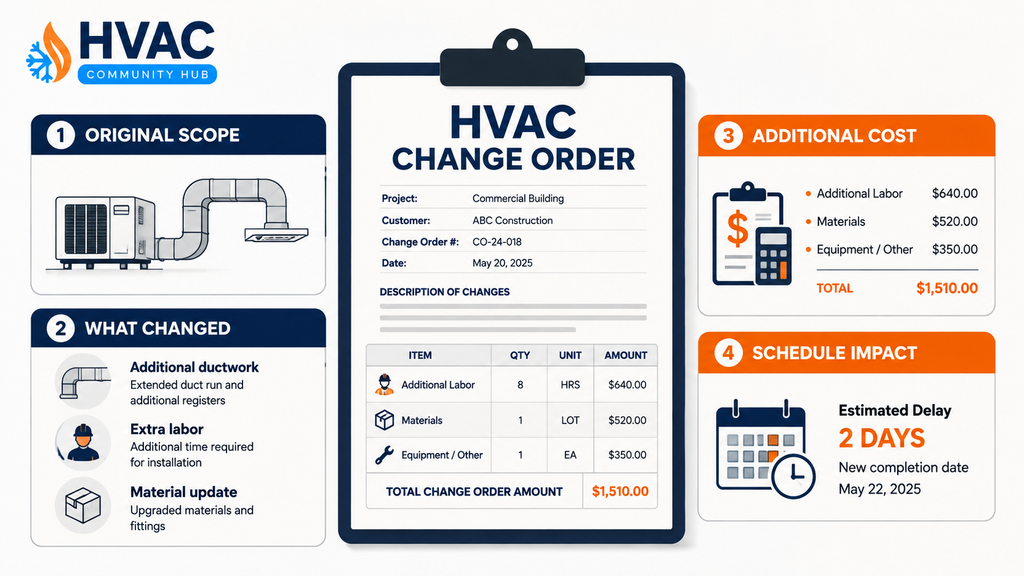
Describe the Change Clearly
Start with the exact work that your team will add, remove, or modify.
Avoid vague descriptions such as “extra work” or “additional materials.” Explain what the team will actually do.
For example, “modify existing ductwork to connect the new supply run” gives the customer much more information than “duct changes.”
Show the Additional Cost
The customer should know what the change will cost before the extra work begins whenever possible.
Include labor, materials, equipment, disposal, subcontractor costs, and other related charges when they apply.
Your team should also track the internal cost. A customer-facing price alone does not show whether the additional work remains profitable.
Explain Any Schedule Impact
Additional work can change the expected completion time.If the change adds several hours or requires another visit, explain that impact clearly. Customers are usually more understanding when they know what caused the delay.
Get Customer Approval
The safest approach is to get customer approval before starting additional billable work.
Your company can choose the approval method that fits its normal process. The important part is keeping a clear record of what the customer approved.
How to Prevent Change Orders From Creating Customer Friction
Customers do not always object to additional charges. Unexpected charges create much more frustration.
If a customer receives an invoice that is higher than expected, they may immediately question the difference.
Early communication can prevent that situation.
For example, a technician could explain:
“The original job included X. We discovered that Y is also required. That will add approximately two hours of labor and these additional materials. Here is the revised cost. Would you like us to proceed?”
This approach gives the customer a clear choice.
More importantly, it separates the original agreement from the new request.Clear communication can keep a small job adjustment from becoming a larger customer-service problem.
Train Technicians to Recognize Scope Changes
Your technicians are often the first people to notice that a job is changing.
For that reason, technician training plays an important role in change-order management.
Technicians should understand the difference between completing the agreed scope and discovering additional work. They should also know when they need approval from the office before continuing.
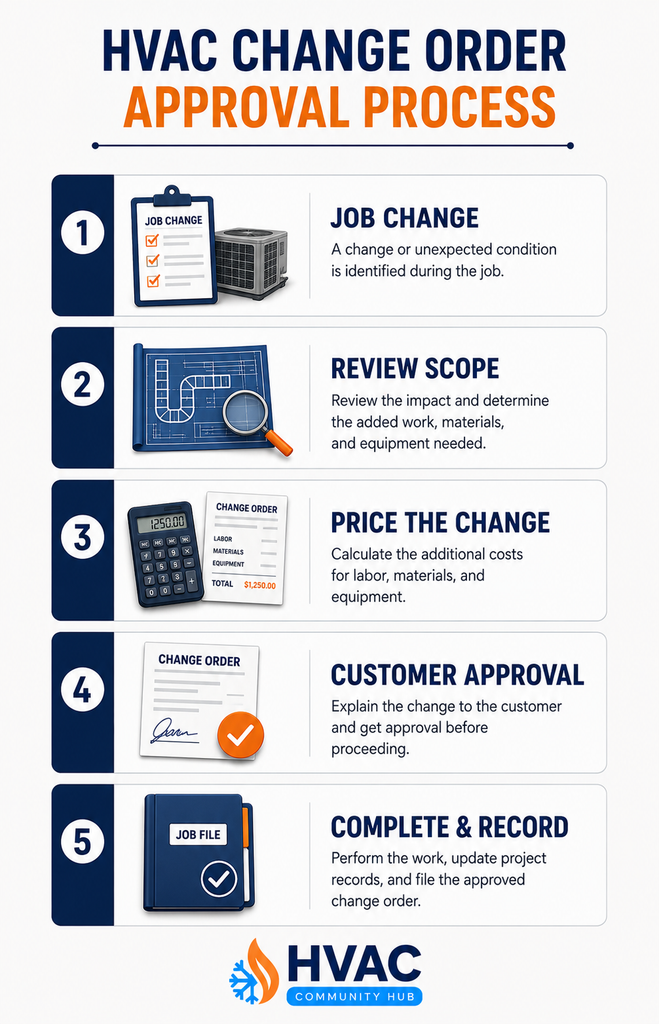
A simple internal process can help:
- Identify the change.
- Explain why it is needed.
- Estimate the additional time and materials.
- Contact the office or responsible person.
- Present the change to the customer.
- Record the approval.
- Complete the additional work.
Keep the process simple enough for technicians to follow during a busy day. If the process takes too many steps, people may eventually find ways around it.
Track Change Orders Across Your HVAC Business
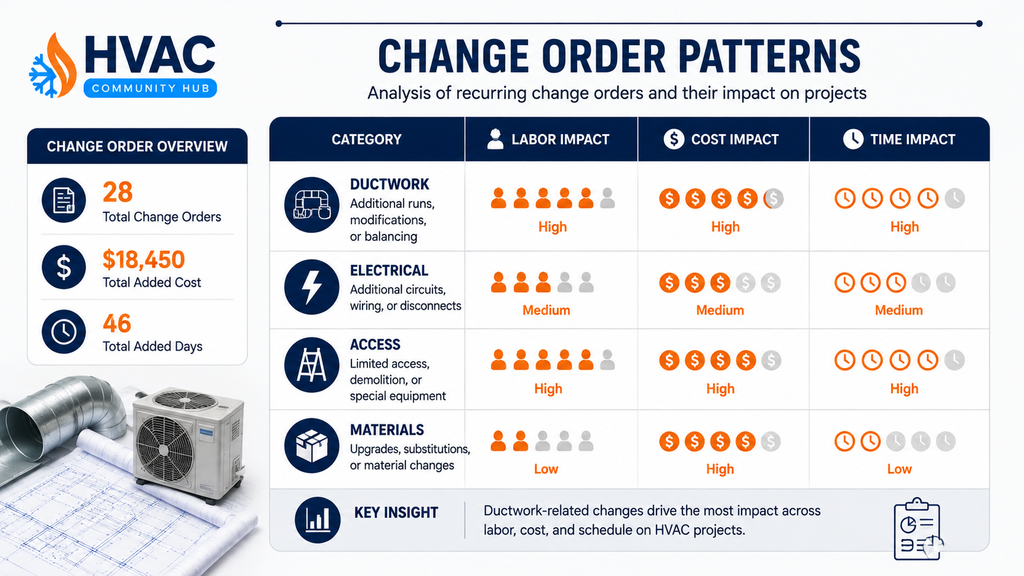
Change orders can also reveal patterns that your team may miss when it reviews every job separately.
Suppose your team sees repeated change orders for duct modifications. That pattern may show that the original job-scoping process needs improvement.
Perhaps another type of project often requires additional electrical work. In that case, your sales or estimating process may need a more detailed site review.
Over time, these patterns can help improve your original job scopes.
Your business can also track which types of changes create the most additional labor, material costs, or scheduling problems.
The goal is not to eliminate every change. Some changes are simply part of HVAC work.
Instead, use the information to make future jobs more predictable.
Know When a Change Is Too Small to Delay the Job
Not every change needs the same level of attention.
A minor adjustment may not justify stopping the entire project for a long approval process. However, your team should not allow small changes to become untracked extra work.
Create clear internal guidelines so technicians know what they can handle within the original scope.
For example, your company can decide which small adjustments technicians may complete without contacting the office. Larger changes involving extra labor, materials, or cost should require approval before the work continues.
These guidelines should match your business, job types, and customer agreements.
Clear rules also make decisions easier in the field. Technicians know when they can continue working and when they need to contact the office.
As a result, your company can keep jobs moving without losing control of additional costs.
Use Change Orders to Improve Future Jobs
HVAC change orders can do more than protect profit on one job. They can also help your company improve future work.
After completing a project, review any major changes and look at what caused them.
Did the original scope miss something? Could the team have found the problem during the first site visit? Perhaps the customer added new work after seeing the original plan.
Questions like these can reveal useful patterns.
For example, customers may often request the same upgrade after work begins. Your sales team could start discussing that option before the job begins.
Another pattern may involve difficult access, extra ductwork, or electrical changes. When these issues appear often, add them to your pre-job inspection checklist.
Better preparation can reduce surprises on future projects.
It can also help your team create clearer job scopes, plan technician time more accurately, and protect expected profit.
HVAC Change Orders Protect More Than Profit
Profit is one important reason to manage HVAC change orders properly. However, a good change-order process also improves communication.
Customers can clearly see what they originally approved and what changed later.
Technicians also know which work belongs to the original job and which work requires additional approval. Meanwhile, the office team has a clear record of what should appear on the final invoice.
This shared information can prevent unnecessary confusion.
It also gives your business a professional way to handle unexpected job changes.
Changes will always happen on some HVAC projects. The goal is not to avoid every change. Instead, your company needs a simple process that keeps the work, cost, and customer expectations aligned.
Frequently Asked Questions About HVAC Change Orders
What is an HVAC change order?
An HVAC change order records a change to the original job scope. It may cover extra labor, materials, equipment, modifications, or other work that was not part of the original agreement.
When should an HVAC business use a change order?
Use a change order when new or requested work falls outside the original scope and affects the job’s cost, labor, materials, or schedule.
Should customers approve HVAC change orders before work starts?
Whenever possible, get customer approval before starting additional billable work. This gives both the contractor and customer a clear record of the work and its cost.
Can HVAC change orders help protect profit?
Yes. A clear change-order process helps your company charge for additional labor, materials, and other job costs instead of absorbing those expenses.
How should HVAC technicians handle a scope change?
Technicians should identify the change, explain why the extra work is needed, estimate its impact, and follow the company’s approval process before continuing.
What information should an HVAC change order include?
Include a clear description of the additional work, its cost, any effect on the schedule, and the customer’s approval. Your company can add other information based on its normal business process.
Take the Next Step
HVAC change orders are not just paperwork.
They are a way to keep job scope, customer expectations, technician work, and business costs aligned when something changes.
Start by reviewing how your team currently handles additional work.
Ask a few simple questions.
Do technicians know when they need approval? Can customers clearly see what changed? Does your office record additional labor and materials? Can you identify which types of jobs create the most changes?
If the answer to any of these questions is no, start with a simple process.
Document the change. Explain the cost. Communicate the schedule impact. Get approval. Then complete and record the work.
That small discipline can prevent minor job changes from quietly turning into major profit problems.
For additional guidance on managing your business finances and keeping accurate records, you can also review the U.S. Small Business Administration’s business finance resources and the IRS recordkeeping guidance for businesses.
For more HVAC business resources, explore HVAC Community Hub.





Responses