
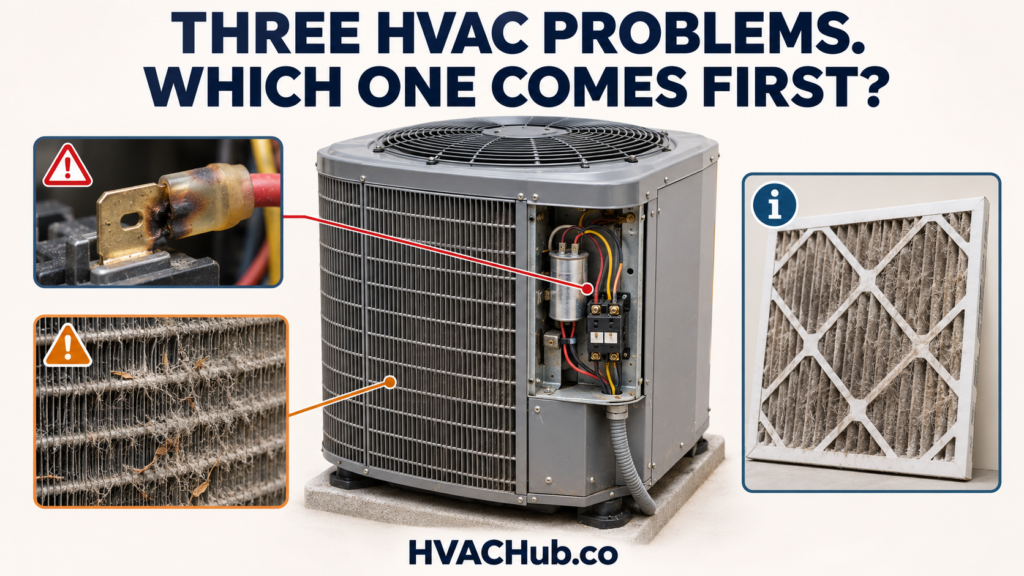
Your HVAC Technician Found Three Problems. Which One Should the Customer Fix First?

An HVAC technician arrives to investigate weak cooling. During the inspection, they find a heat-damaged electrical connection, a dirty outdoor coil, and an overdue air filter change. The homeowner expected one repair. Now they face three recommendations and a question: which one actually needs attention first?
This is where good diagnosis meets good communication. A contractor must explain the risks, avoid overstating the urgency, and help the customer make an informed choice. Simply handing over a list of charges does not explain why one finding matters more than another.
HVAC repair priorities depend on the actual condition of the system, not a fixed sales script. The following framework helps contractors separate safety concerns from reliability issues and routine upkeep. It also shows how to document recommendations and respect customer budgets.
Three Findings Do Not Always Mean Three Urgent Repairs
A service visit may uncover several issues at once. Some could relate directly to the complaint. Others may be unrelated maintenance items. A third finding might pose a safety risk that changes what the technician can safely do next.
Consider the example above. A heat-damaged electrical connection needs careful assessment because it may create a fire or shock hazard. A dirty condenser coil may reduce heat transfer and affect system performance. An overdue filter may restrict airflow, although its impact depends on the equipment and how badly it is blocked.
The technician should not automatically rank all three findings by price or by how easy they are to sell. First, verify each condition. Next, assess its risk and effect on operation. Then explain the available options in plain language.
Safety First: Identify Conditions That Cannot Wait
Safety comes before comfort, efficiency, and convenience. A technician who finds a hazardous electrical connection, unsafe venting, a suspected gas leak, or another serious risk must follow applicable safety procedures and local requirements.
Do not describe a dangerous condition as a routine repair that the customer can safely postpone. Explain what the technician observed, what it means, and which actions are needed to make the situation safe. Depending on the finding, that may mean shutting down equipment, isolating power, contacting the utility or emergency services, or referring work to an appropriately qualified professional.
A damaged wire does not automatically prove that the whole system needs replacement. Likewise, a warning sign should not become a scare tactic. Explain the evidence and the appropriate corrective work without making claims that the inspection cannot support.
Show the evidence without overwhelming the homeowner
Photographs can help when they clearly show the actual issue. For an electrical concern, a technician might explain where they found discoloration, heat damage, or a loose connection. The image should support the explanation, not replace proper testing.
Customers do not need a lecture on every electrical measurement. They need to understand the practical concern, what the contractor recommends, and why the system may not be safe to run until the issue is addressed.
A Practical Three-Level HVAC Repair Priority Guide
Contractors can use three broad categories to organize recommendations: address a safety concern now, plan an operational repair soon, or schedule appropriate maintenance and monitoring. These are communication tools, not substitutes for diagnosis or code requirements.
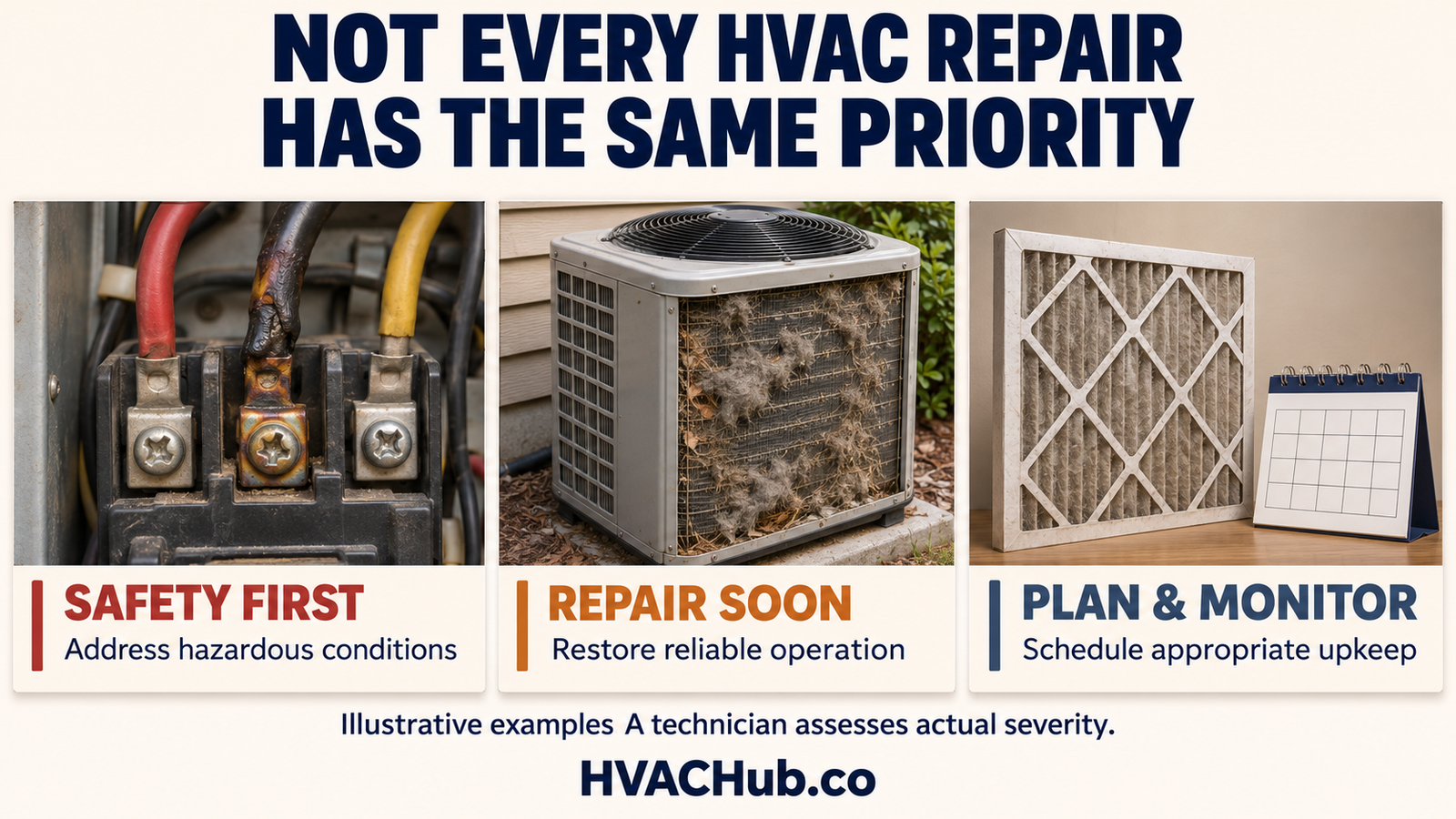
Priority 1: Address hazardous conditions
This category includes verified problems that create an unacceptable safety risk. The technician should describe the hazard, take required protective steps, and explain what work must happen before normal operation resumes.
Avoid promising that a quick repair will solve a broader problem without checking the cause. A burned connection, for example, may call for further inspection of the circuit and equipment.
Priority 2: Repair issues that threaten reliable operation
A system may still run while a failing component, airflow problem, or drainage issue increases the chance of a breakdown. Explain the likely effect on performance and what could happen if the customer delays the repair.
Be specific. “The outdoor coil is heavily blocked, which can affect heat rejection” gives the customer more useful information than “Your AC is about to die.” The exact urgency depends on the measured condition and system behavior.
Priority 3: Plan maintenance and monitor lower-risk findings
Some findings call for cleaning, routine service, or a follow-up inspection rather than an immediate major repair. An air filter that needs replacement is a common example, although severe airflow restriction can become urgent.
Explain what the customer can reasonably monitor, what signs should prompt another call, and when the contractor recommends completing the work. Never label an item optional if leaving it unresolved creates an unsafe condition.
How to Decide Which Repair Comes First
Begin with the customer’s original complaint. Does the finding explain the loss of cooling, noise, poor airflow, or repeated shutdown? Then consider whether the issue creates a hazard, affects system reliability, or represents routine upkeep.
Use test results, equipment guidance, and professional judgment. A fault that triggers a protective shutdown may need attention before other repairs can be evaluated. In some cases, fixing one problem reveals another issue that was not visible during the first inspection.
The goal is not to produce a perfect ranking before the technician has enough evidence. It is to make a clear plan based on what is known, identify any uncertainty, and explain when further testing is needed.
Avoid treating age alone as a diagnosis
An older unit may justify a discussion about long-term costs and replacement options. Age by itself does not prove that a specific component has failed. Explain actual findings, repair costs, equipment condition, and the limits of any estimate.
A homeowner may choose a repair even when replacement deserves consideration. The contractor should provide accurate information and avoid turning every multi-issue visit into a replacement pitch.
Explain the Options Without Selling Fear
Customers often hear several repair recommendations as a single expensive demand. A clear conversation separates what the technician found from what the technician recommends and what the customer can choose.

Try a simple structure: “Here is the issue we found. Here is how it affects your system. Here is the work we recommend. Here is what happens if you wait.” For safety concerns, explain any required shutdown or protective action clearly.
Use ordinary words where possible. Instead of relying only on terms such as contactor, static pressure, or condenser approach, describe the part’s job and the effect of the problem. You can still provide technical details in the written report for customers who want them.
Separate diagnosis, recommendation, and price
A good estimate distinguishes the confirmed condition from the proposed fix. It should also explain the scope of work, important exclusions, and any testing needed afterward.
Avoid presenting a guessed future failure as a certainty. Phrases such as “may increase the risk of a breakdown” are often more accurate than “this will fail next week,” unless the evidence supports a stronger statement.
When the technician cannot establish a cause during the visit, say so. A recommendation for additional diagnosis can be more honest than a confident repair quote based on incomplete information.
What If the Customer Can Afford Only One Repair?
A homeowner may accept that several problems exist but have a limited budget. That does not mean the contractor should abandon safety standards or pressure the customer into work they cannot afford.
Start by explaining any actions needed to address a hazardous condition. Then discuss which remaining repairs directly affect operation and which items may be scheduled later. Offer separate written prices where practical so the customer can understand each choice.
If the customer declines necessary work, document the discussion and follow applicable procedures. Never suggest that unsafe equipment can continue operating simply because the customer signed a waiver.
Give the customer a realistic next step
A useful plan might include one approved repair today, a follow-up appointment for a nonurgent item, and a maintenance reminder. Make sure that plan fits the actual condition of the equipment.
Do not assume that a customer who declines work today has rejected the contractor. They may need time to review the estimate, discuss household finances, or compare options. Respect that decision while making the risks and next steps clear.
The Repair Decision Roadmap
A repeatable process helps technicians stay consistent across different homes and service calls. The sequence is straightforward: diagnose the system, prioritize verified findings, explain the options, and agree on the next step.

Step 1: Diagnose
Record the original complaint, observations, relevant measurements, and tests. Distinguish confirmed faults from possible causes that still need investigation.
Step 2: Prioritize
Assess safety, system operation, and maintenance needs. Follow equipment instructions and applicable codes. Do not let repair price determine urgency.
Step 3: Explain
Show the customer what you found and what each proposed action would accomplish. State costs and limitations clearly. Invite questions without using fear or artificial deadlines.
Step 4: Decide and document
Record approved work, declined recommendations, safety actions, and any follow-up plan. Give the customer a copy of the findings in language they can understand.
This process protects customer choice while helping the contractor communicate consistently. It also gives the next technician a clearer history if the customer calls again.
Documenting Repairs the Customer Declines
Accurate service notes matter when a customer chooses not to proceed. Record the actual condition, the recommendation, the reason for concern, and what the customer decided. Avoid emotional comments or assumptions about their motives.
When relevant, note whether the equipment was left off, isolated, or otherwise made safe. Follow company policy, manufacturer instructions, and local legal requirements for signatures and service records.
A note that says “customer refused everything” provides little useful context. A better record explains the individual findings, the recommended actions, and which items the customer approved or declined.
Documentation should not be used to shift responsibility for unsafe work onto the homeowner. Contractors still need to meet their own professional and legal obligations.
When Several Repairs Point Toward Replacement
Multiple faults can raise a reasonable repair-versus-replacement question. However, three recommendations do not automatically mean a system is beyond repair.
Review the equipment’s age, condition, repair history, expected remaining service life, parts availability, warranty coverage, and the actual cost of the proposed work. Where possible, explain the difference between a short-term repair and a longer-term investment.
Do not promise a precise lifespan for repaired equipment. A repair may resolve the diagnosed issue without guaranteeing that unrelated parts will not fail later.
Give customers enough detail to compare options. Some will choose to repair. Others may prefer replacement after considering the full picture. Both decisions deserve a clear, respectful explanation.
How HVAC Owners Can Support Better Recommendations
Business owners can make repair discussions easier by giving technicians a consistent reporting process. A simple checklist can capture the complaint, confirmed findings, safety status, repair options, photographs, and customer decisions.
Training should focus on diagnostic accuracy and clear explanations, not just average ticket value. Review sample service reports to see whether a homeowner could understand why each recommendation matters.
Managers should also check whether technicians have enough time to complete proper tests. Rushing diagnosis can create confusing estimates, unnecessary callbacks, and lost trust.
Review patterns without forcing every call into a script
Different systems require different decisions. A gas furnace with a venting concern does not belong in the same workflow as a dirty cooling coil. A useful framework supports professional judgment rather than replacing it.
If customers repeatedly question the same recommendation, examine the explanation and evidence. Confusion may signal a training opportunity rather than customer resistance.
Frequently Asked Questions
Which HVAC repairs should be done first?
Address verified safety hazards according to applicable procedures. Next, consider faults that prevent normal operation or create a high risk of damage. Plan routine maintenance based on the actual equipment condition. A qualified technician must assess each case.
Can a homeowner delay a recommended HVAC repair?
Some nonurgent repairs and maintenance tasks can be scheduled later. Others may create safety risks or lead to further damage. The technician should explain the specific finding, the risks of waiting, and any steps needed before the equipment can operate safely.
Should HVAC technicians give separate prices for each repair?
Separate line items can help customers understand their options, provided the estimate clearly explains work that must happen together. Some repairs share labor or require additional testing, so prices should reflect the actual scope.
Does finding three problems mean the HVAC system needs replacement?
No. Several findings may involve minor maintenance, individual component repairs, or more serious issues. Replacement should follow an assessment of the whole system, not simply the number of items on an estimate.
How should a contractor handle declined HVAC repairs?
Explain the findings and risks, document the customer’s decision, and follow required safety procedures. Offer appropriate follow-up for work that can safely wait. Do not treat a signed refusal as permission to leave hazardous equipment operating.
The Bigger Question: Can the Customer Trust the Repair List?
A homeowner should leave a service visit understanding what the technician found, which concern matters most, what each repair would change, and what choices remain. Clear priorities help customers make decisions without feeling trapped between a large estimate and an unexplained risk.
For HVAC contractors, that clarity can matter as much as technical skill. It reduces confusion, supports sound decisions, and makes the service record useful for future visits.
Contractor discussion: When you find three problems on one HVAC call, how do you explain which repair matters most without making the homeowner feel that you are trying to sell everything? Share your approach with the international HVAC community at HVACHub.co.



Responses