
HVAC Social Media Marketing: How to Grow Your Business Without Paid Ads in 2026

HVAC social media marketing is one of the most underused growth tools available to HVAC business owners in 2026. Most HVAC businesses rely entirely on word of mouth, Google rankings, or paid ads to find new customers. Social media sits unused or inconsistent — a few posts here and there, then nothing for weeks. Meanwhile, HVAC companies that show up consistently on platforms like Facebook, Instagram, and TikTok build trust, generate enquiries, and grow their reputation without spending a dollar on advertising. This guide explains which platforms work best for HVAC businesses, what content to post, and how to turn social media followers into paying customers.
Why HVAC Social Media Marketing Works in 2026
Social media has changed how customers choose service businesses. Before calling an HVAC company, most customers now check their social media presence. They look for recent posts, customer reviews, and evidence that the business is active and professional. A company with no social presence — or one that last posted six months ago — raises doubt in the customer’s mind before they even pick up the phone.
HVAC social media marketing solves that problem. A consistent, professional social media presence signals to potential customers that your business is active, trustworthy, and good at what it does. It also keeps your brand in front of existing customers — so when their system needs attention, your business is the first name they think of.
Furthermore, organic social media content costs nothing but time. A well-produced video of a completed job, a quick tip about maintaining a split system, or a before-and-after photo of a new installation can reach hundreds or thousands of local people without a single dollar in advertising spend. That reach is available to every HVAC business willing to show up consistently.
Which Social Media Platforms Work Best for HVAC Businesses
Not every platform delivers the same results for HVAC businesses. Focusing on the right ones saves time and generates better results than spreading effort across every channel.
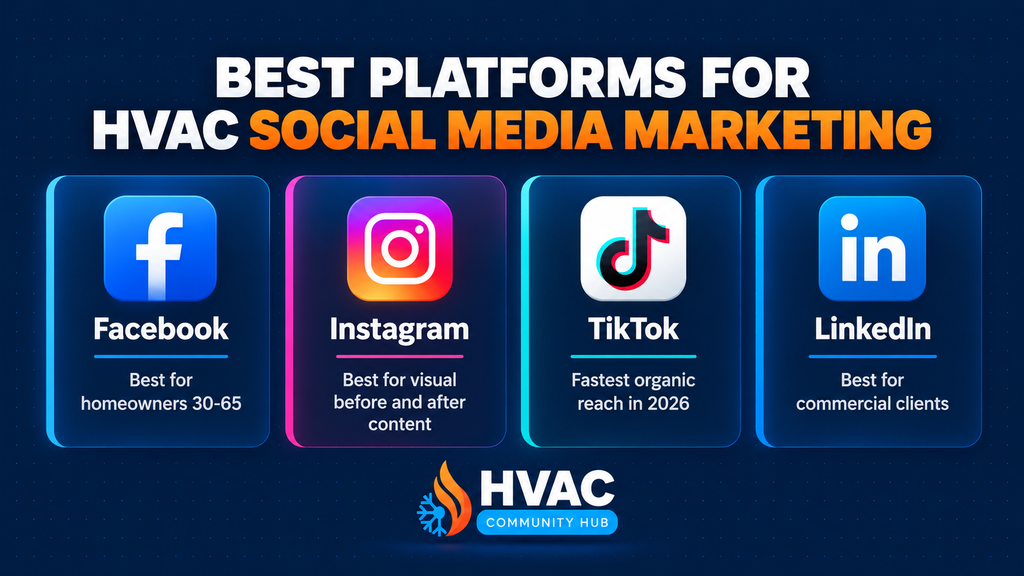
Facebook remains the most effective platform for HVAC social media marketing in most markets. Your target audience — homeowners aged 30 to 65 — uses Facebook more than any other platform. A well-maintained Facebook business page with regular posts, customer reviews, and response to messages builds credibility and generates direct enquiries. Facebook Groups are also powerful — joining local community groups and providing genuine, helpful advice positions your business as the trusted local HVAC expert.
Instagram works exceptionally well for HVAC businesses that produce visual content. Before-and-after installation photos, clean ductwork images, and short Reels showing a technician at work all perform strongly on Instagram. The platform skews younger than Facebook — ideal for reaching homeowners in their 30s and early 40s who are renovating or building new homes. Short Reels videos receive significantly more reach than static images on Instagram in 2026.
TikTok
TikTok has become a genuine lead generation tool for trade businesses in 2026. Short, educational videos — “why your air conditioner smells musty”, “how to check if your HVAC filter needs changing”, “signs your system is low on refrigerant” — regularly reach tens of thousands of local viewers with zero advertising spend. HVAC businesses that post consistently on TikTok often report it as their fastest-growing source of new enquiries. The barrier to entry is low and the organic reach is higher than any other platform right now.
LinkedIn works best for HVAC businesses targeting commercial clients, property managers, and facilities teams rather than residential homeowners. If your business handles commercial installations or maintenance contracts, LinkedIn is worth including in your HVAC social media marketing strategy. Sharing case studies, project outcomes, and industry insights builds credibility with the decision-makers who award large contracts.
What to Post on Social Media as an HVAC Business
The most common question HVAC business owners ask about social media is what to actually post. The answer is simpler than most people expect. Your everyday work is more interesting to potential customers than you think.
Before and After Content
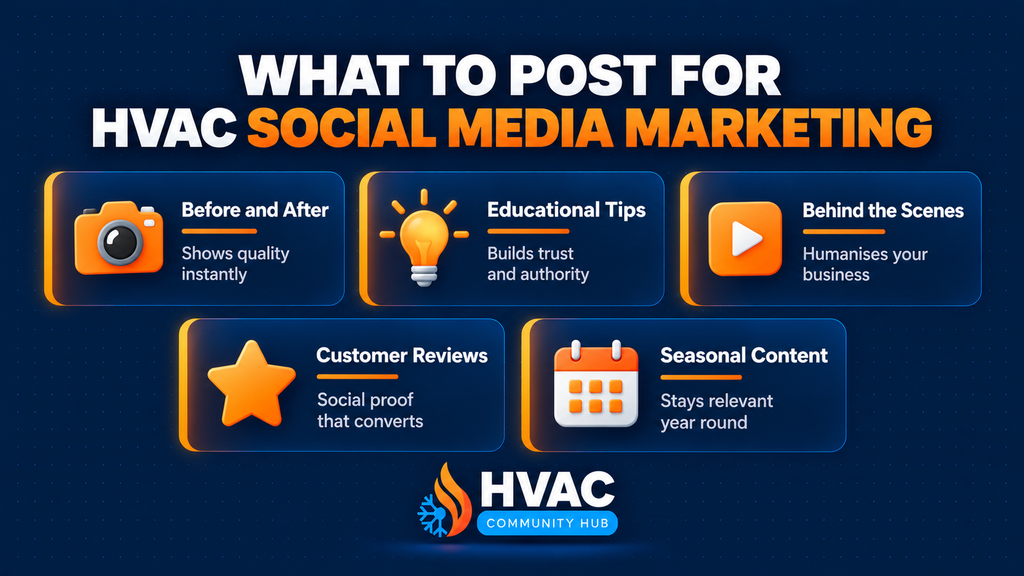
Before-and-after photos and videos are the most effective content type for HVAC social media marketing. A photo of a dirty, poorly installed system beside a clean, professionally completed installation tells a powerful story without a single word of explanation. These posts generate strong engagement, build instant credibility, and attract customers who want quality work — not just the cheapest quote.
Educational Tips and Advice
Short posts explaining how to check an air filter, what an unusual noise from an HVAC unit might mean, or when to call a professional instead of DIYing a fix position your business as the trusted local expert. Customers who learn something useful from your content remember you when they need help. Educational content also performs strongly in search on platforms like TikTok and YouTube, extending your reach beyond your existing followers.
Behind the Scenes Content
People buy from people they trust. Showing your team at work — arriving at a job, working through a complex installation, or celebrating the completion of a large project — humanises your business and builds connection with your audience. Behind the scenes content does not need to be polished or professional. Authentic, real-world footage of your team doing great work is far more effective than a perfectly produced promotional video.
Customer Testimonials and Reviews
Sharing a customer review or testimonial as a social media post is one of the simplest and most powerful forms of HVAC social media marketing. Screenshot a five-star Google review, add your branding, and post it. Video testimonials from satisfied customers perform even better. Social proof builds trust faster than any promotional message your business could create.
Seasonal and Timely Content
Posting content that matches the season — reminders to service a system before summer, tips for keeping energy bills down during peak cooling season, or advice on preparing an HVAC system for winter — keeps your content relevant and timely. Seasonal content also gives you a natural posting rhythm throughout the year without having to think too hard about what to post next.
How Often Should an HVAC Business Post on Social Media
Consistency matters more than volume in HVAC social media marketing. Posting three times a week consistently delivers far better results than posting ten times in one week and then going silent for a month. Social media algorithms reward accounts that post regularly. More importantly, consistent posting keeps your business visible to potential customers over time — building familiarity and trust that a sporadic presence never achieves.
A realistic posting schedule for most HVAC businesses is three to four posts per week across one or two platforms. Focus on quality and consistency rather than trying to post on every platform every day. One strong before-and-after post, one educational tip, and one behind-the-scenes piece of content each week gives you a solid foundation to build on.
Batch creating content once a week saves significant time. Spend one hour on a Monday capturing photos and short videos from the week’s jobs. Then schedule those posts across the week using a free scheduling tool. Your social media runs on autopilot while your team focuses on the actual work.
How to Turn Social Media Followers Into Paying Customers
Followers and likes are not the goal of HVAC social media marketing. Enquiries and booked jobs are the goal. These strategies convert your social media audience into paying customers.
Always Include a Clear Call to Action
Every post should tell the viewer what to do next. “Call us today for a free quote”, “Click the link in our bio to book online”, or “Send us a message to find out more” all give the viewer a clear next step. Posts without a call to action generate engagement but rarely generate enquiries.
Respond to Every Comment and Message Quickly
Speed of response on social media directly affects how many enquiries convert into booked jobs. A potential customer who sends a message on Instagram at 7pm and receives a reply the next afternoon has already called a competitor. Automated responses that acknowledge the message instantly — and promise a follow-up within a set timeframe — keep the customer engaged until your team can respond properly. You can read more about setting up these automated responses in our HVAC business automation guide.
Link Your Social Media to Your Website
Every social media profile should link directly to your website. Your website converts visitors into enquiries far more effectively than a social media profile alone. Make sure the link goes to a page that clearly explains your services, shows your contact details, and makes it easy to get a quote or book online. For tips on making sure your website converts social media traffic effectively, read our HVAC website maintenance guide.
Common HVAC Social Media Marketing Mistakes to Avoid
Most HVAC businesses that try social media and give up make the same handful of mistakes. Avoiding these saves time and delivers better results faster.
Posting only promotional content is the most common mistake. A feed full of “call us for a quote” posts gives followers no reason to engage or return. Mix promotional posts with educational, behind-the-scenes, and social proof content to keep your audience interested.
Ignoring comments and messages destroys trust faster than inconsistent posting. A business that posts regularly but never responds to questions or comments looks unresponsive and unprofessional. Set aside ten minutes each morning to respond to any interactions from the previous day.
Starting on too many platforms at once spreads effort too thin and leads to burnout. Pick one or two platforms where your target customers spend the most time. Build a consistent presence there before expanding to other channels.
Measuring the Results of Your HVAC Social Media Marketing
Tracking your results tells you what is working and where to focus your effort. These are the key metrics worth monitoring for HVAC social media marketing.
Profile views show how many people are discovering your business through social media. Engagement rate — likes, comments, and shares divided by total followers — shows how relevant and interesting your content is to your audience. Direct messages and enquiries from social media show how effectively your content converts viewers into potential customers.
Most platforms provide free built-in analytics that track all of these metrics automatically. Review them once a month to identify which content types perform best, which platforms drive the most enquiries, and where to focus your effort in the coming weeks. For a broader understanding of how social media fits into your overall digital marketing strategy, Hootsuite’s 2026 Social Media Trends Report offers useful data on which platforms and content types are delivering the strongest results for service businesses right now.
Frequently Asked Questions About HVAC Social Media Marketing
How long does it take to see results from HVAC social media marketing?
Most HVAC businesses see measurable growth in profile views and engagement within four to eight weeks of posting consistently. Enquiries directly from social media typically start appearing within two to three months of a consistent posting schedule.
Do I need professional photos and videos for social media?
No. Authentic, real-world content filmed on a smartphone performs as well as — and often better than — professionally produced videos on most platforms. Natural lighting, a steady hand, and genuine content from your actual jobs is all you need to get started.
Should I respond to negative comments on social media?
Always. A calm, professional response to a negative comment shows potential customers that your business handles problems with integrity. Ignoring or deleting negative comments damages trust more than the original comment ever could.
How do I get my team involved in creating social media content?
Start by asking one team member to take a quick photo or short video at the start and end of each job. You do not need everyone involved — one person with a smartphone capturing real moments from the working day gives you more than enough content to post consistently every week.
HVAC Social Media Marketing Builds the Business Competitors Cannot Copy
Your competitors can match your prices. They can copy your service packages. They cannot copy your team, your personality, and the authentic story of your business told consistently over months and years on social media. That authenticity is the most powerful competitive advantage available to any HVAC business — and it costs nothing to build except consistency and time.
Take the Next Step
First, choose one platform where your target customers spend the most time and create or update your business profile this week. Second, take a before-and-after photo on your next job and post it with a short description of the work. Third, commit to three posts per week for the next four weeks and track how your profile views and enquiries change.
If you want a complete HVAC social media marketing strategy built and managed for your business, HVAC Hub helps HVAC business owners create consistent, professional social media content that generates real enquiries without paid advertising.
Visit hvachub.co to find out how we help HVAC businesses grow through social media in 2026. You can also read our HVAC SEO guide to understand how social media and search engine optimisation work together to build a dominant online presence for your HVAC business.
Responses