
Your HVAC Technician Arrived on Time. So Why Did the Service Call Still Take All Day?

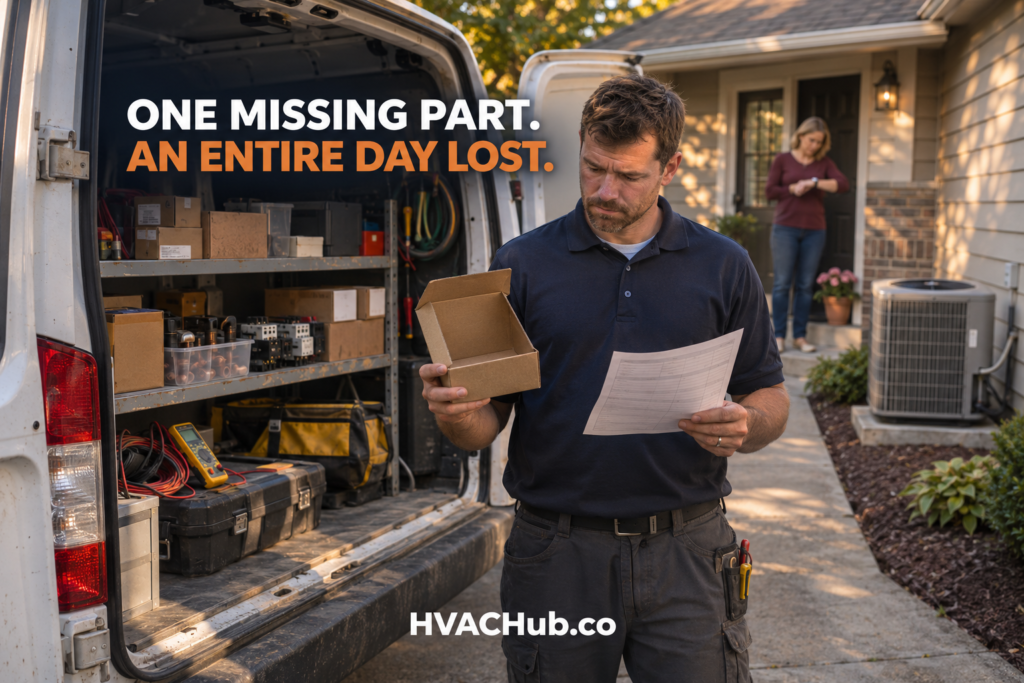
At 9 a.m., an HVAC technician arrives at a customer’s home to diagnose an air conditioner that stopped cooling. The diagnosis goes smoothly. The technician identifies a failed component and explains the repair. Then comes the problem: the replacement part isn’t in the van.
A trip to the supply house sounds simple until the part is unavailable. The technician calls another branch, waits for confirmation, and drives across town. Meanwhile, the homeowner still has no cooling, and the next scheduled customer is waiting. A visit that should have been completed in one trip now takes much of the day.
This is why HVAC truck stock management matters. Inventory is not just about neat shelves or buying more parts. It connects diagnosis, first-time repair completion, technician productivity, cash flow, and customer expectations. A well-managed van helps contractors carry the right items without turning every vehicle into an expensive mobile warehouse.
The HVAC Service Call That Lost an Entire Afternoon
Imagine a residential cooling call during a busy summer week. The technician confirms that a common electrical part has failed, checks the related circuit, and prepares an estimate. The customer approves the repair. Only then does the technician discover that the last matching replacement part was used on yesterday’s call and never replenished.
The office checks the warehouse. No stock. The closest supplier has a similar component, but it may not meet the equipment’s requirements. A second supplier says the correct item is available, although someone must collect it before closing. The technician cannot safely substitute an unsuitable component just to finish the visit.
Now the company must choose between waiting, rescheduling, or sending another employee to retrieve the part. None of those options restores the lost time. The customer may understand the delay, but they still need an accurate explanation and a realistic return plan.
Stock decisions should follow actual demand, equipment compatibility, and replenishment discipline.
Why a Correct Diagnosis Does Not Guarantee a Completed Repair
Technicians can identify a fault correctly and still leave without completing the work. Parts may be missing, damaged, incorrectly labeled, unsuitable for the equipment, or unavailable from local suppliers. Some repairs also require authorization, special tools, or additional testing before work can proceed.
Contractors should distinguish an inventory-related return trip from a necessary second visit. A custom part that must be ordered is different from a frequently used item that should have been restocked. Treating both situations as the same problem leads to misleading performance reports.
Ask which return visits could reasonably have been prevented. This leads to better decisions than blaming technicians for every second visit.
The Hidden Cost of a Supply-House Run
A parts run costs more than the fuel used to reach the counter. The technician spends time driving, parking, checking availability, waiting, and returning to the job. Dispatch may have to move another appointment. Office staff may field customer calls and rearrange the schedule.
For illustration, suppose an unexpected parts run consumes 90 minutes. If that happens four times in a week, the company has lost six hours of technician availability before counting office coordination or customer delays. These are hypothetical figures, not an industry average; each business should calculate its own experience.
During a heat wave, an unexpected parts run can push an urgent call into the next day. Inventory affects service capacity, not just purchasing.
Track the real reason for each delay
When a job cannot be finished, record a simple reason code: missing truck stock, warehouse shortage, supplier backorder, special-order part, wrong component, additional diagnosis, or customer approval pending. Clear categories reveal patterns without turning every delay into an employee performance issue.
Review the records monthly. If several technicians repeatedly leave jobs to buy the same approved component, the company has a stocking problem worth investigating. If delays come mainly from uncommon equipment-specific parts, better sourcing and customer communication may matter more than larger van inventories.
What Should Every HVAC Service Van Carry?
There is no universal list that fits every HVAC contractor. A company serving residential split systems has different needs from a team focused on commercial refrigeration, boilers, or specialized controls. Climate, equipment brands, service agreements, and local supplier access all influence stock choices.
Start with completed service history. Identify parts and consumables technicians actually used over the past several months. Separate frequently used, reasonably interchangeable items from model-specific components that require exact matching. Review the findings with experienced technicians and whoever handles purchasing.
Common service inventory categories may include approved electrical replacement components, appropriate fuses, connectors, condensate service materials, fittings, fasteners, filters, and routine consumables. Exact specifications matter. Electrical ratings, refrigerant compatibility, manufacturer instructions, and local requirements take priority over convenience.
Avoid treating a broad category such as ‘capacitors’ as one interchangeable item. A replacement must meet the equipment’s applicable specifications. Stock systems should identify the actual part, rating, and approved use rather than relying on a vague shelf label.
Use minimum and maximum stock levels
A practical starting point is a minimum quantity that triggers replenishment and a maximum quantity that prevents unnecessary accumulation. Set those levels from usage patterns, delivery lead times, and the consequences of running out. Revisit them when demand changes.
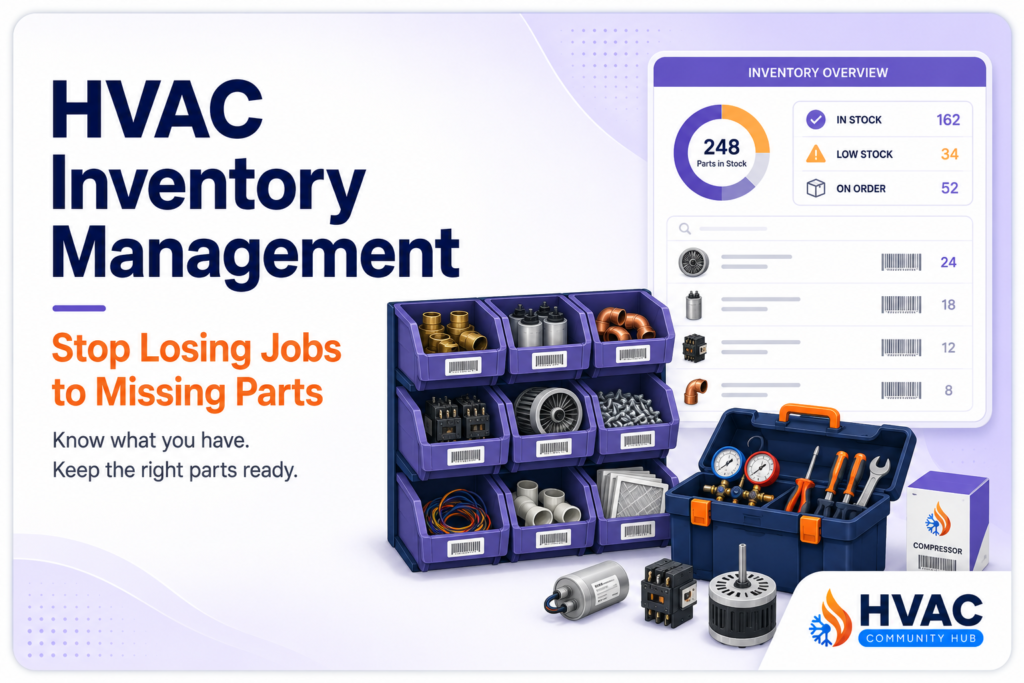
A small contractor may begin with a printed checklist and labeled bins. A larger operation may use inventory software, barcode scans, or purchasing integrations. The technology matters less than whether technicians can find parts quickly and whether used stock is reliably replaced.
Organized Inventory Versus Overstocked Trucks
A van packed with parts is not automatically well prepared. Overstocking ties up cash, makes items harder to find, increases the risk of damage, and can leave obsolete stock on shelves for years. Poor organization can create a missing-part problem even when the correct component is physically inside the vehicle.

Compare two vans carrying similar categories of supplies. One has mixed boxes, loose components, and uncertain quantities. The other has secure shelves, labeled bins, and a restocking process. The second technician is more likely to confirm availability quickly, but organization alone does not guarantee a first-time fix.
Review slow-moving items. Transfer usable parts where needed, return eligible stock, and dispose of damaged items appropriately. Follow manufacturer storage guidance.
Make the shelf label useful
Labels should distinguish parts that look alike but have different specifications. Include a part number or clear identifier, approved application information when needed, and the reorder location. Keep the layout consistent across vehicles so technicians can find items without learning a new system in every van.
Inventory accuracy also depends on habits. When a technician uses a stocked part, that use should trigger a reliable update. A perfect shelf layout becomes unreliable if yesterday’s repair is never recorded.
How to Measure HVAC First-Time Fix Rate
The first-time fix rate measures the share of eligible service jobs completed without a return visit to resolve the original issue. Businesses should define ‘eligible’ consistently before comparing technicians, teams, or months. Planned multi-visit installations and authorized special-order work may need separate treatment.
For example, if 80 eligible repair jobs are completed and 64 are resolved on the first visit, the first-time fix rate is 80%. That figure is a calculation example, not a benchmark. A higher percentage is useful only when repairs remain safe, accurate, and durable.
Do not encourage technicians to rush diagnosis or install unsuitable components to improve the metric. A job that appears complete but produces a callback is not a success. Track callbacks and customer outcomes alongside first-time completion.
Look beyond the headline percentage
Review the reasons for second visits. Were parts unavailable? Did the technician need special equipment? Was the fault intermittent? Did the customer delay authorization? These distinctions help managers improve systems rather than punish technicians for circumstances outside their control.
You can also track unplanned parts runs per technician-week, stockouts of frequently used items, replenishment accuracy, and inventory value per vehicle. Choose a few measures that lead to decisions. A complicated dashboard is not helpful if nobody changes purchasing or restocking practices.
When the Supplier Does Not Have the Part
Even a carefully stocked service van cannot carry every possible replacement component. Supplier relationships and purchasing procedures become important when an uncommon part fails or local inventory runs out.
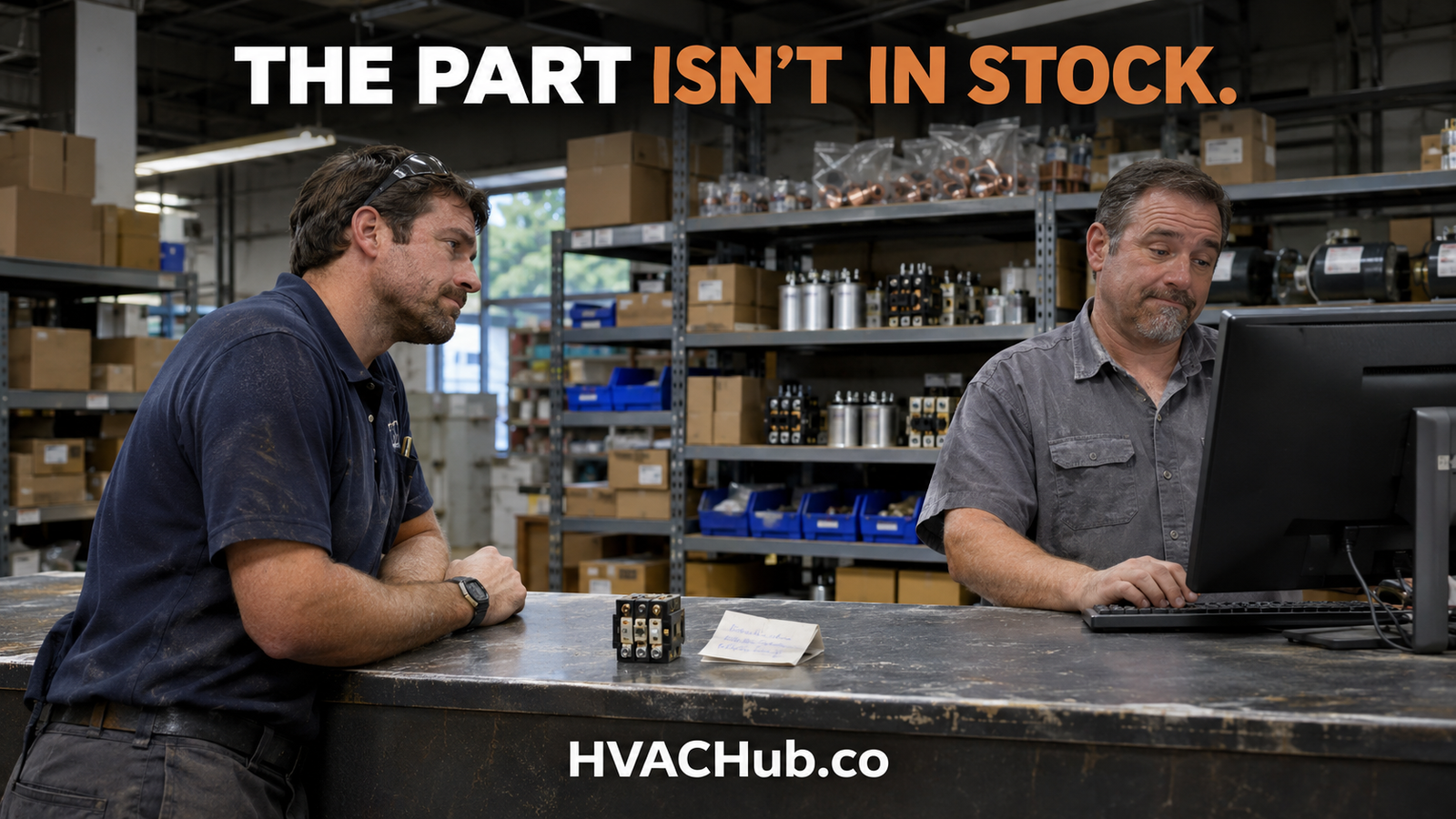
Before sending a technician across town, confirm the exact part number, required specifications, availability, branch location, and pickup arrangements. Ask whether stock is physically available rather than assuming an online listing guarantees immediate pickup.
If a suitable alternative is proposed, verify compatibility through reliable manufacturer or technical guidance. Do not substitute parts solely because they look similar or are available sooner. Safety, performance, warranty conditions, and applicable requirements must guide the decision.
When the correct part must be ordered, tell the customer what is known and what remains uncertain. Explain whether the equipment can safely operate, provide a realistic update schedule, and avoid promising a delivery date that the supplier has not confirmed.
Give dispatch useful information
A technician’s note should tell the office which part is required, whether it has been ordered, who is responsible for follow-up, and what conditions must be met before a return appointment can be booked. This prevents the customer from repeating the same story to several people.
Where appropriate, keep the customer informed even when the update is simply that the order is still pending. A clear explanation and a specific next contact point often matter more than repeated vague assurances that someone will call soon.
The Human Cost of a Return Visit
The customer took time off work, waited through the diagnosis, and approved the estimate. When the technician must leave without completing the repair, the customer may face another uncomfortable night and another appointment window.

The technician may also feel frustrated. They completed the diagnostic work but cannot deliver the result the customer expected. If the office repeatedly schedules tight appointment windows without accounting for parts availability, the pressure increases across the whole team.
Be transparent without blaming colleagues or suppliers. Explain what happened, what the company is doing, and when the customer can expect the next update. If a repair cannot be completed safely, say so clearly. Never let the desire to avoid a second visit override proper procedures.
A Practical 30-Day HVAC Truck Stock Improvement Plan
Week 1: Audit the current situation
Choose a sample of recent service calls and identify unplanned parts runs, missing items, and repeat visits. Inspect several vans with technicians present. Record what is actually stocked, what is damaged, and which labels or bins create confusion.
Keep the audit focused. The goal is not to count every screw on day one. Find the shortages and organization problems that most often disrupt repairs.
Week 2: Build a realistic stock list
Use service history to choose common items and define their exact specifications. Set initial minimum and maximum quantities, assign shelf locations, and decide which specialized parts belong in central inventory rather than every van.
Confirm storage requirements and purchasing sources. Include technician feedback because field experience can reveal seasonal needs that raw purchasing reports miss.
Week 3: Test a simple replenishment process
Pilot the system with one or two vans. Make it easy to record parts used and identify items below minimum stock. Decide who checks the list, places orders, and confirms that replenishment actually reaches the vehicle.
A paper form can work if it is consistently used. A digital system can work if the team trusts its quantities. Choose the method that fits the operation and verify it against physical inventory.
Week 4: Measure and adjust
Compare missing-part delays and unplanned supply-house runs with the starting period. Review any repeat visits that still occurred. Ask technicians which items were useful, which took up unnecessary space, and what information dispatch needed sooner.
Review results over time and across seasonal demand changes. Build a sustainable routine, not a one-time cleanup.
Common HVAC Inventory Mistakes to Avoid
The first mistake is stocking by habit alone. Technicians may remember the one rare part they needed last week while overlooking items used repeatedly across the season. Combine experience with actual service records.
The second mistake is buying too much to eliminate every possible shortage. Excess inventory can absorb cash that the business needs for payroll, vehicles, and other operating costs. Some parts are better sourced when required.
The third mistake is failing to record usage. Without a dependable replenishment step, the inventory list slowly becomes fiction. A van may look organized while its most useful bins are empty.
The fourth mistake is judging technicians solely by first-time fix rate. Service mix, equipment type, customer decisions, and supplier availability all affect the result. Review context before drawing conclusions.
Finally, do not confuse fast completion with good service. Proper diagnosis, compatible parts, safe workmanship, and clear customer communication are more important than an impressive number on a report.
Frequently Asked Questions
What is HVAC truck stock management?
HVAC truck stock management is the process of deciding which service parts and supplies belong in each vehicle, organizing them, recording their use, and replenishing stock. The aim is to support efficient repairs without carrying excessive inventory.
How can an HVAC company improve its first-time fix rate?
Start by identifying why eligible repairs require return visits. Improve diagnosis, stock frequently used approved parts, verify supplier availability, and give technicians accurate equipment information before appointments. Measure results alongside callbacks and repair quality.
Should every HVAC van carry the same parts?
Not necessarily. A common core inventory can make restocking easier, but vehicle stock should reflect the technician’s work, local equipment, seasonal demand, and service territory. Specialized teams may need different components and tools.
How often should service van inventory be checked?
Frequently used items should be recorded as they are consumed and replenished through a defined process. Periodic physical checks help catch errors, damage, and obsolete stock. The exact frequency depends on service volume and inventory value.
Can better truck inventory eliminate return visits?
No. Some repairs need special-order parts, additional diagnosis, customer approval, or planned follow-up. Better inventory can reduce preventable delays, but it cannot remove every reason for a second visit.
The Real Goal Is a Completed Repair, Not a Full Van
An HVAC service van is useful when its inventory matches the work technicians actually perform. The best system balances readiness, compatibility, organization, replenishment, and the cost of carrying stock. It also gives dispatch and customers accurate information when a repair cannot be finished immediately.
One missing part can turn a straightforward call into a long day. A reliable stock process will not solve every service challenge, but it can prevent avoidable trips and give technicians more time to complete the work they were sent to do.
Contractors, what is the one part you always seem to need when it is not on the truck? How do you decide what belongs in your service van? Share your experience with the HVAC community at HVACHub.co.



Responses