
HVAC Callbacks: Why Technicians Get Called Back and How to Prevent Them

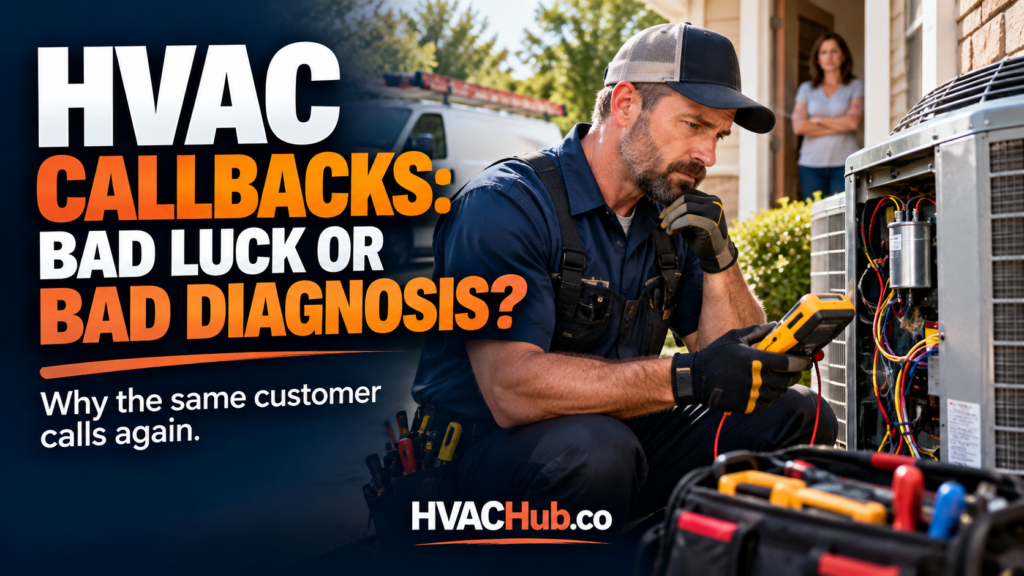
The technician finishes a repair on Monday. The equipment runs when they leave. By Wednesday, the customer is calling again with the same complaint. Is that simply bad luck, a new fault, or something the first visit missed? HVAC callbacks can happen for several reasons, and the right response starts with understanding the original complaint—not automatically blaming the technician or replacing another part.
For contractors, repeat visits consume scheduling capacity and can strain customer confidence. For technicians, they create pressure to find a quick answer. This guide explains how to classify callbacks, avoid incomplete diagnosis, communicate clearly, and build a practical review process without inventing a universal callback rate or assuming every return visit was preventable.
What Counts as an HVAC Callback?
A callback is a return visit after an earlier service or installation where the customer reports a continuing or new concern. Companies should define the term consistently. A repeat visit for the same symptom differs from a new failure, an unrelated issue, or a planned follow-up. Without those distinctions, a callback report can unfairly penalize technicians and hide the real patterns.
Record the first visit date, original complaint, equipment involved, work performed, and what changed between visits. Then classify the return after diagnosis. The classification should follow the evidence rather than the customer’s frustration or the manager’s first impression.
Seven Reasons HVAC Technicians Get Called Back
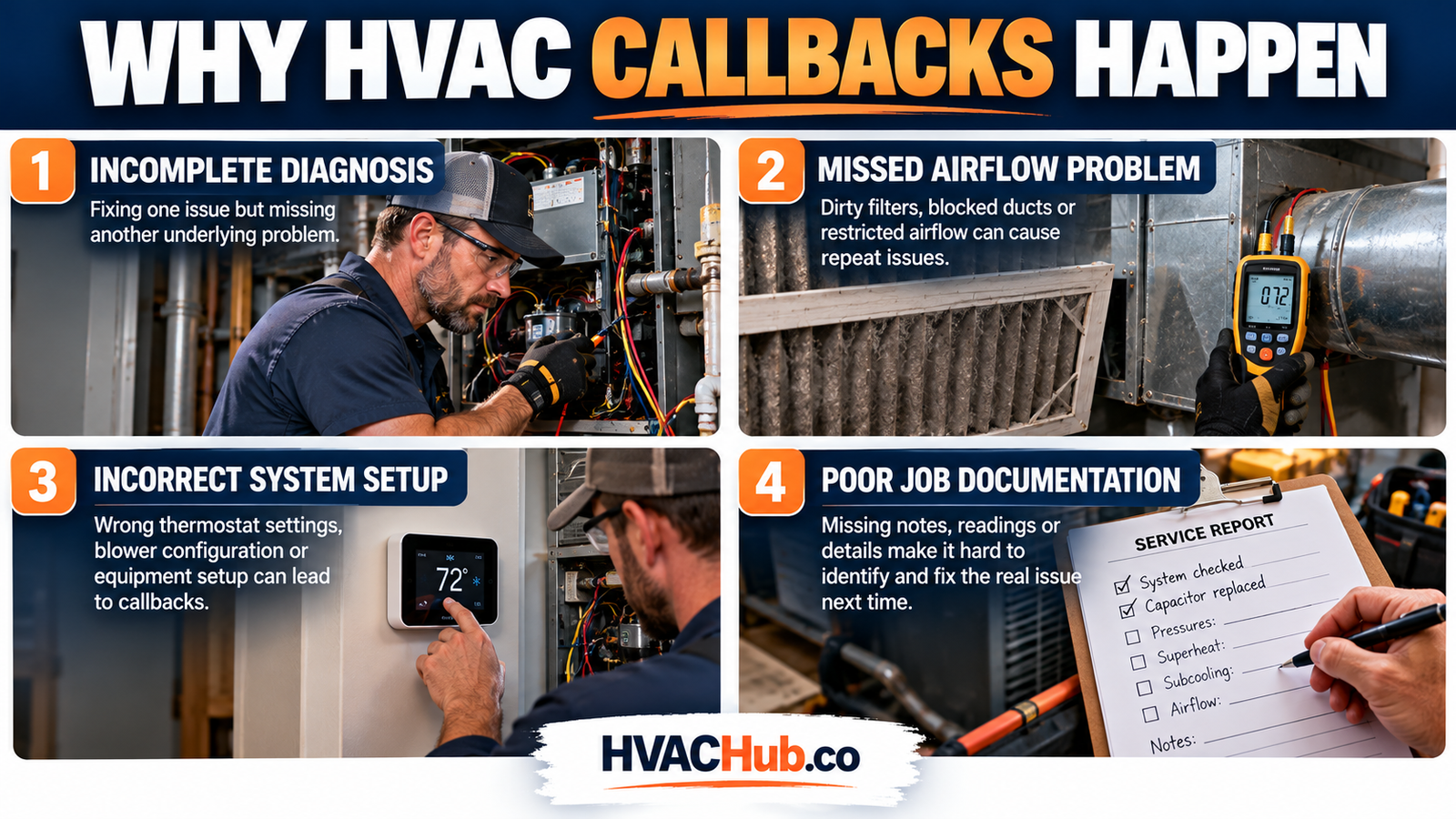
1. The symptom was treated instead of the underlying cause
A technician may spot a failed capacitor quickly but still needs to find out why the system stopped and check the rest of the equipment. A part replacement can restore operation while another fault remains. Confirm the original complaint, test the relevant system functions, and document the post-repair result. Avoid replacing additional parts without diagnostic evidence.
2. Airflow restrictions were overlooked
A comfort complaint can involve a dirty filter, blocked return, restrictive ductwork, incorrect blower configuration, or coil condition. Poor airflow can also affect refrigerant test results. When symptoms point to airflow, use the manufacturer’s test steps and the right tools. For a detailed method, see our HVAC static pressure testing guide.
3. The equipment was tested for too little time
A system may start normally but fail later in the cycle. Other faults appear only after the system runs longer or a control changes state. Depending on the complaint, check how the system responds, including controls, drainage, defrost, staging, or safety devices. Choose the test method and duration based on the equipment and its service instructions.
4. Installation or setup details were missed
Incorrect airflow settings, control wiring, thermostat configuration, drain slope, duct transitions, or accessory setup can create repeat complaints even when the main unit is new. During an installation callback, verify commissioning records and the actual installed configuration before assuming the equipment is defective. A good checklist supports judgment; it does not replace it.
5. The original complaint was not documented clearly
“AC not working” is not a useful diagnostic history. Was the system not starting, cooling unevenly, short cycling, leaking, making noise, or failing only at certain times? Without that context, the second technician may repeat the first visit from scratch. Document the customer’s exact symptom, relevant operating conditions, and what the system did during testing.
6. The customer expected a different result
Customers may call again when no one clearly explains what the repair will fix. A repair may resolve the immediate failure without correcting an unrelated comfort or duct issue. Explain what your tests confirmed, what remains uncertain, and what needs more testing. Written notes reduce misunderstandings and help dispatch handle a follow-up accurately.
7. A separate failure happened after the visit
Not every callback reflects poor workmanship. Aging systems can develop an unrelated failure shortly after a legitimate repair. The correct response is to investigate the new symptom fairly, compare it with the first visit, and explain the evidence to the customer. Avoid automatically charging or automatically assigning blame before the second diagnosis is complete.
A Better Diagnostic Process Before Closing the Job
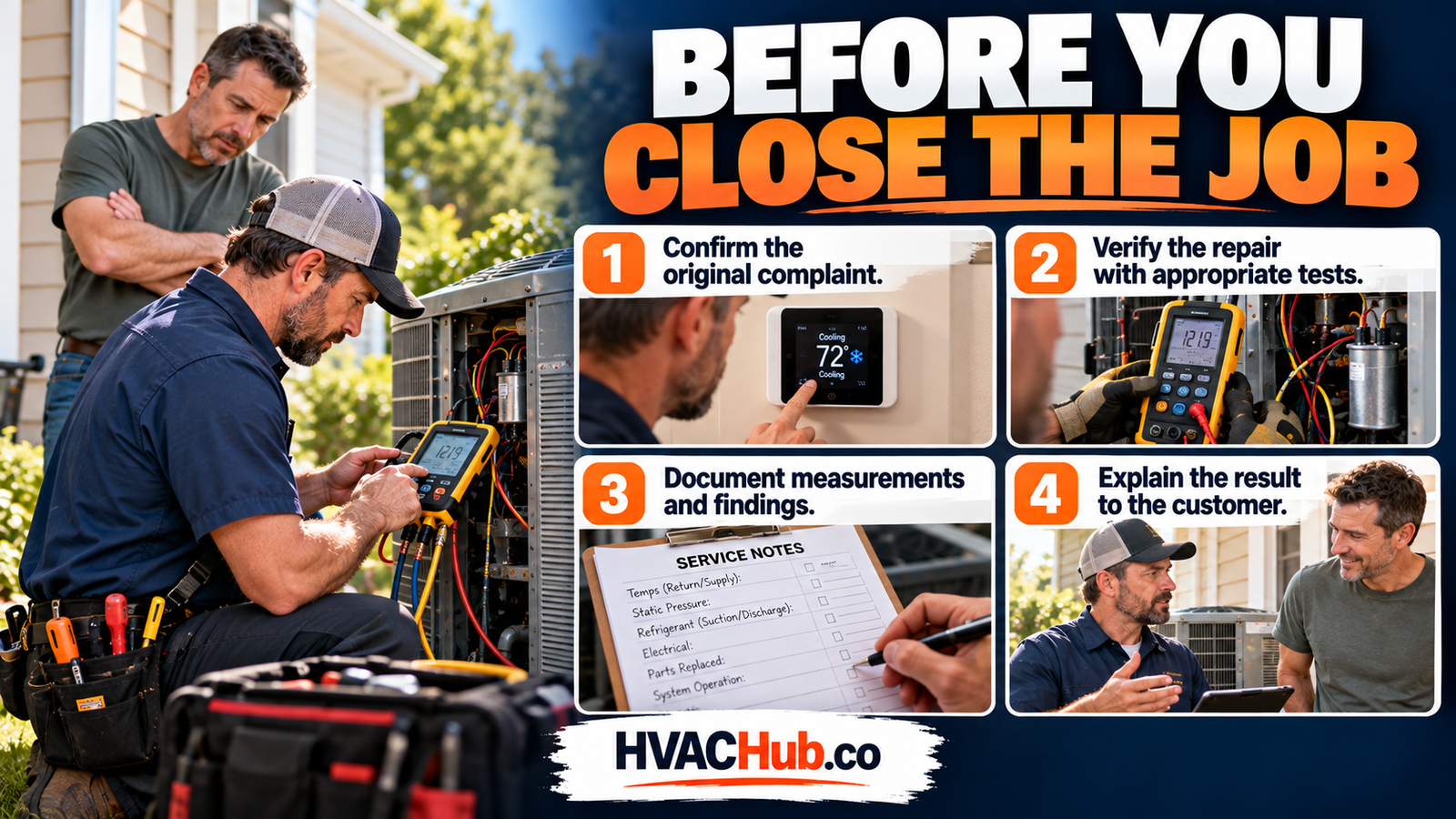
The goal is not to add an hour of unnecessary testing to every call. Instead, build a repeatable closeout process that fits the equipment, complaint, and work performed. The technician should explain the fault, the repair, and the test results that show the system now works as expected.
- Restate the customer’s original complaint and confirm the repair addresses that symptom.
- Record the failed component or diagnosed condition, including the evidence that supports the conclusion.
- Check related operating conditions when relevant: airflow, electrical measurements, controls, condensate management, or safety functions.
- Test the equipment in the appropriate operating mode and record meaningful post-repair observations.
- Explain any unresolved issues, limitations, or recommendations before leaving.
- Take clear, relevant photographs where company policy and customer permission allow.
- Write notes another technician could use without calling the first technician for clarification.
For example, after restoring a cooling system, the technician may verify that the system starts correctly, the controls respond, and the original symptom is no longer present. Choose extra tests based on the system and complaint instead of collecting numbers that do not help.
What Dispatch Should Ask When a Customer Calls Back
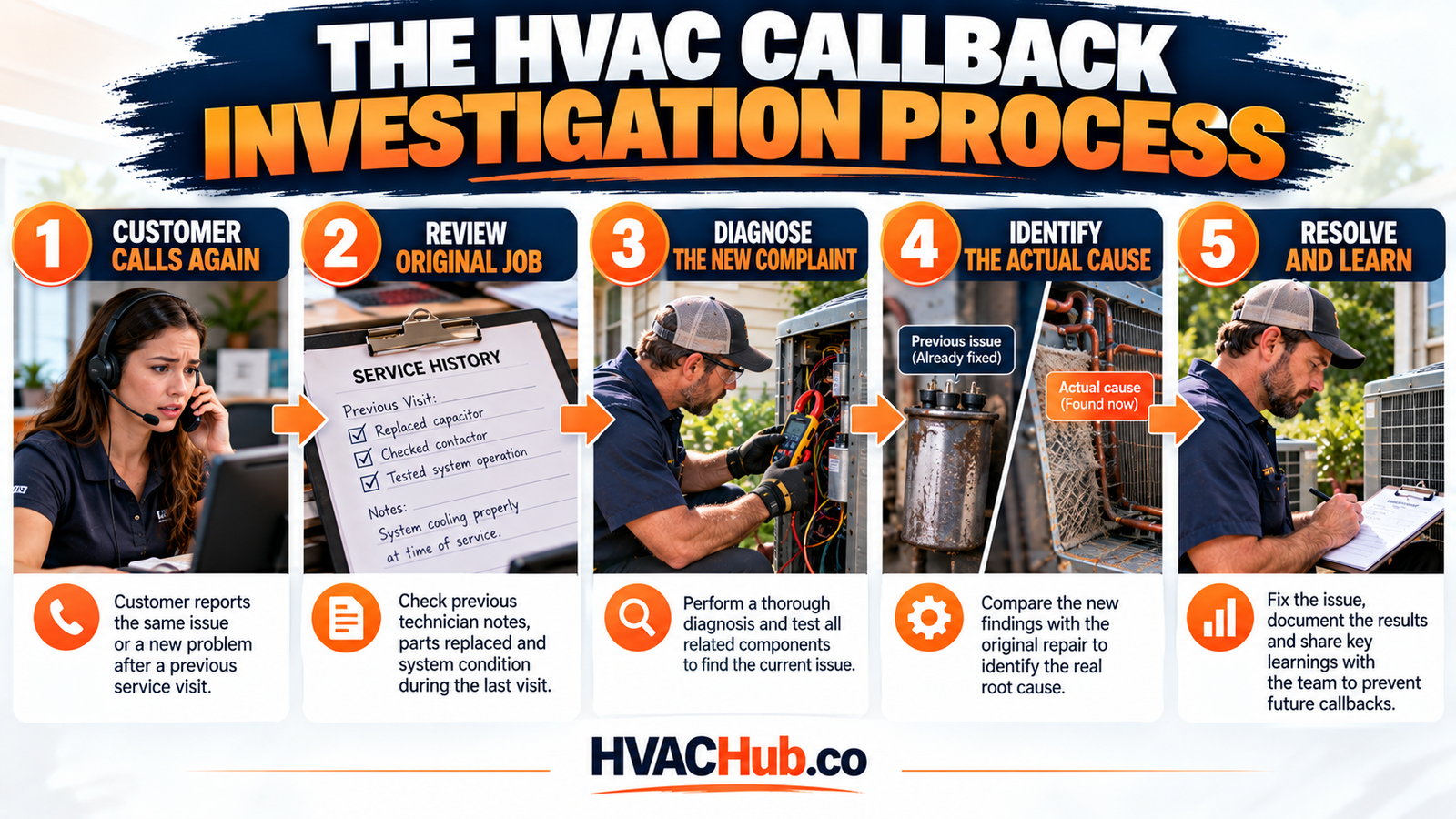
A strong callback process begins before the second truck rolls. Dispatch should listen without arguing about fault, then capture the information the returning technician needs. Ask whether the symptom is identical to the first complaint, when it started, whether the equipment is operating at all, and whether any new noises, leaks, odors, or error indications are present.
Also ask about any immediate safety concerns. Suspected gas leaks, smoke, electrical hazards, or carbon monoxide concerns require the company’s emergency and safety procedures rather than a routine scheduling script. Never advise a customer to operate potentially unsafe equipment while waiting for service.
Attach the previous invoice, technician notes, relevant photographs, and equipment details to the callback appointment. This prevents the returning technician from arriving without context and helps the office set realistic expectations about next steps.
How HVAC Owners Should Review Callbacks Fairly
A callback count only helps when the company defines it clearly and reviews it in context. Separate same-symptom repeat visits from unrelated failures, installation follow-ups, maintenance findings, and planned return work. Otherwise, a technician who handles older or more complex equipment may appear worse than someone assigned simpler calls.
Review a sample of completed callbacks with the technicians involved. Look for patterns: missing test records, rushed closeouts, inadequate commissioning, weak handoffs, repeat equipment issues, or customer communication gaps. Discuss what would have changed the outcome. Coaching based on evidence is more useful than announcing that all callbacks are unacceptable.
If your company tracks a callback rate, write down the denominator and the time window. For example, you can compare repeat visits in a set period with the number of eligible completed calls. However, do not treat that figure as an industry standard without a reliable source. Track the classification and trend consistently over time.
When a Second Visit Should Become a Training Opportunity
Sometimes a difficult callback reveals a weak process rather than one person’s mistake. When technicians miss the same setup step, revise the startup checklist. Vague dispatch notes call for a better intake form. Recurring complaints about one equipment type deserve a closer look at its installation and service history.
Use brief case reviews that protect customer privacy and focus on what the evidence showed. Encourage technicians to share the original symptom, tests performed, root cause, corrective action, and what they would do differently. This makes the next diagnosis better without creating a culture where people hide mistakes.
How to Explain a Callback to the Customer
Customers usually want two things: confidence that someone is taking the problem seriously and a clear explanation of what happens next. Acknowledge the inconvenience, avoid premature promises, and explain that the technician will compare the new symptoms with the previous work. After the visit, explain what the technician found and how the company will handle charges or warranty coverage under its policies.
Do not claim that a callback is always free or always chargeable. Labor warranties, manufacturer coverage, workmanship policies, and consumer laws vary. Clear expectations and accurate records help both the contractor and the customer understand the decision.
HVAC Callback Prevention Checklist for Service Teams
- Before diagnosis: identify the exact complaint and review service history.
- During diagnosis: confirm the suspected cause with appropriate tests.
- After repair: verify the relevant operating function under suitable conditions.
- Before departure: document readings, work completed, limitations, and customer communication.
- At dispatch: capture repeat symptoms and attach the original job record.
- At management review: classify the callback before measuring trends.
- At team training: turn recurring patterns into specific improvements.
Frequently Asked Questions About HVAC Callbacks
Do technician mistakes cause every HVAC callback?
No. A callback may reflect incomplete diagnosis, installation or process issues, unclear expectations, or a separate new failure. Investigate and classify the return visit before assigning responsibility.
What is the best way to reduce repeat HVAC service visits?
Start with accurate complaint intake, evidence-based diagnosis, appropriate post-repair testing, and detailed documentation. Then review recurring callback patterns and improve the process that caused them.
Should the same technician handle the callback?
It depends on availability, safety, customer preference, and the nature of the issue. The original technician may have valuable context, while another experienced technician can provide a fresh perspective. Good records matter either way.
What should technicians document after a callback?
Record the original and new symptoms, tests performed, findings, corrective action, relevant measurements, and customer communication. Use the test results to note whether the return relates to the original repair or a separate failure.
Share Your Toughest HVAC Callback Story
Every HVAC contractor has seen a repair that looked straightforward until the phone rang again. What was the actual cause: a missed airflow restriction, an intermittent control fault, a setup issue, or something completely unexpected? Join fellow technicians and business owners at HVAC Community Hub to compare diagnostic approaches and learn from real field experience. Share lessons, not customer-identifying details.


Responses