
The HVAC Warranty Nobody Wants to Talk About: Who Pays When the Manufacturer Says No?

A homeowner calls about a failed component in a relatively new air conditioning system. They were told the equipment came with a warranty, so they expect the repair to be free. The HVAC contractor files a claim. The manufacturer declines it. Suddenly, the homeowner, the installer, and the manufacturer all have different ideas about who should pay.
This is the uncomfortable side of HVAC warranty claims: the word “warranty” can describe several different promises, each with its own conditions. A parts warranty does not necessarily pay for labor. A contractor’s workmanship promise may not cover an unrelated factory defect. And a rejected claim does not, by itself, settle the question of responsibility.
The following scenario is illustrative, not a report of an actual dispute. Warranty terms, consumer rights, and legal obligations vary by product and jurisdiction. Contractors should review the specific documents and seek qualified advice where a dispute requires it.
The Call Nobody Wants: “But It’s Under Warranty”
Imagine a system installed three years ago. A major component fails. The homeowner remembers hearing “ten-year warranty” at the time of purchase and assumes there will be no charge. The service company identifies the failed part and submits the claim, only to receive a denial citing an eligibility or documentation issue.
The homeowner hears: “The manufacturer won’t cover it.” The contractor hears: “Your customer still needs heat or cooling.” The manufacturer may be applying written terms that neither side reviewed carefully at installation. None of those facts alone proves who is legally responsible.
The first job is to separate what failed, what coverage was promised, what the claim decision actually says, and what the contractor must do next.
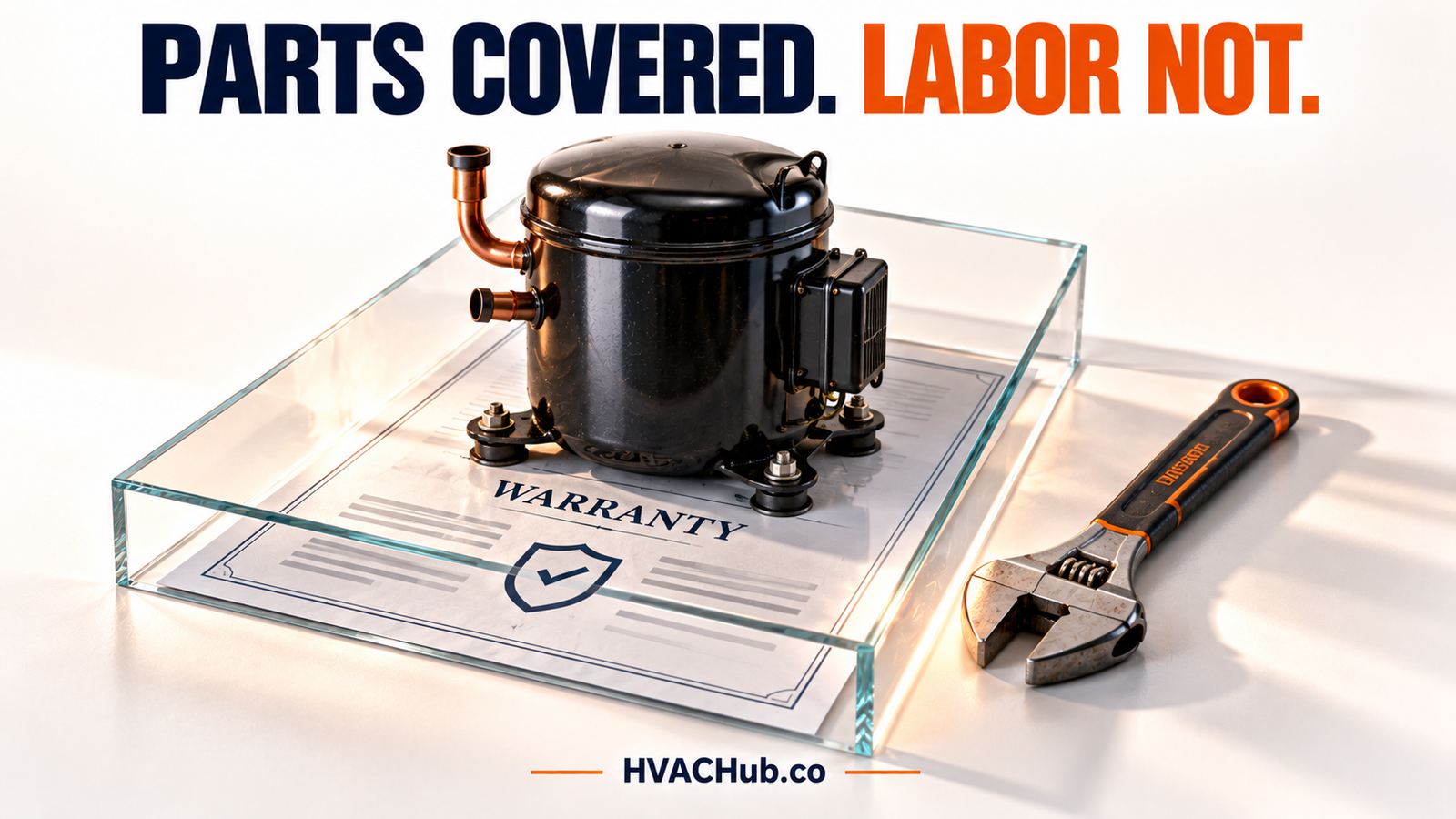
Parts Covered. Labor Not. What HVAC Warranties Actually Mean
Manufacturer parts warranty
A manufacturer warranty commonly addresses eligible defects in specified equipment or components, subject to its terms. Coverage may depend on model, purchase or installation date, registration requirements where permitted, proper installation, maintenance, or proof of ownership. It may cover a replacement part while excluding diagnosis, refrigerant, shipping, or labor.
Contractor workmanship or installation warranty
An HVAC contractor may separately promise to correct defects caused by its installation work for a stated period. That is different from guaranteeing that every manufactured component will never fail. A contractor should describe the scope, duration, exclusions, and claims process in writing.
Labor coverage or service agreements
Some equipment packages, extended service contracts, or third-party plans include limited labor benefits. Others do not. Contractors should never assume a parts approval automatically authorizes reimbursement for the technician’s time.
Statutory consumer protections
Depending on the country, state, or province, consumer law may provide rights beyond a written warranty or restrict certain exclusions. The written manufacturer warranty is not always the final word on a customer’s legal remedies. Local rules matter, especially for residential customers.
Why Manufacturers Reject HVAC Warranty Claims
A denial can be justified, mistaken, incomplete, or based on missing information. Common issues to investigate include:
- The component or failure mode is outside the stated coverage.
- The applicable warranty period has expired or the equipment’s eligibility is disputed.
- A serial number, invoice, installation date, or other required record is missing.
- The claim alleges improper installation, operating conditions, or unauthorized modification.
- The manufacturer requires testing results or return of the failed component.
- A claim was submitted through the wrong process or without required prior authorization.
- The requested labor, refrigerant, or incidental costs are not included in a parts-only warranty.
These are possible reasons, not proof that any particular claim should be denied. A technician’s diagnostic findings and the actual written terms should drive the response.
What to Do Before Accepting a Warranty Denial
1. Get the denial reason in writing
Ask which provision or requirement the decision relies on. “Not covered” is too vague to help a contractor explain the outcome or decide whether an appeal is warranted.
2. Recheck the equipment and job records
Confirm model and serial numbers, installation date, proof of purchase, registration details where relevant, commissioning information, and previous service history. Avoid altering old records to make a claim appear eligible.
3. Preserve diagnostic evidence
Document observed symptoms, tests performed, relevant readings, photographs, and the condition of the failed component. Follow the manufacturer’s procedures for handling or returning parts, and protect customer information.
4. Escalate through the correct channel
A distributor representative, manufacturer technical support team, or formal appeals process may clarify the decision. Keep the discussion factual and record who said what and when.
5. Tell the customer what is known—and unknown
Explain whether the part, labor, or both are disputed. Do not promise reimbursement before it is approved. Give the customer a written explanation of proposed next steps and any charges requiring consent.
Who Carries the Cost When the Manufacturer Says No?

There is no universal answer. Responsibility can depend on the cause of failure, the sales and installation agreement, the manufacturer’s warranty, any service plan, applicable law, and the facts of the specific job.
When the manufacturer may be responsible
If an eligible component failed because of a covered defect, the manufacturer may owe the remedy described in its warranty and any applicable law. A denial based on incorrect records or a mistaken interpretation may deserve review.
When the contractor may be responsible
If poor installation caused the failure, the contractor’s workmanship obligations or other legal duties may apply. The same may be true if the contractor made a clear promise to the homeowner that goes beyond the manufacturer’s coverage. Responsibility should be assessed from evidence rather than assumptions.
When the customer may face a charge
A customer may be responsible for properly disclosed, noncovered work under the agreement and local law. But a customer should not learn about a substantial unexpected charge only after work has already been completed without authorization.
When the business chooses to help anyway
Some contractors offer a goodwill discount, absorb a labor charge, or advocate for the customer even when they believe they are not contractually responsible. That can protect a relationship, but goodwill is a business decision—not an automatic admission of fault. Document what is being offered and why.
The Most Expensive Warranty Mistake Can Happen During the Sale
A phrase like “this system has a ten-year warranty” sounds simple. The homeowner may reasonably interpret it as ten years of free repairs, while the contractor means eligible replacement parts only. That gap in expectations can become a serious dispute years later.
Before installation, explain coverage in plain language: who provides it, what parts are included, whether labor is covered, how long each benefit lasts, what conditions apply, and whom the customer should call. Give the homeowner the relevant documents and a copy of the agreed scope.
Where registration affects benefits, explain who is responsible for it and confirm completion when required. Do not imply registration is always legally necessary; requirements and consumer protections differ by location.
A Practical HVAC Warranty Documentation Checklist
- Record the installed model and serial numbers accurately.
- Keep dated installation invoices, signed scopes, and relevant commissioning records.
- Provide the customer with the actual warranty and labor-coverage documents.
- Explain exclusions and potential diagnostic, refrigerant, and labor charges clearly.
- Preserve service notes, photographs, test results, and claim correspondence.
- Track claim submissions, approvals, denials, appeals, and part-return requirements.
- Set a record-retention policy consistent with local law and business needs.
- Train dispatchers and technicians not to promise coverage before it is confirmed.
How to Handle an Upset Homeowner Without Blaming Everyone Else
When comfort is disrupted, the homeowner usually cares less about which company issued which document than about restoring the system. Start by acknowledging the problem, describing the diagnosis, and setting out the available repair options.
A useful explanation might be: “We confirmed the failed component and submitted the claim. The manufacturer has declined coverage for the reason stated here. We’re reviewing that decision. Before we proceed, we’ll show you what is covered, what may be chargeable, and your options.”
Avoid telling a customer that the manufacturer is definitely wrong before the evidence is clear. Avoid blaming the homeowner for paperwork they were never told to provide. Clear, calm communication is often the difference between a difficult claim and a damaged long-term relationship.
Frequently Asked Questions
Does an HVAC manufacturer warranty usually cover labor?
Not necessarily. Many manufacturer warranties focus on eligible parts. Labor may be excluded or covered separately under an additional plan or contractor agreement. Read the actual terms.
Can an HVAC contractor appeal a denied warranty claim?
Often there is a support or escalation path, but it depends on the manufacturer and product. Request the specific denial reason and submit relevant documentation through the appropriate process.
Who pays for refrigerant during a warranty repair?
Coverage varies. Refrigerant, diagnosis, labor, freight, and other expenses may be excluded even when a replacement part is covered. Confirm the terms and applicable consumer law.
Does a rejected manufacturer claim mean the homeowner must pay?
No. A denial does not automatically decide the homeowner’s rights or the contractor’s obligations. The contract, cause of failure, separate promises, and local law may all matter.
The HVAC Warranty Nobody Wants to Talk About
The hardest warranty disputes are not always about a failed part. They are about mismatched expectations, missing evidence, and uncertainty over who made which promise. Better documentation and honest explanations cannot prevent every failure, but they can make the next conversation fairer.
Contractors: have you had a warranty claim denied that you believed should have been approved? What happened next—and who ultimately covered the repair? Share your experience with peers in the HVAC Community Hub, without disclosing private customer information.

Responses